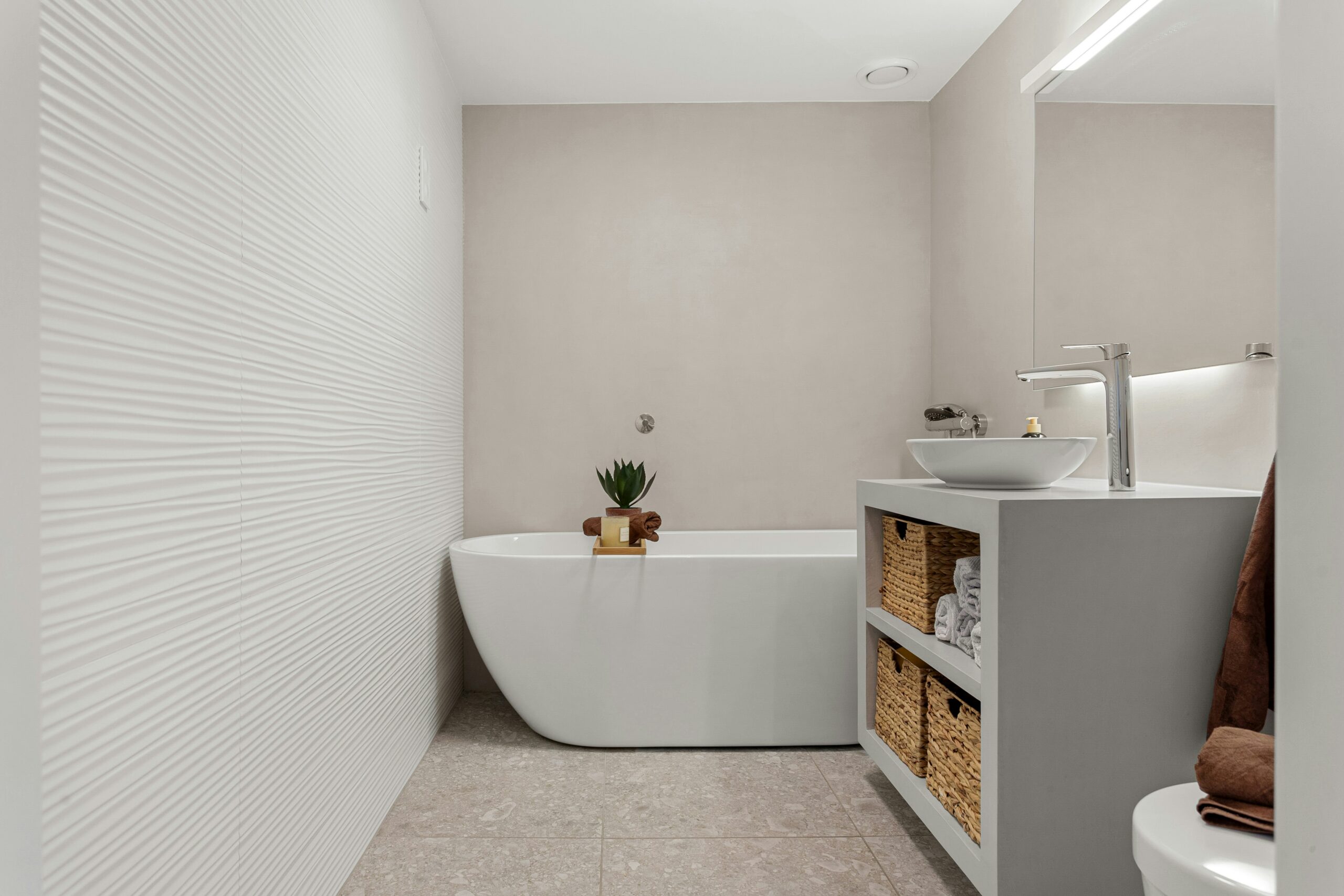
Quick Answer:
If the tub smells when you fill it, the odor usually comes from either the water itself (often the hot water) or from the drain and overflow area. Do a few simple tests to find whether the problem is the supply, the water heater, or a dry or dirty drain, then flush lines and fixtures before calling a pro.
Why This Happens
- Drain or overflow smells: Hair, soap scum and biofilm can build up in the overflow, on the tub surface, or in the P-trap. When you fill the tub the trapped air and warm water can push those odors out.
- Stagnant or discolored water: If a fixture hasn’t been used, water sitting in pipes can get stale or pick up tastes and smells.
- Water heater problems: Rotten-egg (sulfur) smells or a strong odor only in hot water often point to bacteria in the water heater or a failing anode rod.
- Recent shutoff or plumbing work: After a shutoff or repair, sediment and dislodged deposits can make water smell or look off for a short time. If you’ve had a recent supply interruption see guidance on **water smells after a shutoff**.
Step-by-Step What to Do
Step 1 — Determine whether the smell is from water or the drain
- Fill a clean cup from the tub faucet and sniff it. If the cup smells, the supply is likely the source. If the water in the cup is fine but the tub smells when filling or draining, the drain/overflow is likely the source.
- Also smell around the overflow and the drain opening while filling; if the odor is strongest there, it’s probably the drain.
Step 2 — Test hot versus cold
- Run cold water into a cup and smell. Then run hot water into a different cup and smell. If only hot water smells, suspect the water heater.
- If hot water is the problem, check for **water heater issues** such as bacterial growth or a worn anode. If you’re unsure how to inspect the heater, see the When to Call a Professional section below.
Step 3 — Run other fixtures
- Turn on a kitchen faucet and a shower. If the smell is present at multiple fixtures, the issue is likely in the supply or the heater. If it’s only at the tub, focus on the tub drain and overflow.
- After a housewide shutoff, city works, or plumbing repair, many people see short-term odors in several fixtures — flushing lines usually clears this.
Step 4 — Basic flushing and cleaning steps
- Open the tub hot and cold taps and run them together for 3–5 minutes to flush the immediate lines. If only one side smells, run that side longer.
- Fill the tub partway, swish the water to loosen surface grime, then drain. Repeat to flush the overflow and trap air pockets.
- Remove and clean the drain stopper, and clean the overflow grill and visible buildup with a mild cleaner and a brush. Rinse thoroughly.
- For fixtures with aerators or showerheads, remove and soak them in vinegar to remove sediment, then rinse and reattach.
- If the problem started after a period of nonuse, run each fixture for several minutes to replace stagnant water with fresh supply.
What Not to Do
- Do not pour harsh chemicals into the valve.
- Do not ignore sulfur smells.
- Do not keep using if symptoms persist.
When to Call a Professional
- Call a plumber if the smell persists after flushing and cleaning, or if the odor is limited to hot water and running hot faucets doesn’t clear it.
- Call a licensed water heater technician if you suspect bacterial growth, a failing anode rod, or other water heater issues that you’re not comfortable inspecting. Some fixes require shutting off and draining the tank or working on gas/electric connections.
- Contact your water utility if many fixtures in the neighborhood show odors after a shutoff or main repair; they may need to run the mains or advise on water testing.
Safety Notes
- Ventilate the bathroom while you run and clean fixtures. Open a window or run a fan to reduce inhaling odors.
- Avoid mixing cleaners. Don’t combine household bleach with ammonia or acidic cleaners; that can make dangerous fumes.
- If you detect a strong rotten-egg smell that seems like gas rather than water, leave the building and call your gas company or emergency services immediately.
Common Homeowner Questions
- Why does only my hot water smell? It often points to bacteria or a problem inside the water heater.
- Can I fix it myself? Simple flushing and cleaning often help; if the smell persists or is in hot water, call a pro.
- Is it safe to bathe if the tub smells? Mild odors are usually not dangerous, but avoid bathing if the smell is very strong, sulfur-like, or if you see discolored water — get it checked first.