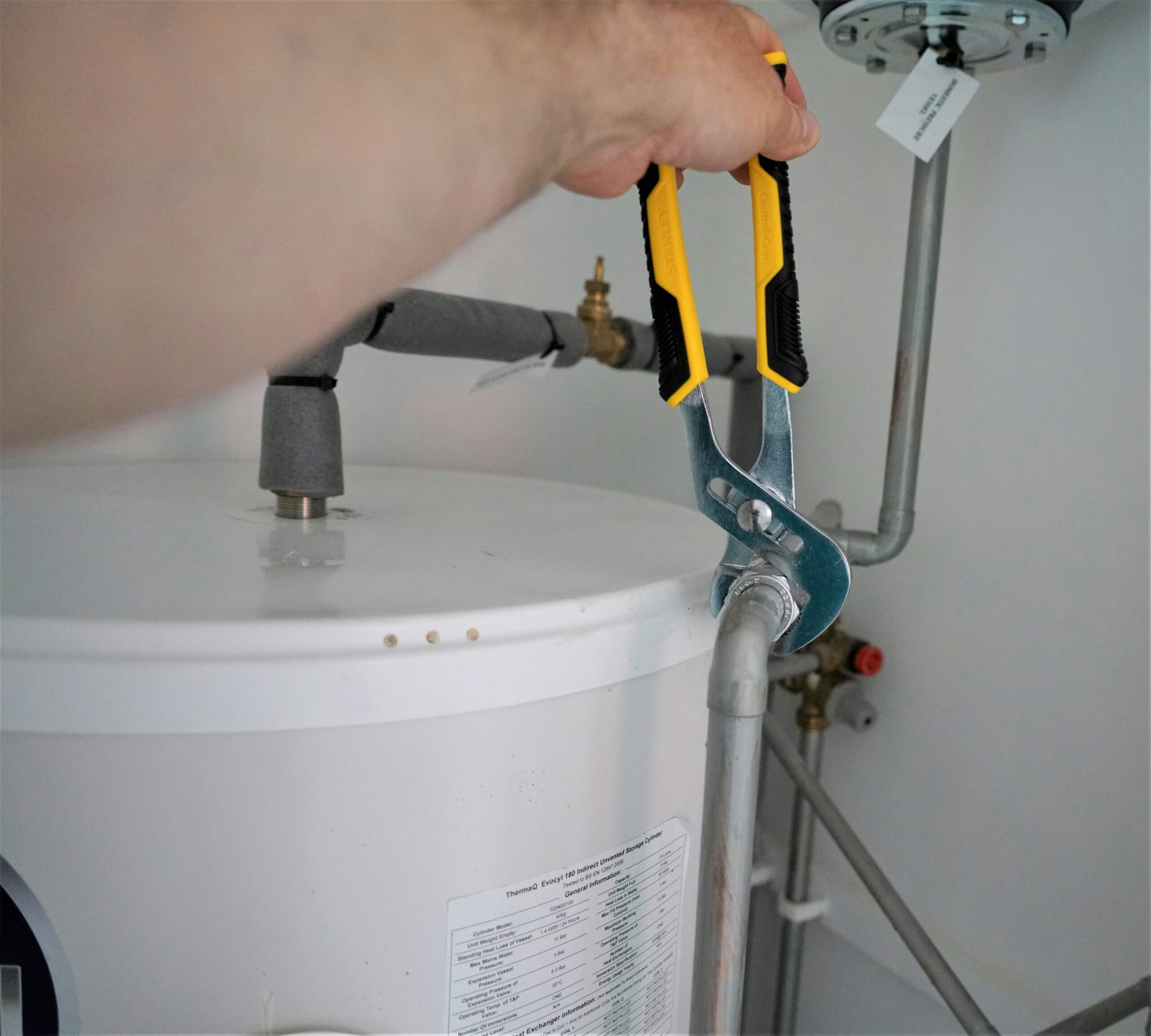
Quick Answer:
If only the hot tap produces white particles, the source is usually mineral scale or something coming from the water heater rather than your supply line. Before assuming the anode is reacting, collect a hot-only sample, inspect it, and try a simple flush. These checks often show whether the issue is harmless mineral buildup or something that needs repair.
Why This Happens
There are a few common reasons the hot side shows white flakes while the cold side does not:
- Mineral deposits. Heating water causes dissolved minerals (calcium and magnesium) to precipitate as fine white particles or flakes.
- Scale or sediment inside the tank. Over time scale can flake off or loose sediment can be pushed out through the hot outlet.
- Anode or corrosion byproducts. Sacrificial anodes are meant to corrode instead of the tank walls; some anode materials can leave light-colored residue. That said, anode-related particles are not the only or most common cause.
If both hot and cold look cloudy after a service interruption or change at the utility, check guidance on Cloudy water after water outage as the cause may be different.
Step-by-Step What to Do
1. Compare hot and cold
- Run cold water and collect a sample in a clear glass. Run hot water from the same tap and collect a separate sample.
- Look for differences in color, cloudiness, or particles. If only the hot sample has flakes, the heater or tank is the likely source.
2. Collect a hot-only sample and inspect
- Turn off the cold supply to the tap (if possible) or let only the hot water run into a clean bowl for a minute. Collect hot-only water in a bowl and look for flakes settling. Let the bowl sit for several minutes to see if particles sink and form a layer.
- Test a few flakes by dropping one into a small amount of white vinegar in a separate container—calcium carbonate will fizz slightly; other materials will not.
3. Flush the water heater
- Drain a few gallons from the heater using the drain valve to clear loose sediment. For tankless heaters, follow the manufacturer’s flush instructions or have a pro perform it.
- After flushing, check the hot water again. If the flakes stop, sediment or scale was likely the cause.
4. Check temperature and recent changes
- Very high water temperature increases scale formation. Lowering the thermostat slightly may reduce particle formation.
- If you recently did plumbing work or had a system change, that disturbance can free sediment.
5. If particles persist, collect evidence
- Save a small amount in a sealed jar for a technician. Note whether particles reappear after flushing or change with temperature.
- Compare what you see to simple home tests and to guidance on White residue after boiling water for additional clues about mineral behavior.
What Not to Do
- Do not replace the heater without confirming anode reaction.
- Do not pour strong chemicals into the heater or attempt major repairs if you are not trained.
- Do not attempt to open or disassemble the tank while it is hot or under pressure.
When to Call a Professional
- Particles persist after flushing or get worse over time.
- Water is discolored, smells metallic, or shows signs of rust—these can indicate corrosion needing inspection.
- You are unsure how to safely drain or inspect the heater, or if the heater is gas-powered and you need gas-valve checks.
Safety Notes
- Hot water can scald. Let the system cool and use protective gloves when working near hot outlets.
- Before draining a tank, turn off power to an electric heater or set a gas heater to pilot and follow the manufacturer’s shut-off steps.
- If you smell gas, leave the area and contact the gas company or emergency services rather than attempting repairs yourself.
Common Homeowner Questions
- Are the white particles harmful?
Usually not—most are mineral deposits. Still, confirm the source if you see other changes like odor or rust. - Could the anode be causing this?
Possibly, but anode reaction is only one cause. Inspecting the anode and tank condition helps confirm it. - Can I stop it temporarily?
Flushing the heater and using cold water for drinking or cooking until you confirm the cause is a safe short-term approach.
For more related articles, see the White Particles, Cloudy Water, or “Milky” Water hub.