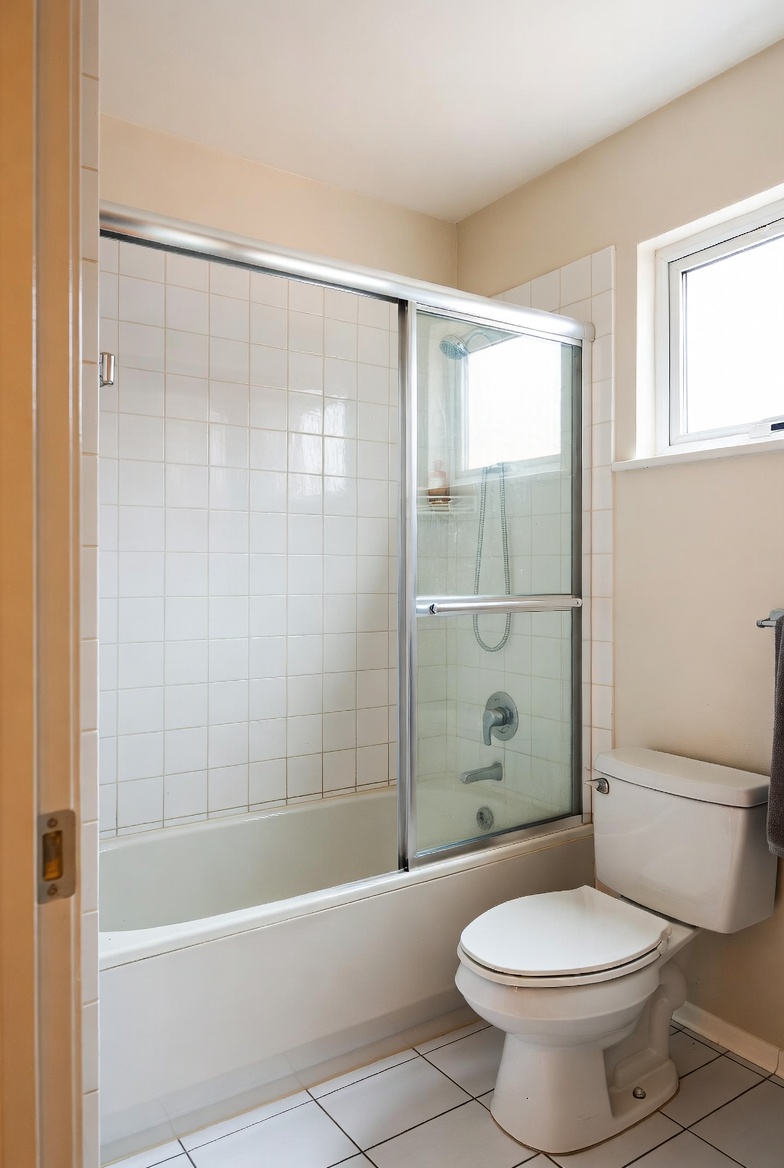
After water-heater replacement, use the actual installer work and toilet feed record. Common supply shutdown can matter, but hot-tank sediment is not automatically on the toilet’s cold feed.
Check the receiver before another flush
Stop added water for a high/rising bowl, poor drainage, shared backup, active leak or damaged toilet. A single flush can overflow; settling or clear-looking water does not certify drainage capacity. Use only safely accessible identified controls under their actual method, without forcing. A supply stop can limit fresh feed but cannot block sewer return. Keep people and pets away from wastewater and arrange prompt help for ongoing or recurrent backup.
For strong, widespread or unexplained gas-like fumes, exposure symptoms, or suspected high sewer-gas concentrations in an enclosed space, leave the building immediately and call the fire department or emergency services from outside. Avoid flames, switches and other ignition sources; do not remain to ventilate, sniff drains or investigate. Smell intensity does not measure the concentration. A faint localized drain odor without those warning signs calls for a different plumbing investigation; it does not automatically establish a fuel-gas leak.
If fuel gas is suspected, leave the building or affected area immediately. Do not operate valves, switches, plugs, appliances or phones there. Call the gas emergency service from a safe location well away, and wait for responders’ clearance.
Keep away from wet electrical equipment. Do not touch wet appliances, plugs or switches, or enter water to reach a breaker. When no gas leak is suspected, power may be isolated only from a safely accessible dry location; otherwise call an electrician or emergency help. Wet equipment needs qualified assessment before it is used again.
If a cleaner may be present, identify the exact product and follow its label. Do not add another cleaner, acid, bleach, ammonia, vinegar or an improvised neutralizer. Do not plunge, snake or open the trap while hazardous residue may remain; tell the provider what was used. A rinse or elapsed time is not proof all residue is gone.
If a carbon monoxide alarm sounds or you suspect carbon monoxide exposure, get everyone outside immediately and call emergency services from safety. Carbon monoxide has no smell; an odor comparison cannot rule it out. Do not restart or repeatedly cycle a fuel-burning heater to investigate a possible combustion problem.
For a new, unexplained water-quality change: do not deliberately taste the water. Use bottled water or another known-safe supply for drinking, food preparation, teeth brushing and ice while you contact the supplier. Follow the actual local notice for other uses. Boiling does not make chemically contaminated water safe, and clear appearance or a fading odor does not certify safety.
Start with the actual toilet
Identify the toilet first: ordinary gravity tank, pressure-assisted vessel, flushometer/direct-feed or powered equipment. A gravity flush uses stored water, while supply delivery affects refill and reaching the proper starting level; some fill designs also vary with operating pressure. Other architectures have different requirements. Do not use a gravity flapper/float recipe on a pressure vessel or electrical assembly. Only lift a normal removable ceramic cistern lid when safe and support it securely.
Keep the original event
- Actual heater/toilet feed, any intended mixing, valves/work affected and commissioning record.
- Original refill versus weak evacuation, starting charge, residue/quality change and leaks.
Trace the real source and completed restoration
An intended anti-sweat mixing path can exist, while an ordinary cold toilet does not normally draw hot-tank sediment. Do not infer that heater flushing is needed from toilet performance alone. A nearby hot/cold purge does not certify the isolated branch clear. Ask the installer to verify the actual affected route and compatible part before repeated flushing or screen cleaning.
Use the actual tank water line, normal bowl seal level, selected full/reduced flush mode and compatible flush mechanism. Not every flush empties the entire tank; remaining water is not automatically a fault. Critical-level marks, valve top and overflow top are not interchangeable water-line settings. Use the actual float adjustment method, including a gentle bend only where the maker permits it for an identified bendable metal arm. No universal one-inch level or half-inch chain setting applies to every toilet.
Do not open every nearby service control
Use only the actual authorized identified valve and model procedure. Do not operate meter/curb controls by proximity or blindly open a heater inlet without its filled/energy/commissioning state addressed. Keep no-force and no owner gas-repair safeguards. Concerning gas or CO takes the emergency response above.
Release the actual isolated segment
A live faucet on another branch cannot be relied on to depressurize the hose/inlet downstream of a closed toilet stop. Preserve source-off, actual local maker release and verified unloaded access, compatible reassembly and safe completion. Do not loosen a nut to discover whether pressure remains, and do not prescribe arbitrary one-minute high/low hot purges.
Safe parts service
Before opening a hose, cap or pressure boundary, identify the actual work segment, independently isolate source/required energy, and release and verify retained pressure under the actual method. A drained gravity tank does not unload every hose or pressure-assisted component, and a faucet on another branch may not release the isolated segment. Keep water off before both access and refit. Use only maker-removable parts, compatible cleaner/tool and specified torque. Do not pry fixed screens, drill/widen jets, probe deeply with a coat hanger or assume bowl vinegar reaches upper internal passages. A prescribed gentle outlet cleaning or captured flush can be valid under its real conditions; not every compatible small tool or approved bucket method is prohibited.
Return to use
Any suitable functional check follows actual correction or appropriate assessment, complete assembly, safe source, known accepting drainage, sufficient initial capacity and model commissioning requirements. No repeated load, increasing paper, hot pour or other-fixture challenge to prove a troubled drain clear. Stop at poor clearance, renewed rise, leakage or failure to shut off. A passing trickle, temporary improvement or a single success does not locate every fault or guarantee future performance. Source and electrical hazards must be controlled before cleanup; use suitable restoration help for sewage or inaccessible contamination.
Related situations
Safety sources
- Wisconsin DHS: sewer-gas exposure and emergencies
- Con Edison: suspected gas leaks
- CDC: electrical hazards near water
- Madison Metropolitan Sewerage District: stop discharge and report sewer backup
- Example drain-opener label: restrictions on plunging, disposal operation and mixing
- CDC: carbon monoxide alarms and wet electrical devices
- CDC: drinking-water advisories
- Example electric-heater manual: filling and maintenance requirements
- Watts WAS example: intentional toilet anti-sweat tempering
- American Standard example: controlled covered fill-valve cleaning