Quick Answer:
Temperature swings in your taps are occurring only during pressure loss. When the supply pressure drops, the mix of hot and cold water through valves and cartridges changes, causing brief hot or cold surges even though fixtures and the heater may be fine.
Why This Happens
Plumbing valves and single-handle mixers balance hot and cold flows based on pressure. If overall supply pressure falls, the balance shifts. A water heater that is working normally can still produce steady hot water at its outlet, but the pressure imbalance at the fixture changes the delivered temperature. Common causes include municipal pressure events — for example, Pressure drops during peak city hours — and sudden household or neighborhood demands like Pressure loss when pool autofill runs.
Step-by-Step What to Do
1. Confirm the timing and pattern
- Note when the swings happen (time of day, when other equipment runs, during peak use).
- See if multiple fixtures are affected at once — demand-related issues usually show up across the house.
2. Test pressure with fixtures isolated
- Shut off downstream fixtures in one area so only the main supply and the fixture you are testing are open.
- Use a simple pressure gauge at a hose bib or install-a-gauge on a laundry faucet to read pressure while the fixture is open and while it is closed.
- Compare readings: large drops when other fixtures are opened point to system demand, not a single fixture failure.
3. Observe meter flow patterns
- Watch the water meter while turning fixtures on and off. A steady, steep movement shows high demand; intermittent ticks suggest short runs elsewhere.
- If the meter spins noticeably when the temperature swings occur, that ties the problem to pressure/flow events rather than the fixture itself.
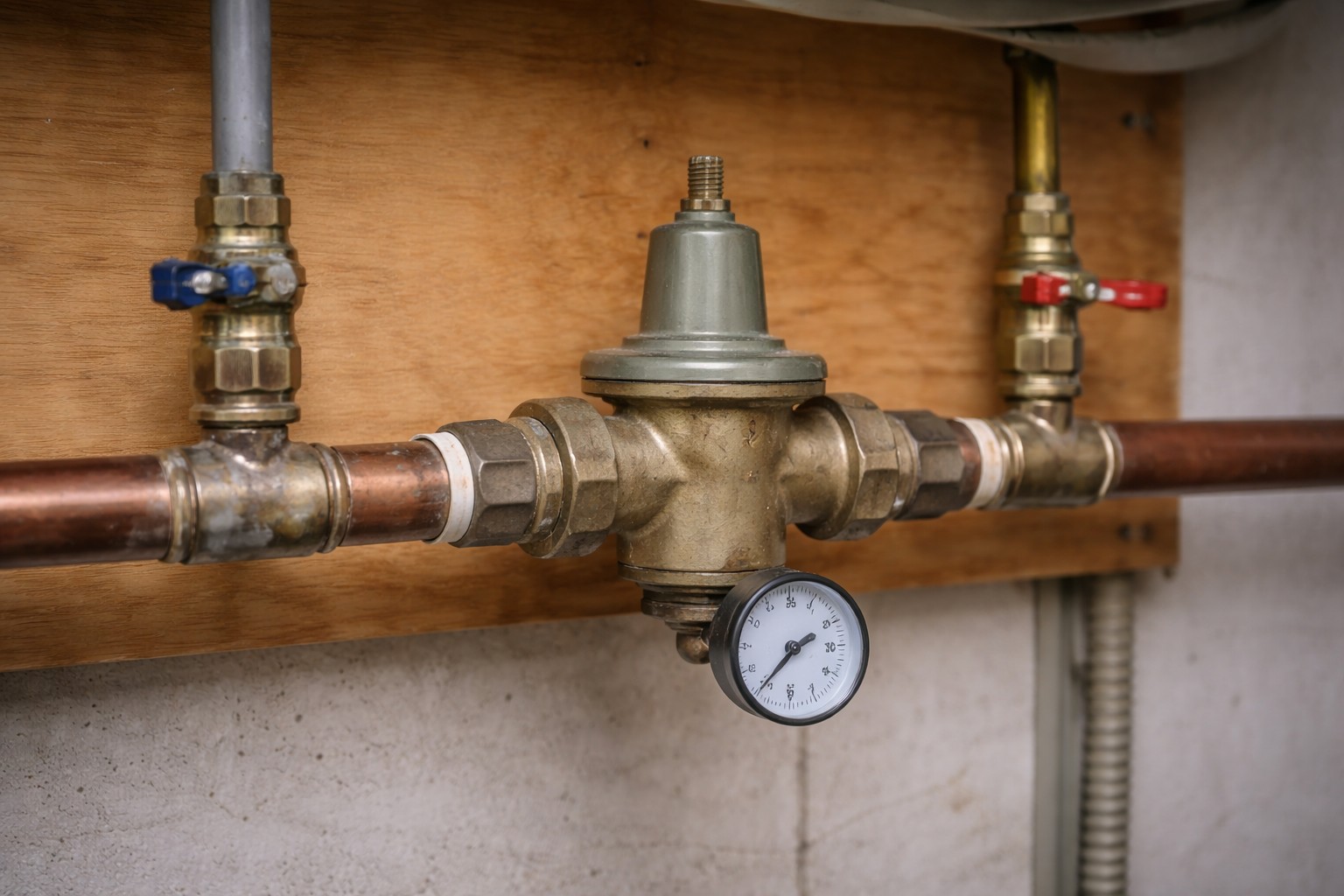
4. Confirm PRV setting and condition
- If your home has a pressure-reducing valve (PRV), verify its setpoint and look for signs of sticking or fluctuation.
- Adjusting or replacing a failing PRV can stabilize pressure changes that lead to temperature swings.
5. Repeat tests during likely events
- Reproduce the situation at times you noted earlier (peak hours, when pool autofill or irrigation runs) to confirm cause.
- Document pressure numbers and meter behavior for a professional if needed.
What Not to Do
- Do not assume fixture failure when the pattern is demand-related — replacing a cartridge or valve may not fix a pressure-driven problem.
- Do not randomly replace the water heater thermostat or elements without confirming flow/pressure behavior first.
- Do not make large adjustments to the PRV without measuring pressure changes before and after.
When to Call a Professional
- If pressure drops are frequent, significant, or affect only your property while neighbors report normal flow.
- If the PRV needs adjustment or replacement and you are not comfortable doing it safely.
- If the meter behavior or pressure tests suggest a hidden leak, mains issue, or repeated rapid cycling of the heater that you can’t resolve.
Safety Notes
- Avoid working on the water heater hot side while it is pressurized and hot; let it cool and shut off fuel/electric supply if service is required.
- Take care when attaching gauges — use appropriate fittings and hand tools, and do not overtighten connections.
- If you suspect gas appliance issues or a significant leak, shut off gas or water and call a licensed technician immediately.
Common Homeowner Questions
- Q: Will replacing a faucet cartridge solve the swings?
A: Only if tests show the problem centered at that fixture; otherwise it won’t fix demand-driven swings. - Q: Can my water heater cause this if it’s old?
A: Unlikely by itself — the heater may maintain output, but pressure/flow changes at the fixture are usually the cause. - Q: Should I contact the water utility first?
A: Yes, if pressure drops are widespread or happen during city peak hours; the utility can confirm system events and advise.
For more related articles, see the Pressure Drops When Multiple Fixtures Run hub.