Quick Answer:
If water from an outdoor hose bib is being pushed back into your house pipes, stop using the outdoor outlet immediately. Close the hose spigot, remove any attached hoses or sprayers, and check inside fixtures. This is backflow — water moving the wrong way through your plumbing — and it can carry contaminants back into your supply. Take quick isolation steps, then call a plumber if the situation doesn’t clear when you close the spigot.
Why This Happens
Backflow through a hose bib usually happens when pressure in the house lines drops or when outdoor pressure is higher than the indoor supply. Common causes include:
- Sudden drop in municipal pressure (main break, heavy demand) causing siphon effect.
- Improper or missing backflow prevention on the outdoor line.
- Cross-connections between potable lines and irrigation, garden hoses, or non-potable sources.
- Damaged or failed check valves and vacuum breakers.
A cross-connection can cause visible or smelly contamination; see Cross-connection causing discolored water for related signs to watch for.
Step-by-Step What to Do
1. Close the outdoor hose bib immediately
Turn the spigot off and remove any hose or attachment. Close hose bib and retest interior flow direction. After closing the spigot, go inside and open a nearby faucet briefly to see whether water still flows oddly or appears contaminated.
2. Isolate and check fixtures
Shut off individual isolation valves to fixtures if you have them (for example, under-sink shutoffs). Check toilets, faucets, and appliances for changes in behavior or water quality. If a toilet or other fixture fills from an unexpected source, it can indicate a cross-feed — see Toilet filling from wrong supply.
3. Remove hoses and attachments
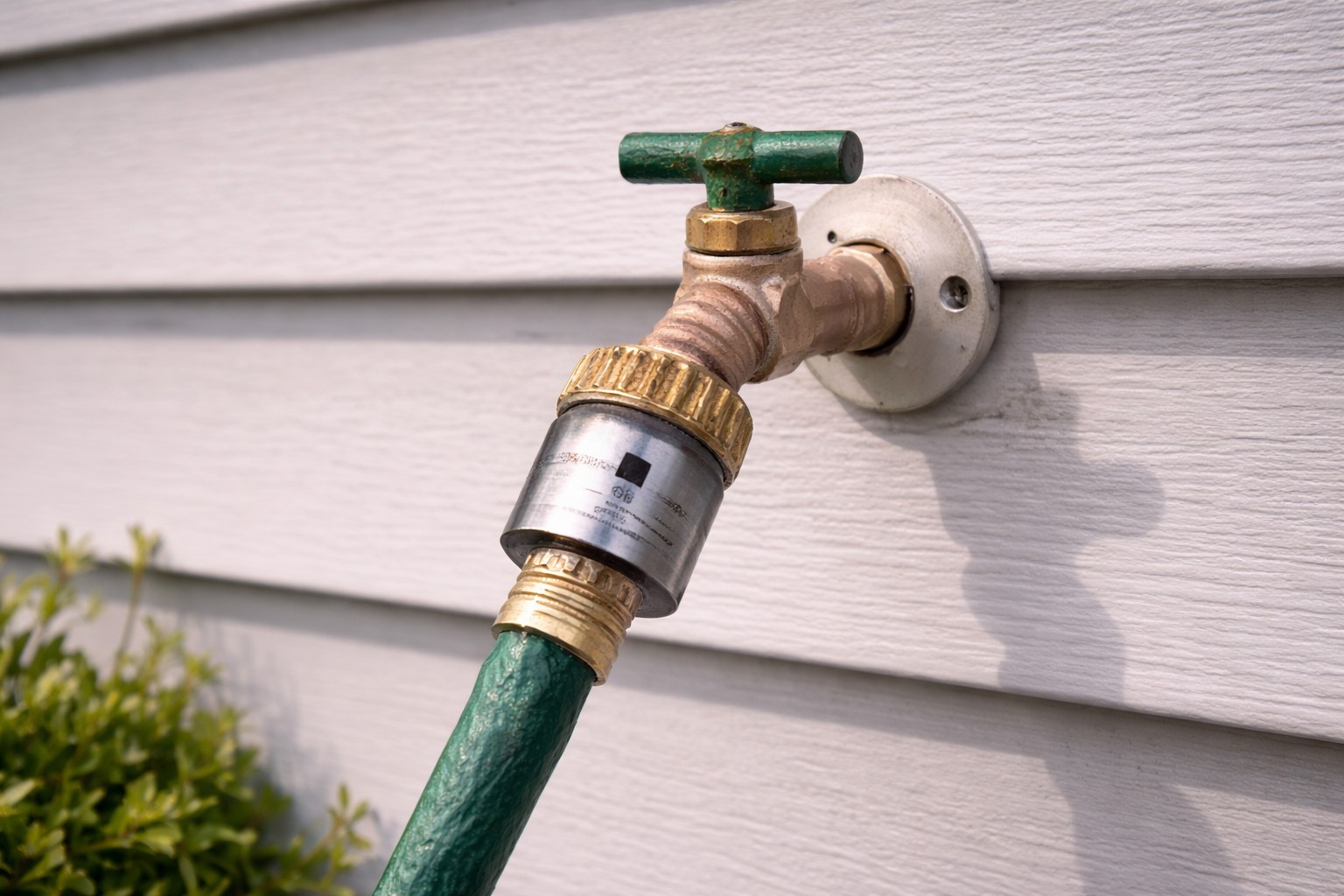
Disconnect garden hoses, timers, sprinklers, and any backflow preventers from the bib. Contaminated attachments can continue to introduce water back into the line if left connected.
4. Shut off the main water if backflow continues
If closing the hose bib and removing attachments does not stop backflow or if you see contaminated water inside, shut off the home’s main water valve to prevent further influx, and contact your water utility or a licensed plumber.
5. Document and contain
Note which fixtures were affected and take photos if water looks discolored. Stop using affected water for drinking, cooking, or bathing until the source is confirmed and the lines are flushed or disinfected by a professional.
What Not to Do
- Don’t rely on hose vacuum breakers alone. These can fail or be bypassed and are not always sufficient for severe cross-connection or pressure issues.
- Don’t drink, cook with, or bathe in water you suspect is contaminated.
- Don’t attempt complex repairs on pressurized lines if you’re not trained — improper work can make contamination worse.
When to Call a Professional
- Any time you see discolored, odorous, or otherwise suspect water entering the house from an outdoor bib.
- If closing the hose bib and removing hoses does not stop the problem.
- If you need a proper backflow prevention device installed, tested, or replaced.
- When the main shutoff is needed and you’re unsure how to restore safe supply or disinfect lines.
Safety Notes
- Treat any backflow event as a contamination risk until proven safe.
- Avoid using affected water for consumption or personal hygiene.
- Wear gloves when handling contaminated hoses or visible deposits, and wash hands thoroughly afterward.
- If contamination is suspected inside appliances (water heater, washing machine), have a professional inspect and flush them.
Common Homeowner Questions
- How quickly should I shut off the main? — Immediately if backflow continues after closing the hose bib or if you see contaminated water indoors.
- Can I clear the lines myself? — Minor flushing after containment might help, but disinfection and verification are best handled by a pro or your water utility.
- Is a new backflow preventer always required? — Not always; a plumber or local authority will advise whether repair, replacement, or a certified device is needed based on your setup and risk.