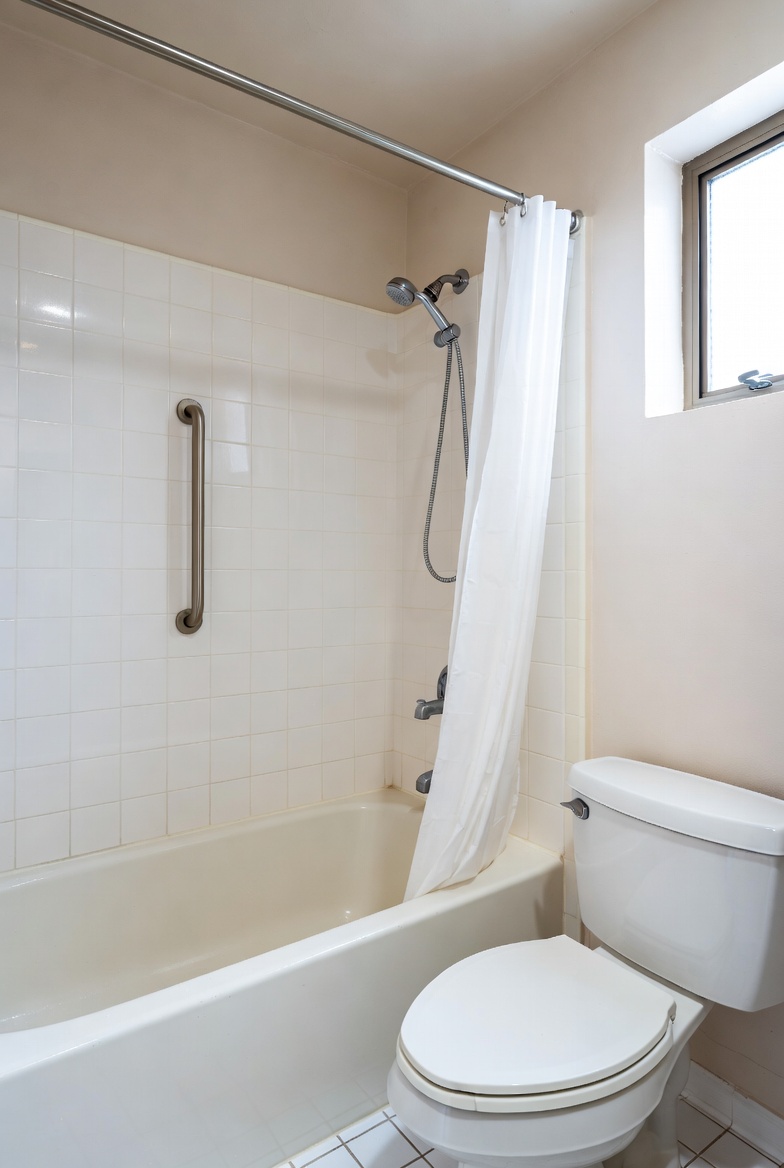
Quick Answer:
Most of the time a small drip after you shut the shower is normal drain-down and will stop within a few minutes. If the spout keeps dripping indefinitely, the valve or diverter is not sealing properly and needs repair or replacement.
Why This Happens
When you turn off the shower, water left in the pipes and the showerhead can run back and out the lowest outlet — the tub spout. That slow “drain-down” usually stops on its own. If the drip continues without stopping, the sealing surfaces inside the faucet assembly (cartridge, valve seats, O‑rings or the diverter) are worn, damaged or clogged with debris so they cannot fully shut off flow.
If you see other symptoms at the same time — for example the spout leaks while the shower is running — it can point to a diverter or cartridge problem like the one described in Tub spout leaks when shower runs.
Step-by-Step What to Do
Step 1 — Observe and time the drip
- Turn the shower off and watch the spout. Note how long the drip continues.
- If dripping stops within a few minutes, it’s likely normal drain-down. If it continues for many minutes or never stops, treat it as a seal/valve problem.
Step 2 — Measure the flow
- Put a cup under the drip for 10 minutes to estimate volume. A few milliliters over 10–15 minutes is drain-down. A steady stream or measurable loss means repair is needed.
Step 3 — Test handle and diverter operation
- Move the control handle through its full range to feel for stiffness or looseness. A sticky handle can indicate a worn cartridge.
- If your spout has a built-in diverter (pull-up or push-down), operate it several times — debris or mineral build-up can prevent full closure.
Step 4 — Basic spout and aerator check
- Look for visible drips at the spout joint or around the handle escutcheon. Tightening small fittings can help if there’s an obvious leak at a joint.
- Turn the water off at the supply before removing a spout or trim. If you remove and inspect the spout, clear any debris from the diverter and check internal O‑rings for obvious damage.
Step 5 — When to replace parts
- If the cartridge, diverter or O‑rings are worn, replacement typically fixes continuous dripping. Cartridge replacement varies by valve type — if you’re comfortable with basic plumbing, you can swap a cartridge after shutting off water. Otherwise call a pro.
What Not to Do
- Don’t confuse normal drain-down with continuous dripping; if it never stops, a plumber is appropriate.
- Don’t force or pry on valve parts with excessive force — you can break metal or strip threads.
- Don’t use silicone or caulk as a permanent fix on internal valve parts; this won’t restore proper sealing and can make repairs harder later.
- Don’t attempt soldering or major valve work without shutting off water and knowing the proper procedures — call a pro for sweated fittings or complicated valve replacements.
When to Call a Professional
Call a plumber if:
- The drip never stops after observing for several minutes and basic checks don’t find an obvious cause.
- You find internal damage to the valve or cartridge and don’t want to replace it yourself.
- Water comes from multiple outlets at once or you notice large leaks, high water bills, or pressure loss — these can indicate more complex valve or plumbing issues. Related scenarios like Water runs from tub and shower together are a good reason to get professional diagnosis.
Safety Notes
- Always shut off the water supply to the faucet before removing spouts or trim. Open a nearby tap to relieve pressure.
- Use the right tools and avoid excessive force. Wear eye protection when working under the tub or behind access panels.
- If the work involves soldering, cutting copper, or changing water heater settings, hire a licensed plumber to avoid injury or property damage.
Common Homeowner Questions
- Why does it drip only for a few minutes? That’s normal drain-down — leftover water in the pipes flows out until the system is empty.
- Can I live with a slow drip? Small drain-down is fine; continuous dripping should be fixed to avoid wasted water and wear on the valve.
- Will replacing the cartridge stop the drip? Often yes — if the cartridge or seals are the cause, replacing them normally restores a watertight shutoff.
For more related articles, see the Tub Spout Leaks When Shower Is On hub.