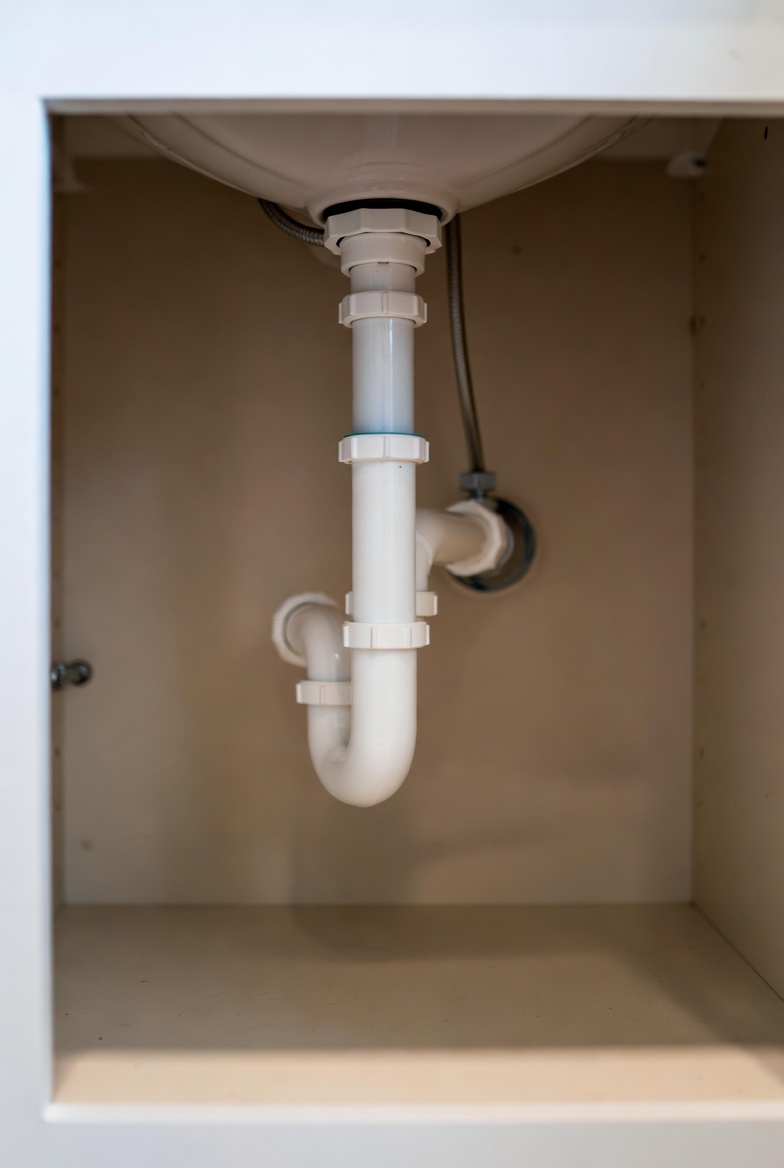
Quick Answer:
If the trap under a sink tilts the wrong way, water and waste can collect instead of flowing into the wall drain. Check with a level and, if the trap arm does not slope slightly toward the wall connection, you can usually correct the alignment by loosening the slip nuts, repositioning the trap, and retesting. If pipes are rigid or damaged, call a plumber.
Why This Happens
Common causes are a poorly fitted trap assembly, a wrong-length trap arm, or an installation where the trap was pushed out of alignment. Movement from heavy use or vibrations can also change the angle over time. When the trap arm angles away from the wall, water can pool in the trap instead of flowing to the drain, which leads to standing water, odors, and clogs. This situation often shows up as the problem described in Improper trap causes slow drain.
Step-by-Step What to Do
Prepare
- Place a bucket under the trap to catch water.
- Clear the cabinet so you can reach the fittings and see the trap arm where it meets the wall.
- Have a small adjustable wrench or channel-lock pliers, replacement washers or slip-nut washers, and a level ready.
Check how it slopes
- Run water in the sink for a few seconds, then watch how the trap fills and drains.
- Use a level to check the trap arm and verify it slopes slightly toward the wall connection. The line of the trap arm should tilt down toward the wall rather than away from it.
Adjust the trap assembly
- Loosen the slip nuts at each end of the trap (hand-tighten first, then use a wrench for a quarter-turn if needed) and support the trap so it doesn’t drop.
- Reposition the trap so the arm angles slightly down toward the wall connection, then finger-tighten the nuts and test with water. Make small adjustments until the water flows freely.
- If the trap arm is too long or too short, you may need to replace it with the correct length or add a short straight fitting. Use properly sized parts and washers.
Test and finish
- Run the sink and watch for pooling and leaks.
- If there are no leaks and the water drains smoothly, fully tighten the slip nuts (do not over-tighten plastic nuts).
- If you replaced washers, discard the old ones and reuse only new, undamaged washers.
What Not to Do
- Do not ‘fix’ slope by forcing parts—stress can crack fittings or loosen seals.
- Do not overtighten plastic slip nuts; that can strip threads or crack the nut.
- Do not ignore standing water: it can hide clogs and lead to odors or sewer gas buildup.
When to Call a Professional
Call a plumber if:
- The trap is made of rigid metal (cast iron) and needs cutting or re-routing.
- Adjusting the trap doesn’t stop pooling or the drain remains slow after alignment.
- You find cracks, corrosion, or damaged pipe that needs replacement.
- Leaks persist after tightening or replacing washers — this can be a sign of a misfit or damaged fittings. If that happens, see guidance on Trap leaks after installation.
Safety Notes
- Wear gloves and eye protection when working under the sink. Wastewater can contain bacteria.
- Keep a bucket and rags handy for spills. Clean up any water promptly to avoid cabinet damage.
- If you smell strong sewer gas or suspect a major leak, ventilate the area and call a professional. Don’t use open flames or create sparks near sewer gas.
Common Homeowner Questions
- Will a small reverse slope clear itself over time? — No. Gravity won’t move pooled water the right way; you need to correct the slope.
- Can I tighten the trap nuts to fix a slope? — Tightening alone rarely changes slope; you usually need to reposition the trap arm then tighten.
- Is a little standing water normal in traps? — A small amount is normal, but persistent pooling that doesn’t clear with a steady flow means the slope is wrong.