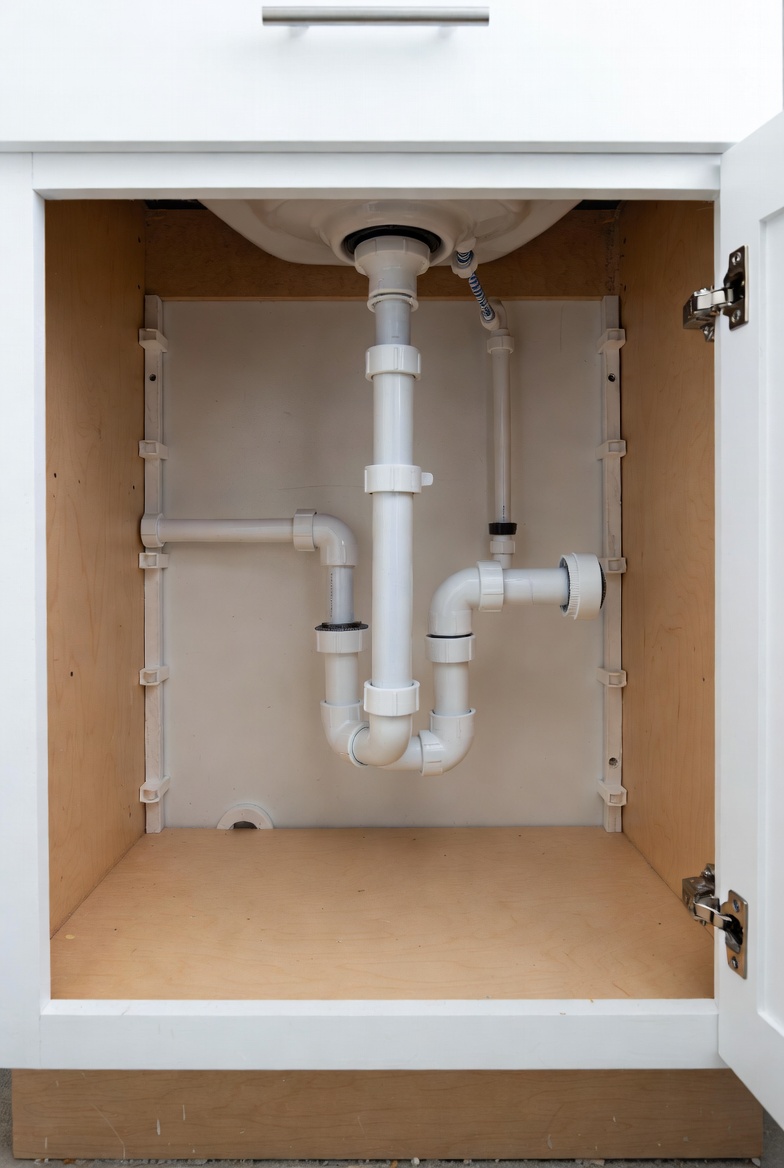
Quick Answer:
If a recent DIY drain or sink install now shows slow draining, gurgling, sewer smell, or leaks, the trap geometry may be incorrect. Stop using the fixture, document the setup with photos, measure the connections, and compare each connection point to a typical trap-and-vent diagram. If you can’t confirm the layout or you see multiple problems, call a plumber.
Why This Happens
- Incorrect trap orientation or connection points change how the trap holds water and how the drain vents air. Common mistakes include a reversed trap, a trap that sits too high, or a long, poorly sloped trap arm.
- Poor alignment or wrong fittings can cause leaks and let sewer gas past the trap seal.
- Missing or blocked vents make the trap siphon dry, which leads to odors and gurgling.
- Using the wrong trap type for the fixture or mixing pipe sizes can disrupt flow and trap function.
Step-by-Step What to Do
1. Stop using the fixture
- Shut off water to the fixture if you see active leaks. Avoid running water until you’ve checked the trap layout to prevent more leakage or siphoning.
2. Photograph everything
- Take clear photos from several angles: the trap under the fixture, the trap arm to the wall, the pipe where it enters the wall or floor, and any vent connections.
- Include close-ups of joints, slips nuts, and any irregular fittings.
3. Compare each connection to a typical diagram
- Lay your photos side by side with a simple trap-and-vent diagram and look for mismatches at each connection point: trap inlet, trap outlet, trap arm slope, and vent location.
- Photograph the setup and compare each connection point to a typical diagram to spot mismatches—note any reversed pieces, unexpected offsets, or unusual fittings.
4. Look for specific problems
- Check that the trap holds a few inches of water (the trap seal). If it drains out, it may be siphoning or installed incorrectly.
- Check alignment: the trap outlet should run nearly straight into the wall stub when possible; long, vertical drops before the trap outlet can cause issues.
- Listen for gurgling when you run water — that’s often a venting or trap-arm slope issue.
- Inspect for leaks at slip nuts and solvent-weld joints.
5. Take simple measurements
- Measure vertical distance from the fixture tailpiece to the trap inlet and the distance from the trap outlet to the wall stub. Note the trap seal depth (the visible water depth in the bend).
- Record any large offsets or unusual angles; these often explain poor performance.
6. Try a basic test
- With the pipes dry, pour about a quart of water into the drain while watching the trap area for leaks and listening for air sounds from vents or nearby drains.
- Do not disassemble glued joints unless you are certain you can reattach them correctly.
7. Match symptoms to likely faults
- Slow drain + pooling at trap: possible partial blockage or trap arm sag.
- Gurgling or sewer smell: venting problem or a trap seal that’s been compromised by wrong geometry.
- Visible sewer gas or continuous leaking: stop and call a pro.
- If you see a reversed trap or the outlet is rising above the inlet, that could indicate a P-trap installed backwards or a P-trap installed too high.
What Not to Do
- Do not assume DIY is fine if multiple symptoms appear—get a plumber if you can’t confirm proper layout.
- Do not use strong chemical drain cleaners to fix geometry or venting problems; they won’t correct installation errors and can harm pipes and seals.
- Do not cut or force-fit pipe pieces without proper fittings and measurements; that often makes leaks and alignment worse.
- Don’t remove vents or cap them temporarily to stop odors; that can create serious siphoning and safety issues.
When to Call a Professional
- Call a plumber if you cannot confirm that the trap and trap arm match typical layout, if you see sewer gas, or if leaks continue after tightening slip nuts.
- Get professional help for soldered, glued, or cast-iron joints you don’t know how to safely rework.
- Hire a licensed plumber if vents are missing, inaccessible, or require roof/attic work to inspect or fix.
Safety Notes
- Avoid working in confined spaces without ventilation. Sewer gas can be unpleasant and, in rare cases, hazardous.
- Turn off water at the shutoff valve before loosening slip nuts or disassembling trap parts.
- Wear gloves and eye protection when handling dirty pipes or residual water. Clean up spills promptly.
Common Homeowner Questions
- Can I fix a bad trap layout myself? Yes for minor alignment or slipped nuts, but call a plumber if you’re unsure about layout or venting.
- How long should a trap hold water? A trap should retain a few inches of water; if it’s emptying, that’s a sign of a problem.
- Is a small leak urgent? Yes—small leaks can damage cabinets and flooring and let sewer gas into the house, so address them quickly.