Quick Answer:
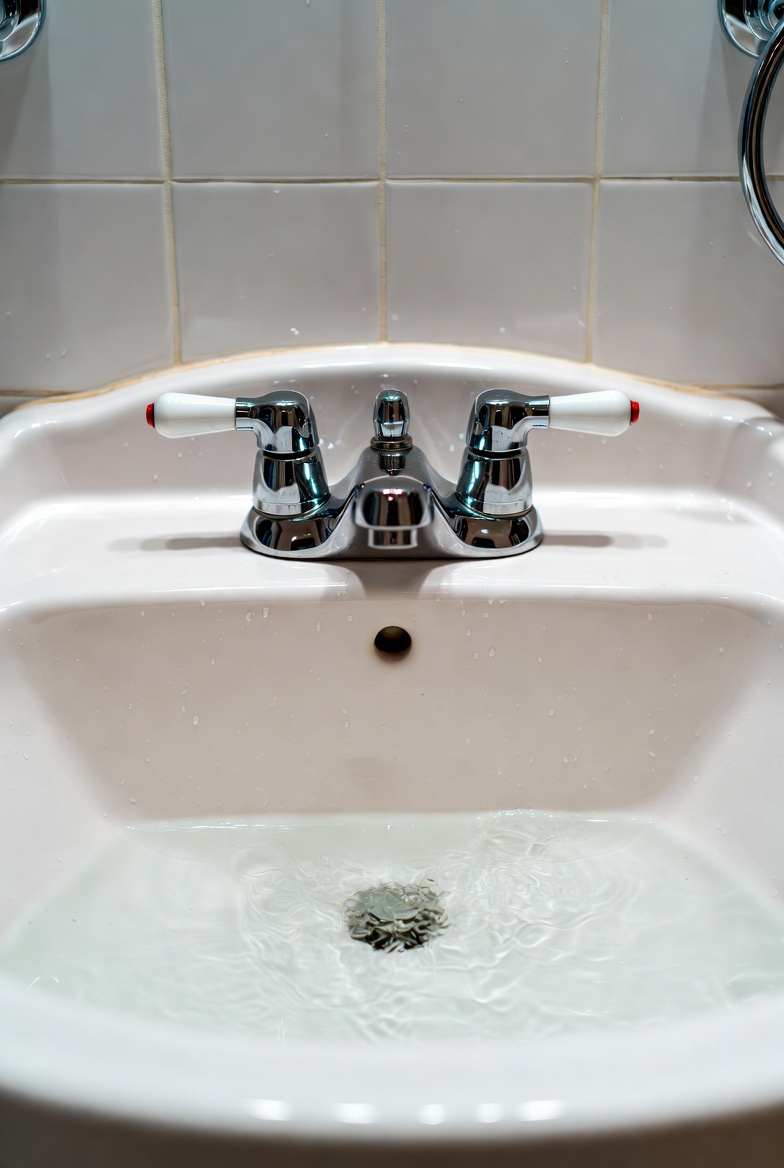
If you can see water standing in the bowl after waiting, it can be caused by a clog at the stopper or drain throat, a blocked or misinstalled trap, or a venting problem. Start by removing the stopper and checking the drain throat; many issues are there rather than in the trap itself. If water begins to back up into the overflow or into other fixtures, stop using the sink and move to safer steps or call a pro.
Why This Happens
Sinks normally hold a small amount of water in the P-trap as a seal against sewer gases. Standing water that does not clear after several minutes means the water cannot flow past a restriction. Common reasons:
- Debris caught at the drain throat or under the stopper.
- A clog inside the trap or trap arm.
- Incorrect trap orientation or trap too deep for the installation.
- Poor venting or a blocked vent stack so water drains slowly.
- Multiple fixtures tied into the same line with a downstream blockage.
If you recently worked on the plumbing yourself, see Trap problem after DIY install for common mistakes to check. If the trap always has standing water with no flow, the article Trap holds water constantly explains causes and checks to consider.
Step-by-Step What to Do
1. Wait and observe
- Turn on the faucet for a few seconds then let it run off. Note if water drains slowly, not at all, or backs up into the overflow.
- A slow but steady decline indicates a partial clog or venting issue; no change suggests a more solid blockage.
2. Remove the stopper and check the drain throat
- Remove the stopper and verify the restriction is not at the drain throat before blaming the trap. Hair and gunk often collect here and are easy to clear with a gloved hand or a small tool.
3. Test with water and other fixtures
- Run water again with the stopper out. If it clears, the stopper was the issue.
- Check nearby fixtures (other sinks, shower, toilet) to see if they drain normally. Problems across multiple fixtures suggest a main drain or vent issue.
4. Clean the P-trap safely
- Place a bucket under the trap. Loosen the slip nuts and remove the trap to inspect for obstructions.
- Clear any blockages, rinse the trap, and reassemble. Tighten by hand then give a gentle additional turn — do not over-tighten plastic nuts.
5. Check trap alignment and slope
- Look at the trap arm slope to the wall drain: it should drop slightly toward the wall (about 1/4″ per foot). Excessive sag or a trap sitting at the wrong angle can trap water.
6. If you cleared the trap but problem remains
- If clearing the stopper and trap didn’t fix it, the restriction may be further down the drain or in the vent. Avoid forcing chemical cleaners — see next sections for safe steps.
What Not to Do
- Do not keep using the sink if standing water persists and begins to back up into the overflow.
- Do not pour large amounts of caustic drain cleaner into a partially blocked sink; it can damage pipes and create hazardous fumes.
- Do not force fittings or overtighten slip nuts — you can crack plastic traps or strip threads.
- Do not attempt to access a roof vent or climb onto the roof unless you are trained and have proper safety gear.
When to Call a Professional
- Water still stands after you remove the stopper and clear the trap, or clearing the trap leads to water backing into other fixtures.
- Strong sewage smell, multiple fixtures affected, or recurring clogs — these suggest a main-line or vent problem.
- Leaks you can’t stop, corroded or damaged piping, or if you’re uncomfortable disassembling the trap.
Safety Notes
- Wear gloves and eye protection when handling dirty traps and debris.
- Keep a bucket and towels handy to catch water and avoid slips from spilled water.
- If you suspect sewage backup, stop using water in the house and call a professional — sewage contains pathogens and can be hazardous.
Common Homeowner Questions
- Q: Will a P-trap ever clear itself if left alone?
A: Minor slow drainage can sometimes clear, but persistent standing water usually won’t clear without intervention. - Q: Is it safe to use a plunger on a sink with a P-trap?
A: Yes, a sink plunger can help for minor clogs; block the overflow first and plunge gently to avoid splashing. - Q: Can poor venting make my sink hold water even with a clean trap?
A: Yes, blocked or inadequate venting can slow drainage and mimic a clog; a plumber can test vent function.