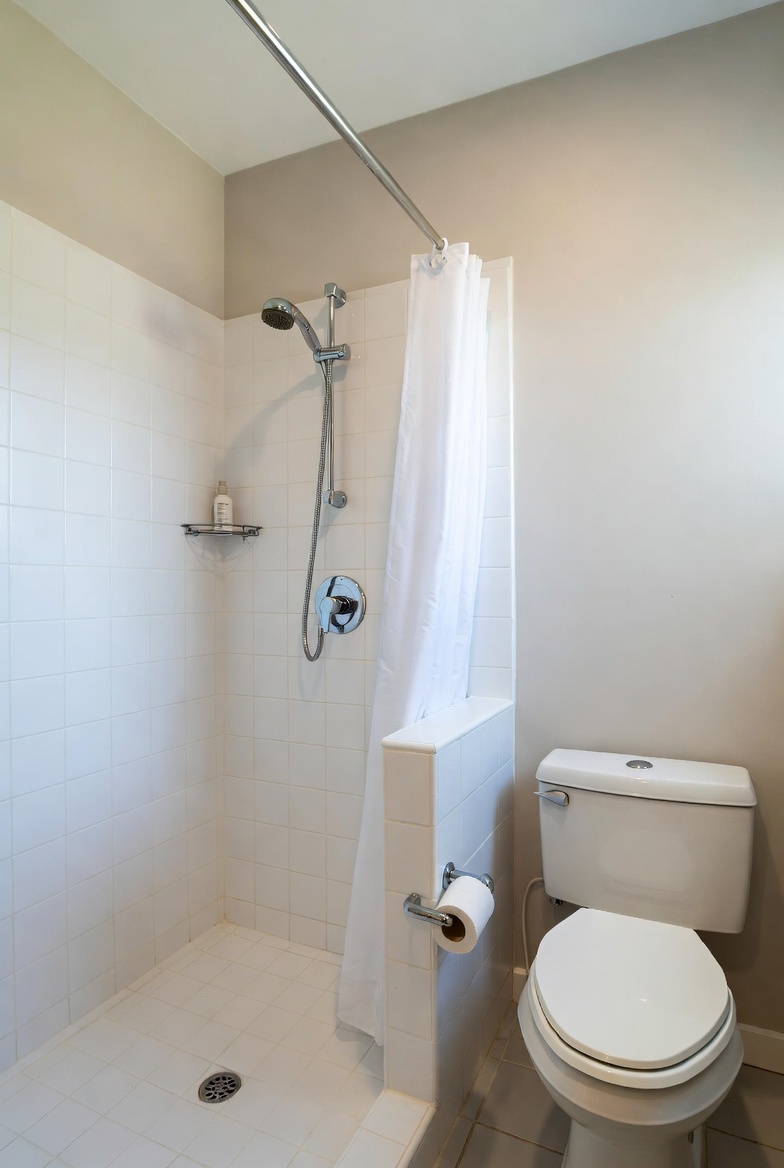
For running noticed during other fixture use, retain the actual concurrent demand and tank state. A potable pressure dip does not directly lift a flapper in an ordinary atmospheric cistern.
Control an active problem first
For external leakage, a high/rising bowl, sewage return, a crack or uncontrolled filling, stop affected use and get prompt help. Control incoming water only with an identified owner valve reached safely, without force; otherwise contact the provider. Keep away from wet electrical equipment. Do not flush again, enter water to reach controls or operate required shared/fire services. Supply closure does not stop every wastewater source.
Keep the original evidence
- Which fixture was actually drawing supply, its ordinary phase and the toilet’s prior level/shutoff.
- Actual fill/flush models, recent device work and wider symptoms already observed.
Distinguish the operating pattern
Identify an ordinary gravity cistern versus a pressure-assisted or powered/direct-feed toilet. Their service methods differ. Handle only a normal removable ceramic lid safely and set it securely on a protected stable surface. Record whether filling never stops, stops then restarts, or takes longer but eventually stops; sound alone does not identify the failed part.
Demand timing needs a mechanism
Concurrent supply use can affect available inlet conditions. Tank outlet loss, float/lever geometry and fill-valve response remain different paths. An appliance running is not always drawing potable water. Do not run sink or tub challenges repeatedly to select a sensitive diaphragm or marginal flapper theory.
Do not tighten fittings to change sensing
A loose or leaking connector needs its actual component assessment and isolated service method. Generic tightening or reseating to change how the valve senses pressure is not a diagnosis. Preserve the kit/manual route, source-off replacement and electrical maker precautions; a local water closure alone does not establish electrical safety.
Match the actual mechanism
Use the actual model’s waterline, float/lever settings, tube support and compatible parts. A clip and a designed canister port can differ; a submerged refill end can cause tank loss. Do not cut an overflow, force plastic or pry out an unidentified screen.
Safe service and return to use
For hands-on adjustment, cleaning or replacement, use the installed product’s owner-service procedure: independently isolate the actual supply and required energy, release retained pressure by its controlled method and verify the worked segment unloaded before opening it. A drained gravity tank or remote tap does not prove every hose/vessel safe. Keep water off before access and refit; reassemble and lock the correct compatible parts before controlled restoration. Use the specified tools and torque for each connector, shank and nut, rather than a universal extra wrench turn. Stop for seized controls, damaged porcelain, corrosion, failed isolation or uncertain access.
Use only compatible cleaning and the actual product label. Do not mix cleaners or assume a rinse clears retained chemicals; a cheap part or age interval does not identify failure.
After actual correction, safe source conditions, complete assembly and a known accepting receiver, restore the identified valve by its own design and observe joints/refill/shutoff. Stop for leaks or abnormal behavior. Persistent or recurring trouble needs assessment without an overnight wait, repeated failure test or successive guessed replacements.
Related situations
- Toilet runs after installing smart shutoff
- Toilet runs after replacing fill valve
- Toilet keeps running after flush