Quick Answer:
If you hear a full flush with no one present, the most likely cause is a leaking flapper or a fill-valve issue that lets tank water run into the bowl. A simple dye test in the tank will help confirm the flapper problem: add dye and watch the bowl — immediate color in the bowl confirms the flapper is leaking.
Why This Happens
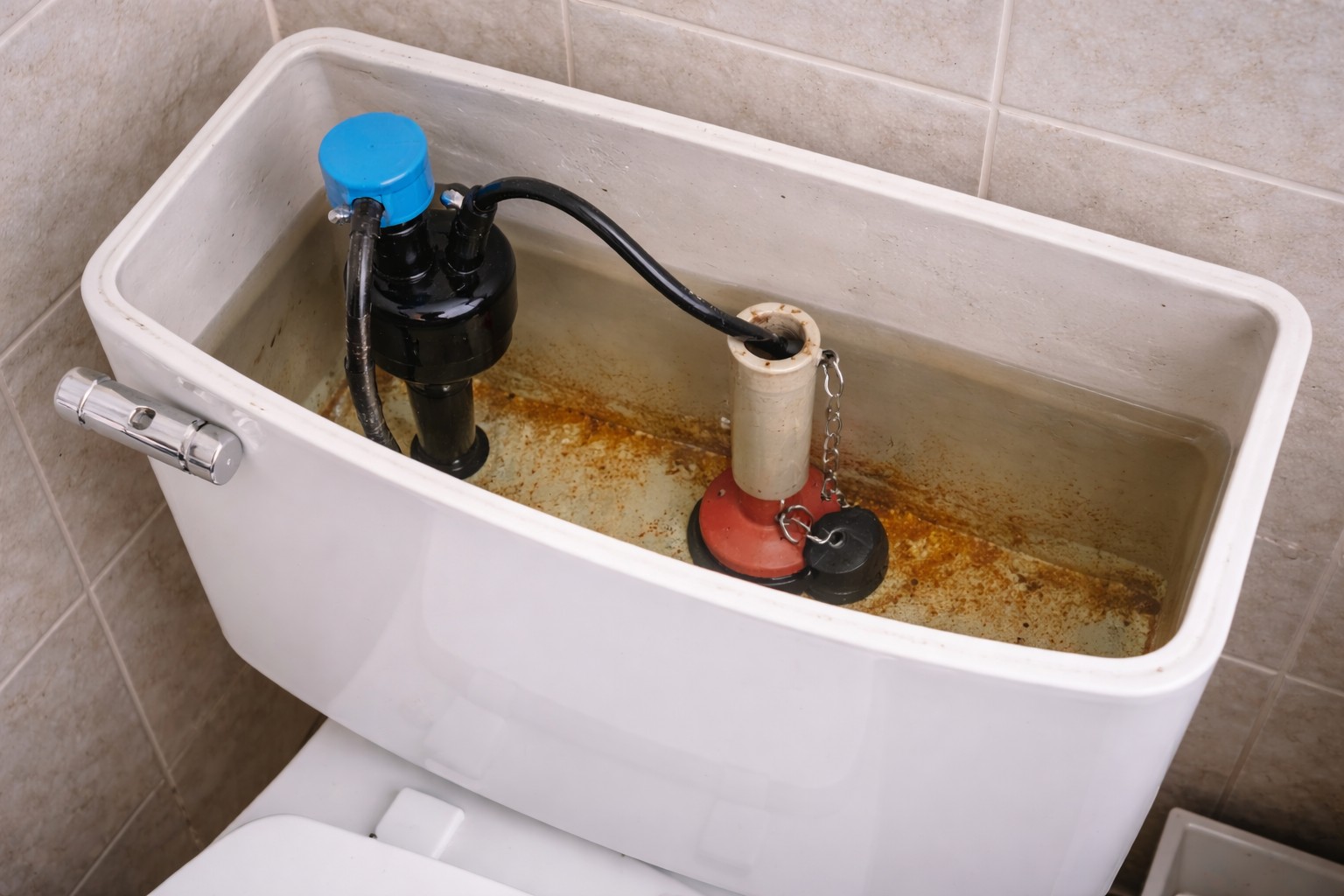
- Flapper wear or warping: rubber flappers become hard or misshapen and fail to seal, letting water siphon slowly or suddenly into the bowl.
- Chain or handle problems: a chain that’s too short or tangled can lift the flapper slightly, causing intermittent flushes.
- Fill valve or overflow issues: a faulty fill valve can cause the tank to top off unexpectedly, or water can run into the overflow tube and trigger a refill. See Random tank refilling for a deeper look at that behavior.
- Pressure or plumbing pulses: occasional pressure changes can create a suction effect, producing what people call Phantom flushes at night.
Step-by-Step What to Do
1. Listen and observe
- Note when the sound happens (night, after use, randomly). This helps narrow the cause.
- If the toilet is near a bedroom, try to reproduce the timing by standing quietly when you expect it to happen.
2. Perform the dye test
- Turn off the toilet’s water supply at the shutoff valve (usually behind the toilet) and flush to empty the tank.
- With the tank refilled, add a few drops of food coloring or a dye tablet to the tank water. Do not flush.
- Watch the bowl for several minutes. If color appears immediately or within a few minutes, the flapper is failing and tank water is leaking into the bowl.
3. Inspect the flapper and chain
- Check the flapper for cracks, stiffness, or mineral buildup. Clean the valve seat and flapper with a soft cloth if dirty.
- Make sure the chain has about 1/2 inch of slack; not so tight that it lifts the flapper, not so loose that it gets under the flapper.
4. Check the fill valve and overflow
- If the dye test doesn’t show a leak but the tank refills randomly, look at the fill valve height and the overflow tube level. Water entering the overflow tube means the fill valve or float needs adjustment.
5. Apply temporary fixes and test
- For a confirmed flapper leak, you can temporarily stop water waste by turning off the shutoff valve until you replace the flapper. Replacement flappers are inexpensive and simple to install for most homeowners.
- After any adjustment or replacement, run the dye test again to confirm the repair.
6. Monitor for recurrence
- Keep an eye on the toilet for a day or two after repair. If the issue returns, document timing and any noises to share with a pro.
What Not to Do
- Don’t keep flushing the toilet repeatedly to “prove” the leak—this wastes water and may mask intermittent behavior.
- Don’t ignore the problem if it persists—don’t wait too long to contact a professional plumber if you can’t stop the leak or identify the cause.
- Don’t use harsh sealants or DIY adhesives on the valve seat unless the product is specifically made for toilet flappers; they can cause more problems.
When to Call a Professional
- The dye test shows a leak but replacing or adjusting the flapper doesn’t help.
- You have continuous running water that doesn’t stop when you close the shutoff valve, or the shutoff valve leaks.
- Water bills spike or the toilet cycles frequently even after basic repairs.
- You’re unsure about working inside the tank or the fix requires parts or tools you don’t have.
Safety Notes
- Turn off the water supply at the shutoff valve before doing most repairs to avoid wasting water or causing overflow.
- Use gloves if you reach into the tank; tank water is not treated and may contain bacteria or debris.
- Don’t use power tools inside the tank or around porcelain unless you’re experienced; you can crack the tank or damage parts.
Common Homeowner Questions
- Is the dye safe for my toilet? Yes—food coloring or commercial tank dye is safe and won’t harm the porcelain or plumbing.
- Can I fix a flapper myself? Often yes; most home fixes are replacing the flapper or adjusting the chain, both basic DIY tasks.
- How long does a flapper usually last? Typical flapper life is a few years; hard water and chemicals can shorten it.