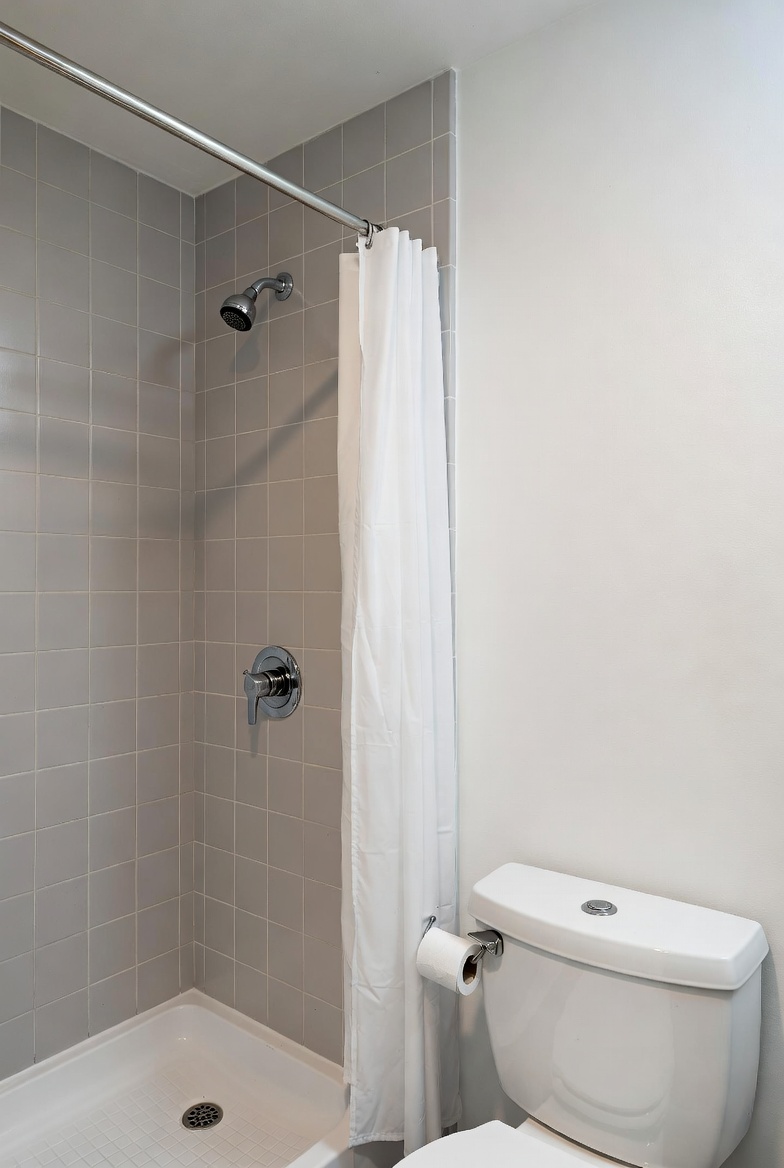
Toilet bubbling during a bathtub discharge needs the original water amount, rate and bowl behavior recorded. Do not fill and dump the tub again to establish vent competition or repeat a full drain after plunging.
For strong, widespread or unexplained gas-like fumes, exposure symptoms, or suspected high sewer-gas concentrations in an enclosed space, leave the building immediately and call the fire department or emergency services from outside. Avoid flames, switches and other ignition sources; do not remain to ventilate, sniff drains or investigate. Smell intensity does not measure the concentration. A faint localized drain odor without those warning signs calls for a different plumbing investigation; it does not automatically establish a fuel-gas leak.
If fuel gas is suspected, leave the building or affected area immediately. Do not operate valves, switches, plugs, appliances or phones there. Call the gas emergency service from a safe location well away, and wait for responders’ clearance.
A new sound alone does not establish an active backup. Distinguish normal motion during the toilet’s own flush, supply/tank-refill noise and a rested bowl reacting to another discharge. Record what already happened; do not create a larger load to strengthen the effect.
Record the original event
- Whether the tub was draining a retained volume or receiving an ordinary running shower.
- Original approximate amount, stopper position, toilet level change and other known effects.
- Recent work, recurring events and exact products used in either fixture.
What the pattern can tell you
Tub discharge can expose a relevant shared condition, but bubbles alone do not measure suction/positive pressure or identify the obstruction. A reduced response after a local tool attempt does not prove a local clog was the only cause or the whole path is clear.
What to do next
For wastewater rising from a drain or affecting several fixtures, stop adding water and keep affected appliances from discharging using only safely accessible dry controls when no gas emergency is suspected. Avoid sewage contact, keep children and pets away and arrange prompt drainage help. Notify building management or the sewer agency as appropriate. Do not run fixtures to locate a shared blockage.
- Keep added input off. If water is already retained in a tub while a backup is unresolved, obtain suitable removal guidance rather than releasing it as another test.
- Do not plunge or snake the tub to diagnose toilet venting. An actual ordinary isolated tub restriction is a separate task with model, residue and receiving controls.
- Use existing work/inspection information without opening a cleanout, removing a trap or climbing to a vent.
- Request assessment for recurrence or new drainage changes using the actual original volume and symptoms. Do not demand excavation or roof clearing based on the tub-trigger label.
If a cleaner may be present, identify the exact product and follow its label. Do not add another cleaner, acid, bleach, ammonia, vinegar or an improvised neutralizer. Do not plunge, snake or open the trap while hazardous residue may remain; tell the provider what was used. A rinse or elapsed time is not proof all residue is gone.
Keep cleanout caps closed. Do not loosen a cap to check a water level, watch a basin dump or release pressure; sewage and gas may escape. Do not climb to vents, enter pits or tanks, or use a flame to investigate an odor. Those checks need the appropriate qualified provider and controls.
If bubbling stops after snaking the tub, is the shared system proved clear?
No. It is one changed result under those conditions. Describe what was actually removed and the controlled outcome; do not generate another full-volume test.
For recurrent or worsening gurgling, unexplained seal loss, leakage or uncertain source, request appropriate plumbing assessment using the original record. Ask what findings support local clearing, vent work or wider inspection; a camera name alone does not guarantee every defect, location or repair will be established.
Related guides
- Gurgling only at night
- Toilet gurgles after remodel
- Toilet gurgling: event and related-guide directory
Safety sources
- Wisconsin DHS: sewer-gas exposure and emergencies
- Con Edison: suspected gas leaks
- Madison Metropolitan Sewerage District: stop discharge and report sewer backup
- Example drain-opener label: restrictions on plunging, disposal operation and mixing
- Korky: conventional toilet supply, fill and flush functions