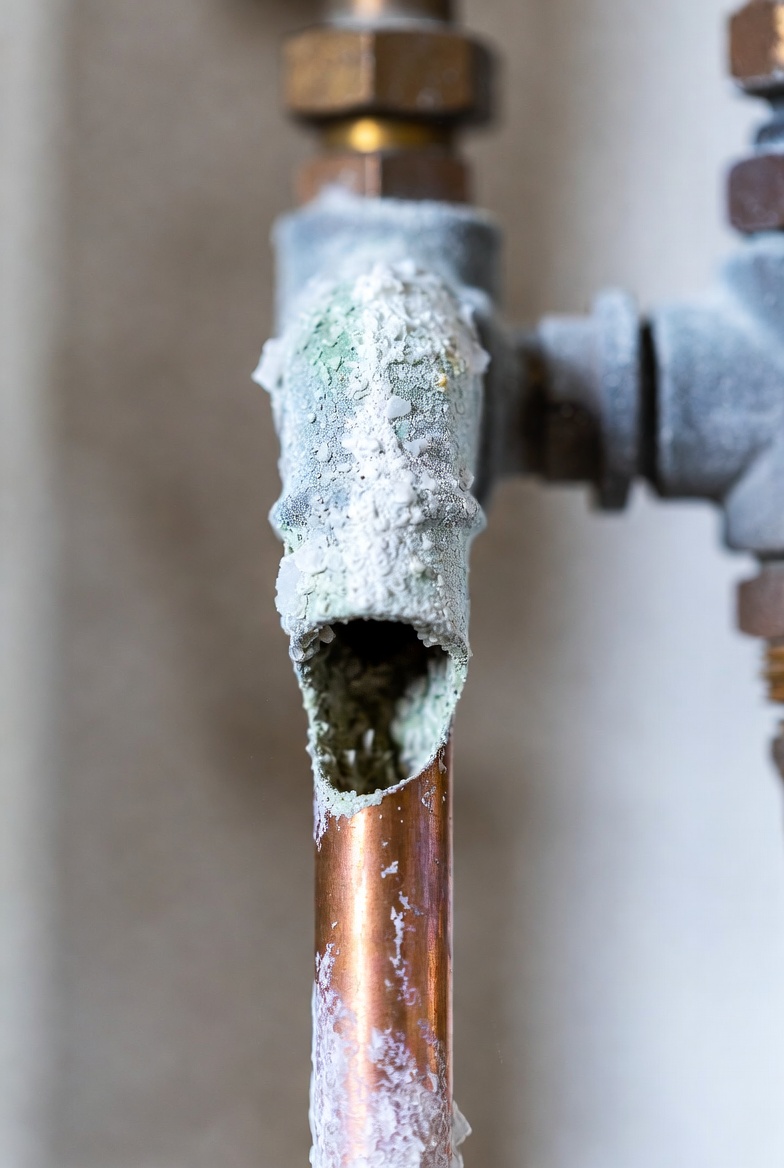
A weaker hot-end shower flow and a stronger sink flow are not direct pressure measurements at the shower inlets. Identify the actual mixer and pipe route before concluding the restriction is local.
Stop unsafe exposure first
For unexpected hot surges or unpredictable temperature, move out of the spray and stop bathing. Stop flow only from a safely reachable control without crossing dangerous water or risking a fall. Keep the shower out of bathing use until assessed and restored. A lower starting setting or separate appliance schedule does not certify protection.
For suspected fuel gas, leave without operating valves, switches, appliances or phones in the affected area. Call the gas emergency service from well away and wait for clearance. A CO alarm or suspected CO exposure requires everyone outside and an emergency call from safety. Do not restart equipment to investigate. Stay away from wet or damaged electrical equipment.
Useful details already available
- Original hot-end setting, actual rate or temperature readings already available, and their outlet/time.
- Known stop/connector layout, actual control model, safe visible damage and recent work.
A cup-and-clock check measures flow
A securely arranged volume/time observation can measure rate under its conditions; feel does not measure pressure. A hot-end mixed outlet is not necessarily an isolated hot-feed test. Some named pressure-balancing valves require pressure on both feeds, so closing one is not a generic diagnostic method. Another outlet’s stronger flow does not by itself clear the heater.
Accessible flexible piping still needs safe service
Not every shower has a flexible supply connector. Do not pull, unkink or replace a loaded hot line just because it is accessible. Identify the approved material and connection, isolate its feeds, cool and release local pressure, then use compatible sound refit and commissioning. Opening a nearby tap may not release every trapped section.
Use safe test settings and the actual maker procedure
Do not force the handle hotter, guess an open-port flush or lower the heater to a universal 120°F test setting. A maker-approved controlled flush may be appropriate with actual preparation and re-isolation before further access. Required retention and temperature-limit parts must be restored before bathing.
Conditions for any further test
Further diagnostic runs need the actual model’s method, sound retained assembly, an accepting drain or secured receiver, and a safely reachable control. Keep everyone out of the spray. Measure delivery with a suitable thermometer positioned without skin exposure; a display, pipe touch or hand check cannot measure an unstable event. Stop for unsafe temperature, leaks or backup. If that setup is unavailable, arrange qualified testing. An ordinary pre-bathing check differs from deliberate exposure to known instability.
If internal service is actually needed
Internal work needs the exact model, isolation of all connected hot/cold feeds, cooling, and controlled local pressure release and verification before opening. A closed shower handle or unrelated open sink is insufficient. Use approved compatible tools, parts, cleaner and lubricant. Complete seals, orientation and secure retention before restoration. Restore the required handle, trim and limit parts, then verify the maker’s cold-first and delivered-temperature requirements before bathing. Re-isolate and release pressure again before reopening after a test.
Review the result before bathing
Ask what the evidence established, what was repaired and how the actual delivered temperature, protection and leak-free return to use were verified. A quieter schedule, one steady run or a new part does not establish every operating condition.
Related observations
- Temperature Unstable After Valve Replacement: First Checks
- Hot Water Fades Then Returns: Storage and First Response
- Temperature Swings During Shower Use
Safety sources
- Con Edison: suspected gas leaks
- CDC: carbon monoxide alarms and wet electrical devices
- Delta 13/14 example: installation, temperature limits and maintenance
- Rinnai RU-series example: minimum flow, temperature and performance conditions
- Moen PosiTemp/Moentrol examples: pressure balancing and both connected supplies