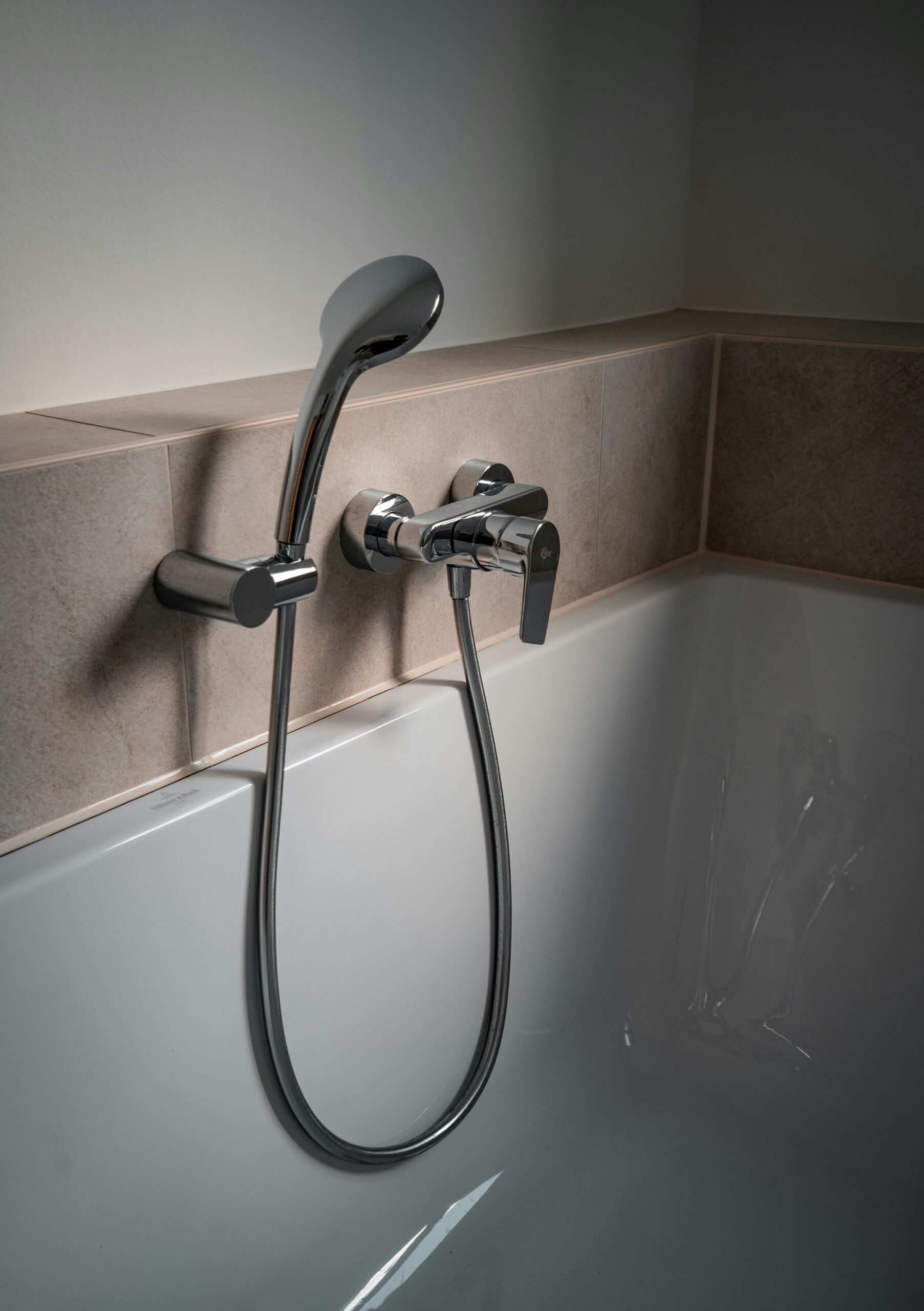
A shower losing delivery or changing temperature suddenly needs safe bathing stopped before comparisons. Do not keep a person under the shower while another outlet or toilet is operated to prove the scope.
Safe first response
If fuel gas is suspected, leave the building or affected area immediately. Do not operate valves, switches, plugs, appliances or phones there. Call the gas emergency service from a safe location well away, and wait for responders’ clearance.
Keep away from wet electrical equipment. Do not touch wet appliances, plugs or switches, or enter water to reach a breaker. When no gas leak is suspected, power may be isolated only from a safely accessible dry location; otherwise call an electrician or emergency help. Wet equipment needs qualified assessment before it is used again.
For uncontrolled leakage or immediate danger, use a separate known safely accessible permitted owner control without force or obtain urgent supplier/plumber help. Keep out of potentially energized water regardless of footwear; never enter it to reach a valve or breaker. Any electrical isolation needs a safely accessible dry approach. Do not operate supplier, shared, fire or unknown controls by guesswork.
Record what is already known
- Original shower setting, delivery/temperature change and any other ordinary use already known.
- Existing affected outlet scope, actual fixture/heater/control models and work record.
- Supplier/device alerts or actual valid measurements already recorded.
What the pattern establishes
Another fixture weakening during the same event makes a shared condition relevant but does not exclude a local shower problem. A coincident toilet fill is demand timing, not a unique cause or system-wide certificate. A flow comparison is not a pressure measurement.
What to do next
- Avoid the affected shower until unstable or unexpected temperature/delivery is assessed. Do not test with a hand, use a bather or create simultaneous appliance/fixture demand.
- Do not attach a gauge quickly during the incident or reopen outlets to chase a transient. Keep the original safe record for the provider.
- Leave temperature, treatment, backflow and automatic protection effective; do not adjust or bypass them as a flow experiment.
- Have actual supply/demand, relevant gauge points and shower/model protection assessed before replacing a cartridge, filter or regulator.
- Treat leakage, severe supply change or uncontrolled temperature promptly. Broader supplier concerns and a local fixture problem can coexist.
Before intrusive service
Before any internal service or fitting removal, identify and isolate every supply that can pressurize the section, release trapped pressure through the appropriate controlled outlet and verify depressurization. Account for hot water and possible alternate feeds. Lowering a PRV setting, reducing flow or wearing gloves does not make a pressurized assembly safe to open. If isolation cannot be established, leave it assembled and obtain qualified help.
Identify every actual feed, the model and its pressure/energy/temperature conditions before a retained part is opened. A main cannot isolate its own supply-side connection; a mixer can have both hot and cold feeds. Keep effective isolation during work, fully secure compatible rated parts before controlled restoration, and use the actual commissioning/leak/function checks. A service flush needs a relevant secured path and accepting discharge, never an exposed supply aimed at a bucket.
Actual equipment restart
Heater work needs its actual safe energy isolation, cooling, all-feed pressure method and commissioning. Do not substitute a generic gas-pilot position or use a safety relief as a convenient test outlet. An electric storage tank that was drained/opened needs verified full fill and the required air purge before energy. A pump, tankless or recirculation installation needs its own procedure.
Will a nearby sink test while the shower is failing settle the cause?
It changes the demand and may affect temperature. Stop unsafe bathing and use original observations plus appropriate controlled qualified assessment instead.
Related guides
- No water at any fixture suddenly
- Water off only on cold or hot side
- Pressure slowly builds then collapses
- Pressure Fluctuates Only on Hot Water
- Whole-House Water Supply Interruption
Safety sources
- CDC: electrical hazards near water
- Watts 25AUB example: regulator service, pressure measurement and limitations
- Con Edison: suspected gas leaks
- Example electric-heater manual: filling and maintenance requirements
- A. O. Smith: water-heater maintenance and refill before restart
- Watts: LF1170/LFL1170 master tempering-valve instructions and limits
- EPA: cross-connections and maintaining appropriate protection