Quick Answer:
If the sink slowly loses water with the stopper down, the likely causes are a worn or misaligned seal in the stopper assembly or a loose connection at the drain. Start by drying the area under the sink, watching where water appears, and testing the stopper after simple adjustments. If repairs feel beyond your comfort level, call a plumber.
Why This Happens
- Worn or compressed rubber gasket under the stopper fails to seal properly.
- Debris or hair prevents the stopper from seating fully, letting water escape around it.
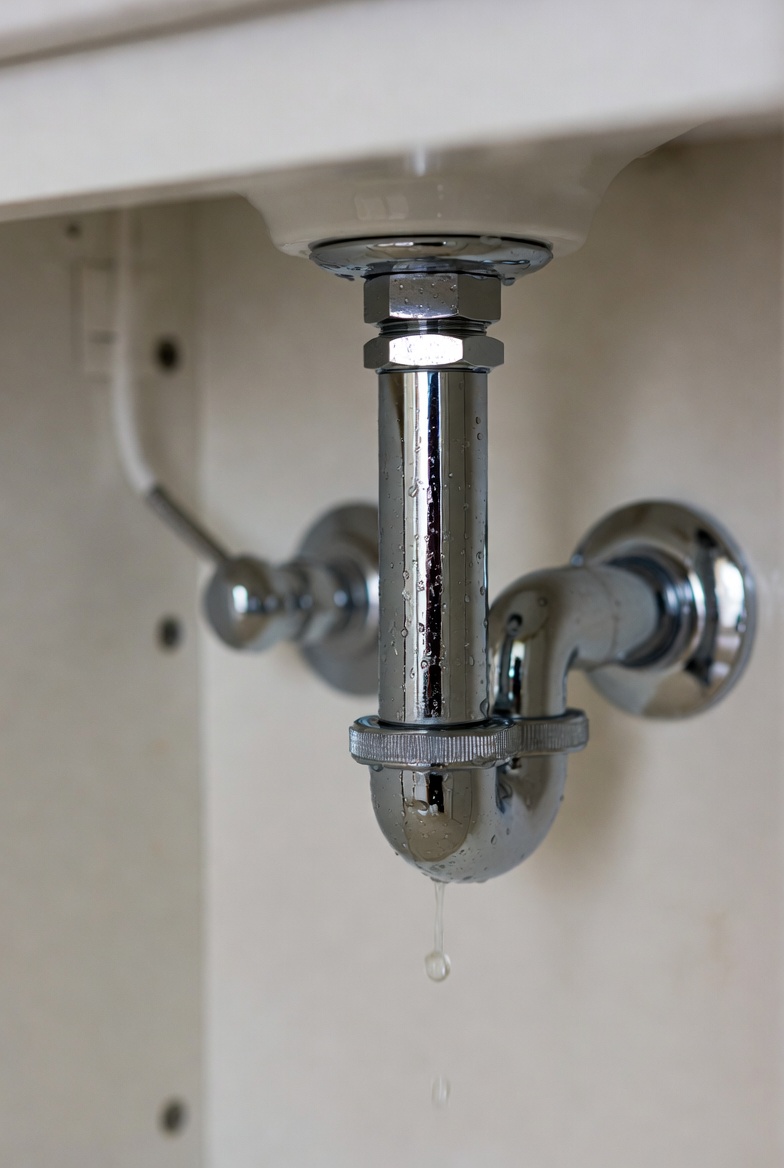
- Loose slip nut or corroded tailpiece allows water to leak at the connection points.
- Misaligned linkage or pivot rod keeps the stopper slightly open even when it looks closed. For linkage problems, see Pop-up moves but drain stays closed.
- A stopper that sits unevenly or is the wrong type for the drain may slow drainage and let water escape; check guidance under Stopper blocks drain partially.
Step-by-Step What to Do
Prepare the area
- Clear under-sink cabinets so you can work and see the drain parts.
- Place a shallow container under the drain to catch any drips.
- Turn off the sink’s water supply if you plan to disconnect plumbing components (optional but safer).
Dry and observe
- Wipe the tailpiece, slip nuts and drain body dry with a towel.
- Dry the area and watch for drips at the tailpiece and drain body.
- Fill the sink, close the stopper, then watch under the sink while the water sits to see exactly where moisture appears.
Check the external connections
- Look for a loose slip nut where the tailpiece meets the trap. Lightly hand-tighten it and re-test. Avoid overtightening metal nuts.
- Inspect the tailpiece and trap for cracks or corrosion. Replace any damaged parts.
Inspect and clean the stopper
- Remove the stopper according to your sink type (release pivot rod or pull out pop-up assembly).
- Clean off any hair, soap scum, or mineral deposits from the stopper and the seat inside the drain.
- Examine the rubber gasket; if it’s flattened, cracked, or missing, replace it and reassemble.
Test and adjust linkage
- Reinstall the stopper and operate the pop-up lever. Make small adjustments to the pivot rod so the stopper seats fully.
- Fill the sink again and watch under the sink to confirm the leak is fixed.
Replace worn parts if needed
- If cleaning and adjustments don’t stop the leak, replace the stopper gasket or the entire pop-up assembly. These are common, inexpensive parts.
- If the tailpiece or drain body is damaged, replace the part rather than trying a temporary patch.
What Not to Do
- Do not ignore steady dripping under the sink—place a container and monitor.
- Do not overtighten plastic slip nuts; you can crack fittings or strip threads.
- Do not apply permanent adhesives or sealants to moving stopper parts; that will stop proper function and make future repairs harder.
- Do not use strong chemical drain cleaners to try to fix a sealing problem—those won’t help a mechanical leak and can damage seals.
When to Call a Professional
- If you can’t find the leak source after drying and observing the tailpiece and drain body.
- If leaks persist after replacing gaskets and tightening connections.
- If there is visible water damage, mold, or active leaks into cabinetry or flooring.
- If the drain or tailpiece is corroded or cracked and you’re not comfortable replacing it yourself.
Safety Notes
- Turn off the water supply before disconnecting plumbing to limit spills.
- Place a towel or plastic sheet to protect cabinet surfaces and catch small parts.
- Wear gloves when handling old gaskets or corroded metal to avoid cuts or contact with contaminants.
- Avoid electrical hazards: move any plugged-in appliances away from the work area and do not touch electrical cords with wet hands.
Common Homeowner Questions
- Q: Why is water still leaking even when the stopper looks closed?
A: Small gaps from a worn gasket, debris, or misaligned linkage can let water pass even when the stopper appears closed. - Q: Can I fix this myself?
A: Often yes—cleaning, replacing a gasket, or tightening a slip nut will stop most leaks if you’re comfortable with basic tools. - Q: How urgent is this to fix?
A: Moderate urgency: place a container under the leak and monitor. Fix soon to avoid water damage and mold. If damage is present, call a professional.