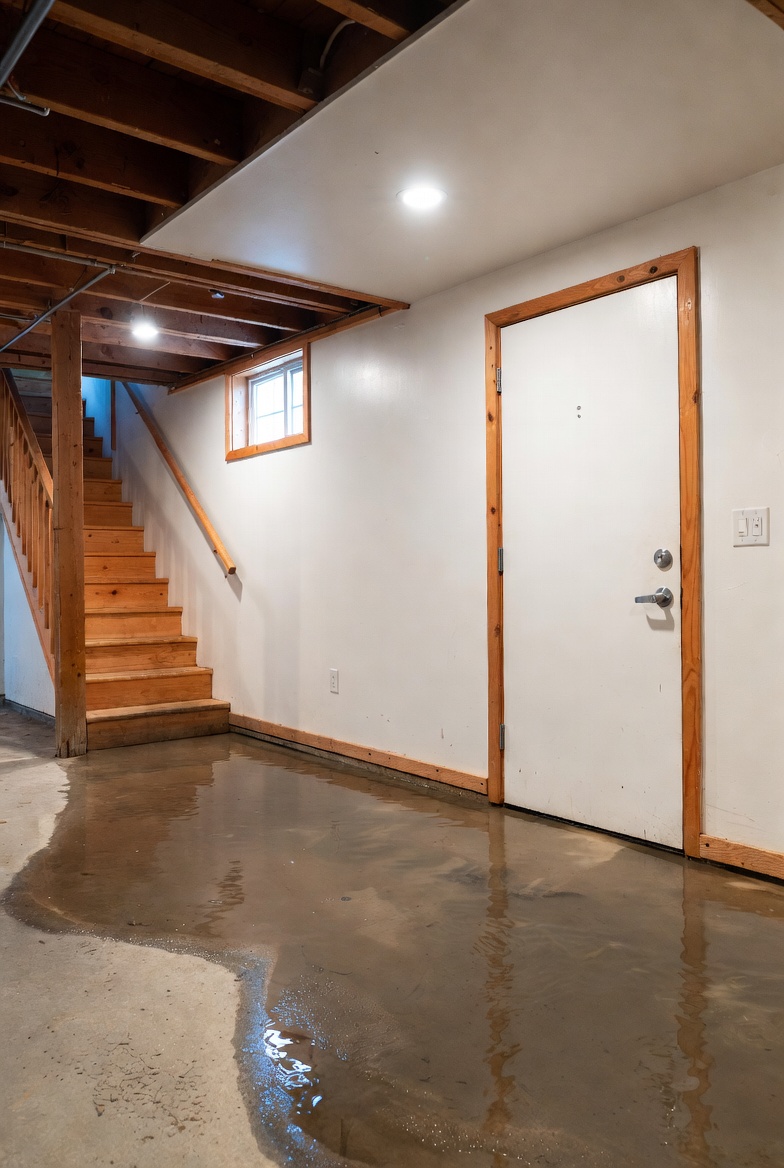
Quick Answer:
If you see standing water only while the washer is draining, the washer’s discharge is likely overwhelming a restricted or undersized drain path rather than a constant leak. Start calmly: Run the washer on a short drain cycle while watching the floor drain to see whether water enters and leaves the drain quickly, then check hose position, the floor drain trap, and the downstream cleanout for signs of overflow.
Why This Happens
Washing machines move water quickly during the drain portion of a cycle. If the floor drain, standpipe or sewer line can’t accept that sudden surge, water will pool on the floor until the flow slows. Common causes are a partially obstructed trap or line, a standpipe that’s too short or badly positioned hose, or a downstream restriction that only shows up at peak flow. Remodeling changes, slow-moving debris, and older pipes that are partially collapsed can make the problem worse.
If you’ve seen persistent ponding unrelated to washer cycles, it’s useful to read about Water never moves in floor drain for other causes and fixes.
Step-by-Step What to Do
1) Prepare and observe
- Clear the area around the floor drain so you can see the grate and nearby cleanout(s).
- Run the washer on a short drain cycle while watching the floor drain. Note whether water pours into the drain and disappears, pools briefly, or backs up immediately.
2) Check the washer drain hose and standpipe
- Ensure the washer drain hose is properly positioned and not inserted too far into the standpipe. The hose should sit just inside the standpipe opening so air can enter and allow smooth flow.
- If the hose is shoved deep into the standpipe it can trap air and slow drainage or force water into the wrong place. Pull it back to a proper position and retest with a short drain cycle.
3) Inspect the floor drain trap
- Remove the grate and use a flashlight to look into the trap. Check for visible debris that might cause a partial obstruction—lint, detergent residue, or small objects can slow heavy discharge.
- Do not reach deep into a drain with bare hands. Use a plumbing snake or a high-pressure garden hose flush (if safe and practical) to clear the trap. Retest with a drain cycle.
4) Temporarily reroute to a utility sink
- Temporarily pipe the washer into a utility sink to test whether flow clears the service line. Place the washer hose into the sink and run a drain cycle; if the sink handles the flow without backup it points toward a problem in the floor drain or downstream line.
- Be ready to stop the washer if the sink begins to back up.
5) Observe downstream cleanout for overflow
- Locate the downstream cleanout and watch it while you run a drain cycle. If water or waste appears at the cleanout, the issue is beyond the floor drain and in the sewer or mainline.
- Document what you see — photos or notes will help a plumber diagnose the problem if you end up calling one.
6) What to try next if the flow is still slow
- Try a mechanical snake to clear the trap and the first few feet of line. If you can clear visible lint and the flow improves, retest the washer cycle.
- If you can’t clear the restriction or if the problem recurs, plan to contact a professional for a deeper inspection or line cleaning.
What Not to Do
- Avoid stuffing the washer hose deeper into the standpipe to force faster flow — this can trap air, create siphoning problems, or push water into places it shouldn’t go.
- Don’t delay calling a professional when washer discharge causes sewage overflow, multiple appliances back up at once, or when rerouting plumbing is needed to handle peak flow — those are signs of a more serious blockage or undersized plumbing.
When to Call a Professional
- Call a plumber if you observe sewage or greasy water backing up (not just clear rinse water), or if the downstream cleanout overflows during a test.
- Contact a pro when the same issue affects other drains or appliances, when you can’t clear the line with safe basic tools, or when rerouting or upsizing the drain/standpipe is required to handle the washer’s peak flow.
- A professional can perform a camera inspection, clear deep clogs, and advise on proper standpipe height and drain sizing.
Safety Notes
- Sewage and standing wastewater can contain harmful bacteria. Wear disposable gloves and eye protection if you handle contaminated water.
- Turn off the washer and power to the appliance if water is pooling around electrical outlets or the machine itself.
- Do not mix chemical drain cleaners with other products, and avoid pouring strong chemicals into floor drains where they may splash or create fumes. Many clogs respond better to mechanical cleaning or professional treatment.
- If you’re uncomfortable or uncertain at any step, stop and call a licensed plumber.
Common Homeowner Questions
- Why does water only pool when the washer runs?
Because the washer discharges a large volume quickly; if the drain or downstream line can’t accept that surge, water will temporarily pond. - Can lint from the washer cause this?
Yes — lint and soap residue commonly collect in traps and standpipes and slow heavy discharge. - Will running hot water help clear the blockage?
Sometimes hot water can loosen soap and grease, but it won’t remove physical obstructions like compacted lint or scale; mechanical clearing is often needed.
If the situation started after construction or changes to your floor or laundry area, consider the issues explained under Standing water after remodel when deciding next steps.
More in this topic
For more related fixes and similar symptoms, see Standing Water in Floor Drain.