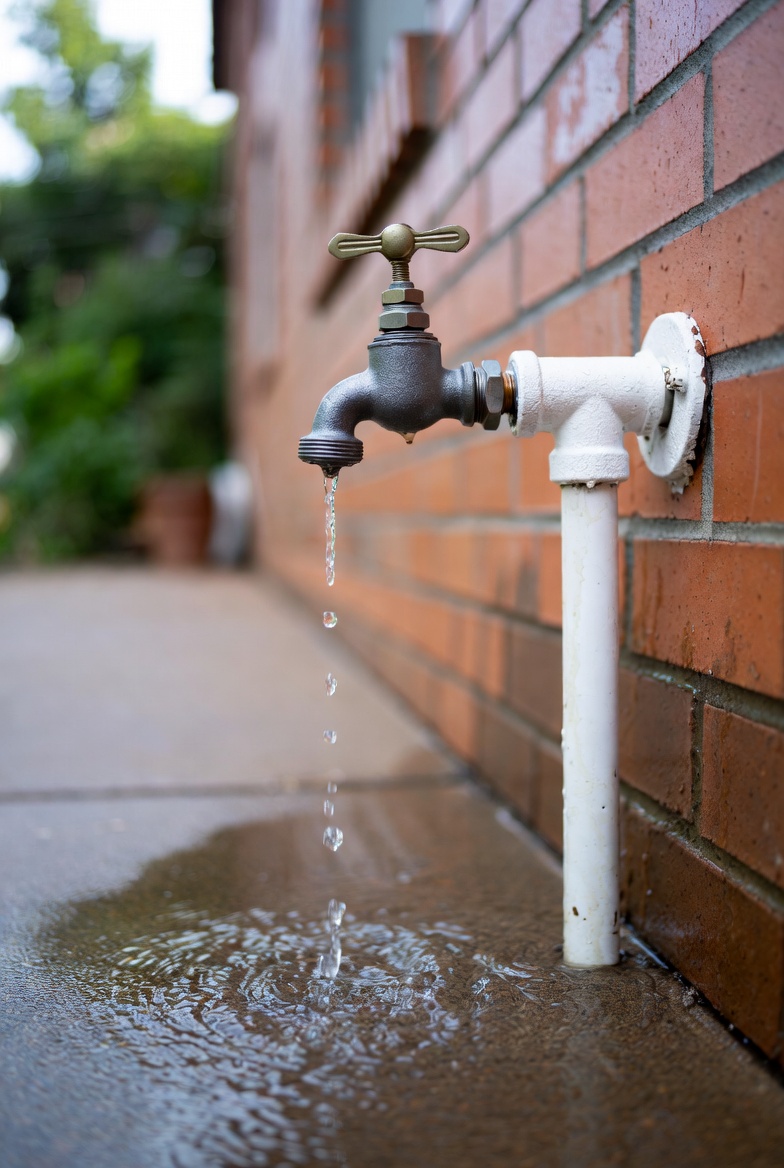
A leak noticed when a sprinkler runs needs the actual sprinkler-to-spigot connection identified. A hose-fed sprinkler and a fixed irrigation system may have different sources and protection. Running a zone does not inherently raise shared supply pressure or prove a seal fault.
Keep away from wet electrical equipment. Do not touch wet appliances, plugs or switches, or enter water to reach a breaker. When no gas leak is suspected, power may be isolated only from a safely accessible dry location; otherwise call an electrician or emergency help. Wet equipment needs qualified assessment before it is used again.
Contain the existing leak
For an active leak, stop use and use a known effective safely accessible homeowner supply control. Keep suspected damage isolated; do not reopen it to collect proof. Obtain urgent help for uncontrolled flow, water entering the building or unsafe access. Do not force a valve or operate utility equipment from its location alone.
Record the original configuration
- Whether the sprinkler was attached to this faucet or merely running elsewhere.
- The actual first wet point: hose joint, quick-connect, stem, device vent, union or wall.
- Zone/controller event, known pump activity, maker/model and existing measured state. Do not infer the branch route from proximity.
Controller off is not verified isolation
Stopping a controller or closing a downstream zone may leave the upstream backflow assembly and other chambers pressurized. A nearby tap may not relieve those spaces. Before any union, bonnet or retained part is loosened, identify all actual feeds and upstream isolation and use the maker’s chamber-relief method. Do not use test cocks or internal checks as improvised homeowner pressure tests.
Protection and fittings
Do not cap a vent, remove required protection or generically reseal every coupling. A device vent release and an external union leak are different observations. Follow actual owner-service permissions and local testing requirements; arrange an appropriately qualified irrigation/plumbing professional for a damaged assembly or uncertain service. Correct seals, torque and protective refit matter.
Locate the actual joint and its sealing method before service. A hose washer-face joint, O-ring union, compression fitting and tapered pipe thread use different instructions. Use the correct approved seal, support and maker torque; no universal quarter-turn or blanket tape application applies. Stop for corrosion, binding, cracked material or an uncertain concealed connection. External maker-permitted packing adjustment is different from loosening a pressure retainer.
Use evidence rather than another irrigation trial
Steady demand can lower flowing pressure; pump controls, geometry and transients can produce other behavior. A changed leak after zone-off does not uniquely identify a gasket. Do not repeatedly run a known leak. An appropriate fully assembled check follows actual correction with safe containment and receiving capacity.
A justified check after correction needs every pressure-containing and protective part fully secured, sound known containment, safe water-use conditions and an accepting discharge path. Follow the actual controlled restoration procedure and attend accessible connections. Stop and re-isolate for renewed leakage, binding or other unsafe change; verify relief before further internal work. A short successful run does not certify a concealed cavity or future duty.
Related situations
- Pooling observed during an irrigation cycle
- Actual hose connection leak
- Reverse flow needs a real connected path
Browse the existing Outdoor Spigot Leaks Under Load group. These are distinct triggers and water paths, not proof of the same failed part.