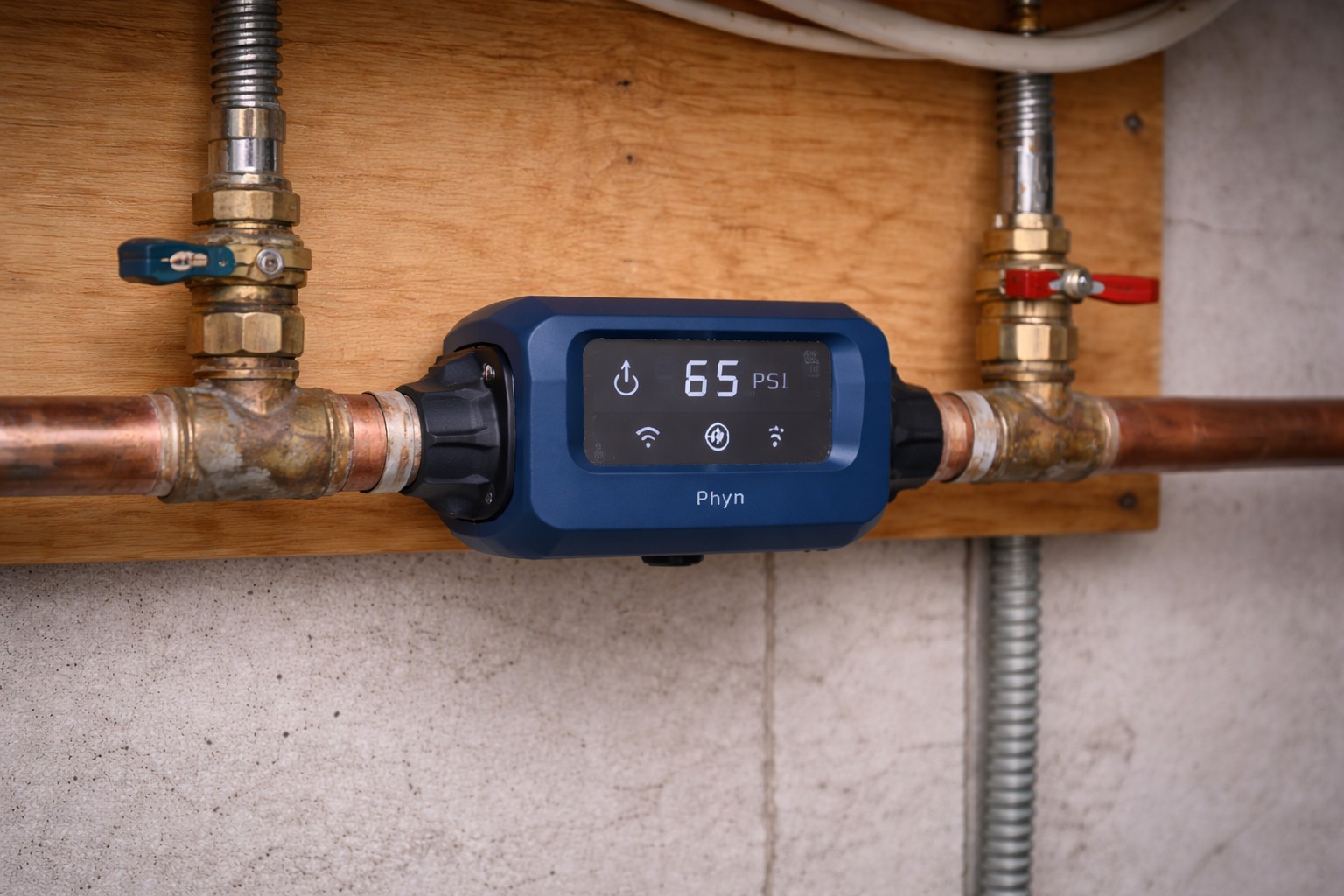
Quick Answer:
If your smart shutoff sends a “leak detected” alert but the basement is dry and the meter shows no obvious flow, don’t assume it’s a real leak. First check the event type in the app (leak vs pressure anomaly), verify the meter reading, and run a controlled 60‑second flow test to re-learn the baseline. Adjust threshold or delay for small transients if needed and confirm no running toilets before taking further steps.
Why This Happens
- Devices can report different event types: an actual continuous leak, or a pressure/flow anomaly caused by transient pressure spikes or electronics. Check whether the alert is labeled as a “leak” or a “pressure anomaly.”
- Small, short flows (toilet fill cycles, sprinkler automatic checks, or a brief pressure surge) can trip sensitive settings. Increasing the detection threshold or adding a short detection delay often prevents false trips.
- Firmware, recent power cycles, or configuration drift can change how the device interprets background flow. If you recently lost power, see the note about resets.
- Sometimes the system needs a fresh baseline after you test or after changes — a controlled test flow and re-learn can clear persistent false alerts.
Step-by-Step What to Do
1. Check the event type
- Open the device app and read the event details. Is it marked as a leak or as a pressure/flow anomaly? The response differs: leaks need immediate verification; anomalies often point to transient behavior.
- If the app shows a pressure anomaly, note the time and any recent activity (washing machine, sprinklers, pump starting).
2. Verify the meter is actually not moving
- Go to the meter or the app’s real‑time flow screen and watch it for 30–60 seconds. If the digital meter reads zero flow or the dial isn’t spinning, there’s likely no significant water loss.
- Confirm other endpoints: touch accessible pipes for unusual warmth or listen near major fixtures for running water.
3. Confirm no running toilets or fixtures
- Check all toilets by marking the water level in the bowl or listening for refill cycles. A slowly leaking flapper can cause intermittent small flows that trip sensitive detectors.
- Inspect automatic irrigation and frost‑protection devices that may run briefly on schedules.
4. Run a controlled 60‑second test flow and re‑learn baseline
- Open a single cold faucet (or an exterior hose bib) at a steady moderate flow for 60 seconds while watching the meter. Note the flow reading and whether the device trips.
- After the test, use the device or app option to re‑learn or reset the baseline if available. This helps the system understand normal household flows.
5. Increase threshold or add detection delay for small transients
- If small, harmless flows are triggering alerts, increase the minimum flow threshold or add a short delay (for example, 30–60 seconds) before a shutoff triggers. That reduces nuisance trips from short cycles.
- Document the original settings before changing them so you can revert if needed.
What Not to Do
- Don’t keep resetting and walking away—confirm real flow with the meter before trusting a ‘false’ trip.
- Don’t ignore repeated alerts. A single false trip can be benign; repeated or worsening alerts deserve investigation.
- Don’t attempt invasive repairs (cutting pipes, removing the valve) unless you’re experienced. Adjust settings and verify with tests first.
When to Call a Professional
- If the meter shows continuous flow you cannot account for, call a licensed plumber immediately.
- If the shutoff engages and you can’t safely restore water or the device won’t reset, contact the device manufacturer support and a plumber if a real leak is suspected.
- If you suspect internal valve failure, repeated false trips despite re‑learning and setting changes, or you find hidden leaks, schedule a professional inspection.
Safety Notes
- If you do find significant, unexplained flow, shut off the main water supply and contact a plumber. Turning off the water is a safe immediate step for a confirmed leak.
- Do not try to repair pressurized piping yourself unless you have the proper skills and tools. Sudden water or damage risk is real.
- If you smell gas or detect electrical issues near the device, leave the area and call the appropriate emergency services—do not investigate in place.
If you continue to see odd behavior after troubleshooting, you may also find guidance in Smart valve shutting off randomly or in situations following outages consult Smart shutoff after power outage for reset tips.
Common Homeowner Questions
- Why did the system say “leak” when nothing is wet? Short or low flows, pressure changes, or sensor calibration drift can register as leaks. Verify the meter before assuming a real leak.
- Can I simply ignore the alert if the meter is still at zero? Not immediately. Confirm with a short observation and the controlled 60‑second flow test. Repeated alerts need investigation.
- Will adjusting the threshold make me miss real leaks? If you raise the threshold too high you could delay detection. Increase carefully and test so you retain protection for meaningful leaks.