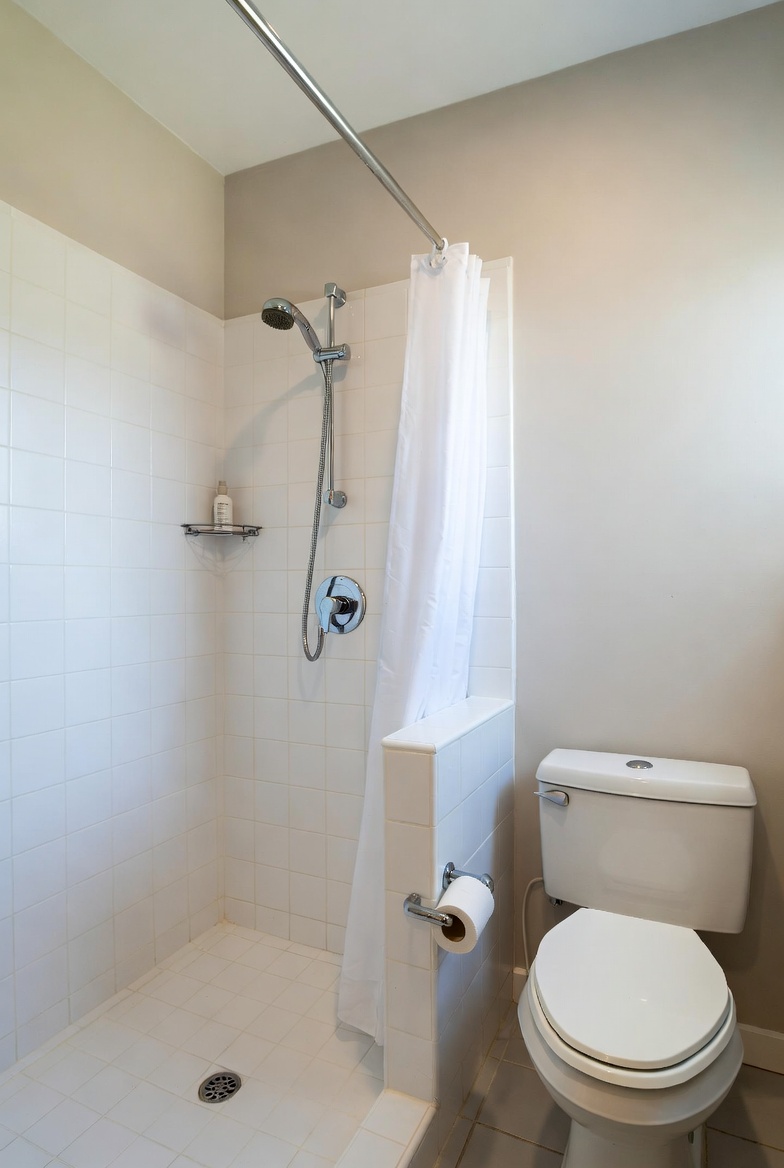
A slow toilet refill after a remodel warrants review of what actually changed. Room dust does not pass through an intact sealed supply pipe; an opened or altered water path, new part or changed operating state needs actual evidence.
Check the condition before testing
For active leakage, a tank/bowl rising toward overflow, damaged supply parts or unsafe electrical conditions, stop use and obtain prompt help. Limit fresh supply only with a safely accessible identified valve under its actual method; do not force a seized stop. A supply closure cannot block wastewater returning from a sewer. Do not keep flushing to measure refill while a drain or bowl is backing up.
If fuel gas is suspected, leave the building or affected area immediately. Do not operate valves, switches, plugs, appliances or phones there. Call the gas emergency service from a safe location well away, and wait for responders’ clearance.
Keep away from wet electrical equipment. Do not touch wet appliances, plugs or switches, or enter water to reach a breaker. When no gas leak is suspected, power may be isolated only from a safely accessible dry location; otherwise call an electrician or emergency help. Wet equipment needs qualified assessment before it is used again.
For a new, unexplained water-quality change: do not deliberately taste the water. Use bottled water or another known-safe supply for drinking, food preparation, teeth brushing and ice while you contact the supplier. Follow the actual local notice for other uses. Boiling does not make chemically contaminated water safe, and clear appearance or a fading odor does not certify safety.
Identify the actual toilet
Identify the toilet and fill mechanism first. An ordinary gravity tank, a pressure-assisted vessel and a powered/direct-feed toilet are different systems. Lift only a normal removable ceramic cistern lid when safe, support it securely and keep hands away from operating parts. Do not open a pressure vessel, electrical cover or unfamiliar sealed assembly. Use the actual model’s instructions for any adjustment or service.
Useful evidence
- As-built route, actual opened or replaced plumbing, parts and contractor commissioning record.
- First original refill behavior, leaks and any water-quality change already observed.
- Safe visible connector/stop condition and actual toilet model/adjustment.
For a safe ordinary refill already occurring, record this toilet’s model, selected flush, starting level and target water line. Use one interval consistently: start when refill actually begins and stop when the intended tank level is reached and the valve shuts off; note a failure to shut off separately. Compare the same fixture under similar conditions with its earlier behavior or actual specification. Another toilet, sound alone, or a generic one-to-three-minute limit is not a controlled baseline. No repeated flushes, overnight watch or multi-fixture challenge is required before seeking help.
Use the work record for a callback
Ask the installer to verify compatible components, correct normal valve positions, actual protected source and the finished fill/refill settings. Do not assume a stiff stop or strong-then-weak stream uniquely locates debris. A partly closed valve can reduce flow; it does not automatically damage every connected component or explain every post-remodel symptom.
Keep flushing controlled and conclusions narrow
A prescribed captured hose flush may be appropriate after safe isolation, release and secured receiving conditions; it is not permission to loosen a live fitting. Turn off again before refitting. If several parts are cleaned or moved together, restored flow does not uniquely identify one dirty screen. Keep the actual findings and acceptance record rather than repeating flushes until a preferred cause appears.
Safe service and completion
Before any cap, screen, hose or fitting is opened, identify the actual work segment, isolate its supply and any required energy, and use the model’s method to release and verify retained pressure. An emptied gravity tank is atmospheric; flushing it does not prove every isolated hose or pressure-assisted component unloaded. Keep water off before disconnecting and again before reconnecting. Use only parts actually intended to be removed, compatible cleaners and the specified tightening method. Do not pry a built-in screen, apply a universal vinegar soak or add an extra wrench turn by default. Do not straighten a badly damaged live connector. Arrange plumbing service for failed isolation, corrosion, damaged parts or an unfamiliar pressure boundary.
A prescribed captured flushing procedure can be valid when the actual maker permits it and the isolated connection, secured outlet, safe water, sufficient accepting receiver and splash protection are established. An assembled refill or repeatedly cycling a stop is not the same procedure. Turn water off before refitting, restore compatible parts and protection completely, then use the actual attended commissioning/leak check. Stop for a leak, continued running or renewed backup. Do not loosen a live nut to create a flushing outlet or run an uncapped valve without its prescribed controls.
Related situations
- Slow refill after plumbing repair
- Slow refill after turning water back on
- Tank refills slowly after filter install
- Slow Toilet Refill Behavior