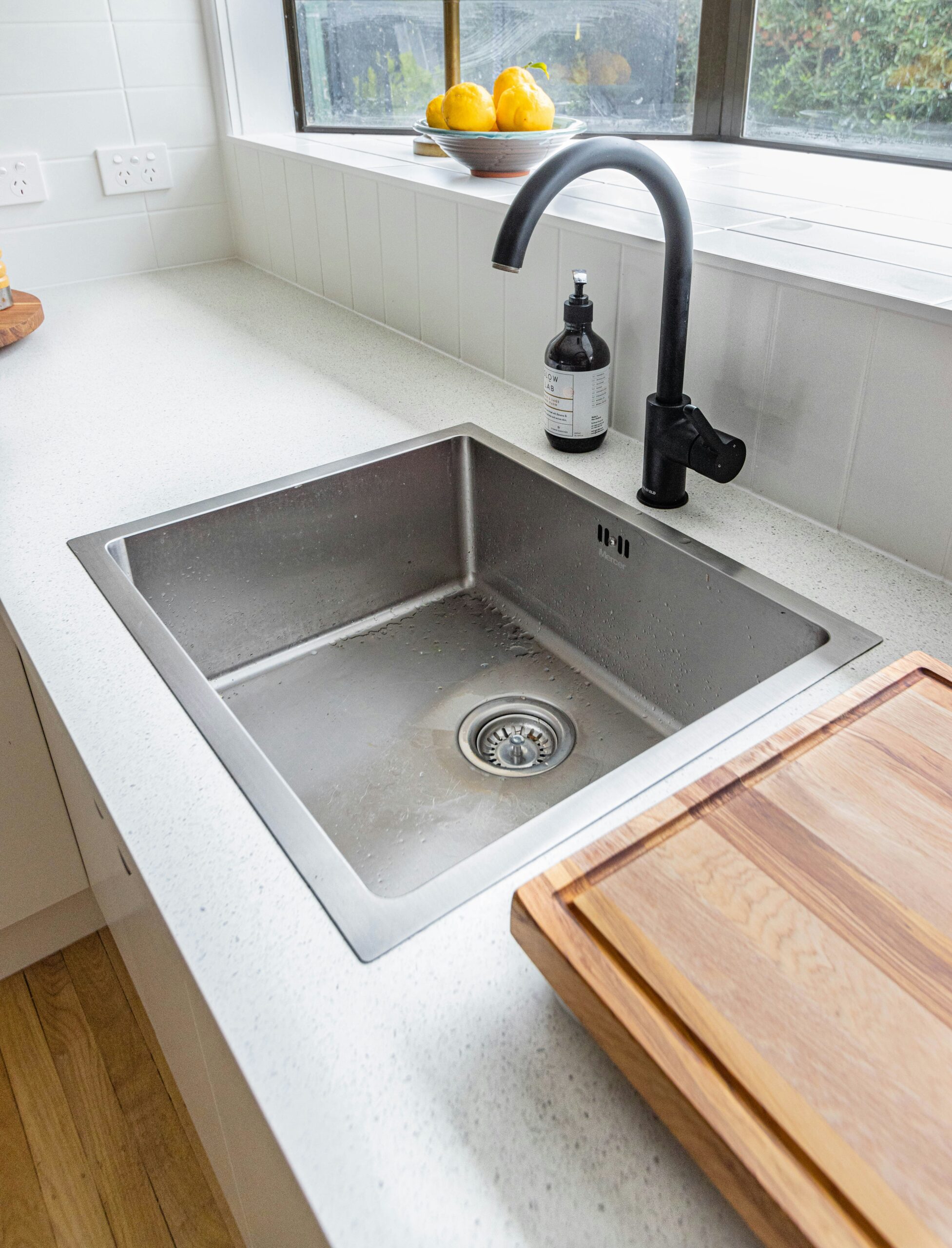
For a slow drain noticed only at the kitchen sink, begin with the actual affected bowl and existing use history. A local obstruction is possible, but normal bathroom drainage does not prove the shared downstream route clear. Do not run every fixture to certify that the problem is kitchen-only.
Check the conditions before adding water or using tools
Stop added water and connected appliance discharge at backup, renewed rise, leakage or wastewater return. Keep away from sewage and wet electrical equipment. Disconnect affected power only from safe dry access; otherwise get help. Strong gas-like fumes, exposure symptoms or suspected fuel gas require leaving and calling for help from safety, without operating switches there.
Identify any drain product already used. Follow the exact label and tell the service provider; do not add another cleaner or improvise neutralization. While hazardous residue may remain, do not plunge, snake, open the trap or operate the disposal. Waiting or a guessed rinse does not establish clearance. A safe method for one known maintenance product does not apply to an unknown opener.
Never put hands or fingers inside a disposal, even when disconnected. Before permitted manual service, controls must be OFF and the actual affected source safely disconnected. A silent motor does not prove wiring dead. Keep the dishwasher from independently pumping into an open drain. Remove tools and restore required guards and secure connections before any permitted return to use; re-isolate before further manual work.
Use fixture scope as a clue, not a location test
- One kitchen bowl is slow: Record the basket or stopper position, visible debris and whether the other bowl was already affected. The actual waste connection may join the bowls before a common trap.
- Other fixtures seemed normal: Keep that observation with its timing and ordinary load. A different branch, elevation or water volume can produce a different visible symptom without excluding a shared restriction.
- A disposal is fitted: Motor rotation does not verify drain capacity. Use only the installed model’s approved isolated care for an actual jam; do not reach inside or probe through the grinder.
- Local care has not helped: Give the plumber the actual work and recovered-material record. A clean trap does not identify a deeper obstruction or make every tailpiece a suitable snake access.
Can I neutralize a cleaner before using a plunger?
Do not invent a neutralizer or mix a second product. Use the exact label and obtain appropriate advice if the product or residual condition is uncertain. The ordinary plain-water options below do not override restrictions for a product still in the drain.
A bounded option for an ordinary local restriction
If the drain is sound, water is cool, no hazardous residue or sewage is present and the problem is an ordinary local restriction, start with an intended removable basket or stopper. Capture food and residue outside the drain; do not force a retained part. Clean it by the component’s compatible method.
A suitable cup plunger can be reasonable under the fixture and tool instructions. Isolate disposal power first, account for the actual second bowl or overflow, and use only enough cool plain water for the seal with controlled strokes. Stop for leakage, movement or no useful improvement; do not increase force or keep repeating cycles.
For an accessible serviceable slip-joint trap, keep all connected inputs inactive, assess the retained volume before release, support the part and provide safe capture, gloves and eye protection. Do not open glued, corroded or unidentified fittings. Clean the removed part away from the sink and fully refit correct seals and alignment before a small attended water check. Never run the faucet into disconnected plumbing. Stop at leakage or renewed rise. Persistent or recurrent trouble needs assessment, not an automatic deeper cable.
Choose maintenance by the actual product and equipment
Keep grease outside the drain. Use actual compatible product and appliance instructions for ordinary care; approved hot drainage, warm cleaning or ice maintenance can differ by model. None is a diagnostic treatment for an unknown restriction or substitute for required source isolation.
Related situations
- Grease clogging kitchen drain
- Slow drain only when hot water used
- Slow Kitchen Sink Drain & Grease Accumulation
Bounded cleaning for an ordinary local kitchen drain
Sources and limits
- Seattle Public Utilities: collect cooking grease outside drains
- Example liquid drain-opener label: remaining product and plunging restrictions
- Moen disposer example: no hands, isolation and approved access
- Manufacturer kitchen-sink guide: suitable surface care, plunger and full reassembly
- CDC: electrical hazards near water
- Madison Metropolitan Sewerage District: stop contributing discharge during backup
Examples do not identify the installed appliance, product or local system. Independent professional review and household field tests have not been obtained.