Quick Answer:
Remodel work can change how the sink lines up with the wall stubout, letting sewer gas bypass the trap or leaving gaps where odors escape. Start by checking the P-trap and whether the wall connection height moved during the remodel. Many fixes are simple, but if pipes were re-routed or the stubout was moved you may need a pro.
Why This Happens
When a bathroom is remodeled the sink, cabinet, or drywall can shift the position of the drain and the wall stubout. That can cause:
- P-trap misalignment or a gap between the trap arm and the wall pipe.
- Trap siphoning because the trap outlet is too high or too low relative to the sink tailpiece.
- Open gaps at the wall or behind the cabinet where sewer gas can escape.
- Blocked or altered venting if a vent was disturbed, which can let odors back through the drain.
If the smell comes back intermittently after fixes, it often means the trap or vent is still not right — for example, if you notice Odor returns every few weeks, check alignment and venting again.
Step-by-Step What to Do
1. Do a quick smell check and pattern test
- Note when the odor appears (constant, after running water, only after resting overnight).
- Check other drains to be sure it’s the remodeled sink and not a housewide sewer issue.
2. Refill or test the P-trap
- Run several gallons of water into the sink for a minute to refill the trap. A dried trap is a common simple cause.
- Pour a small amount of water into nearby unused drains too, to rule out dry traps elsewhere.
3. Inspect whether remodel shifted the wall connection height
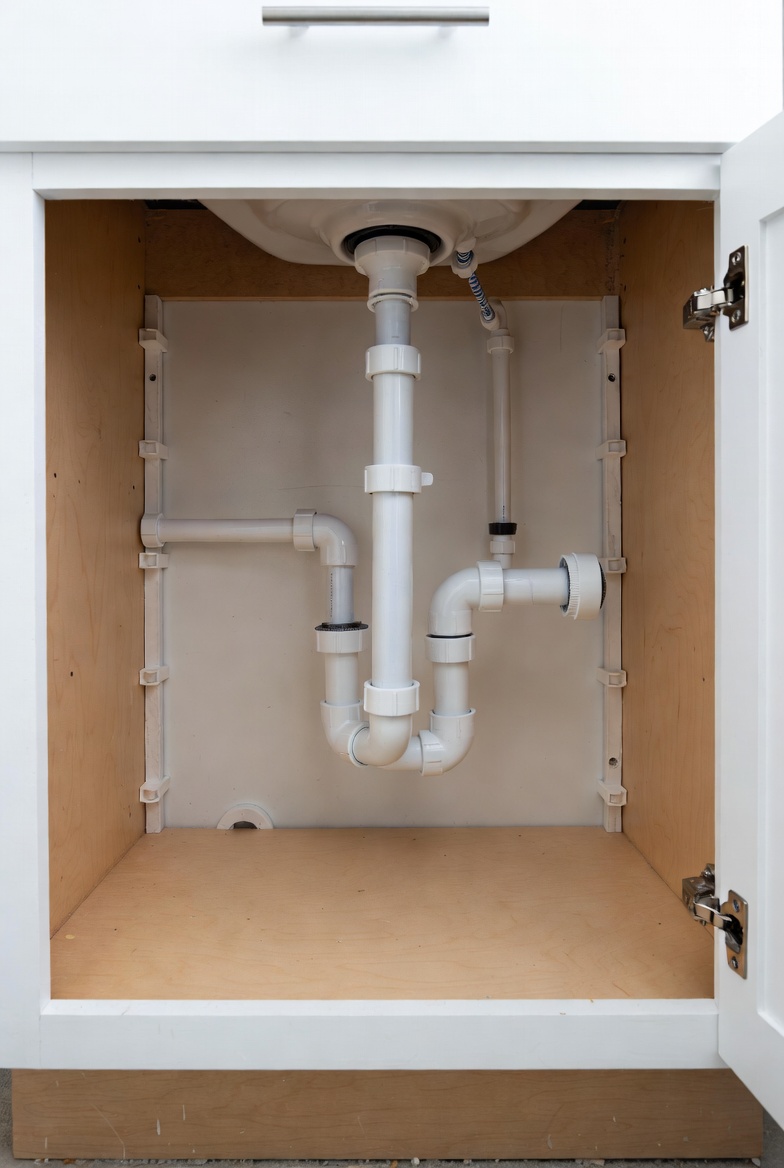
- Open the cabinet and look at the trap arm where it meets the wall. If it looks pulled, crushed, or at an odd angle, the stubout may have moved.
- Measure roughly from a fixed reference (cabinet floor or countertop) to the center of the stubout and compare to the sink tailpiece center. Large differences indicate a shifted connection.
- If the trap cannot sit level or the slip joints are under tension, the outlet was likely moved and the trap will not seal reliably.
4. Remove and inspect the trap and trap arm
- Place a bucket under the trap, loosen the slip nuts, and inspect for debris, cracks, or gaps.
- Check the trap arm length and slope. It should slope down slightly into the wall and fit without forcing the joints.
5. Seal visible gaps and test
- Seal small gaps in the cabinet back or around the wall penetration with appropriate caulk or foam to block odor paths.
- Reassemble the trap, run water, and smell again. If the odor is reduced but not gone, re-check alignment and vents.
6. What to do if the trap won’t fit correctly
- If the trap arm is too high or too low and cannot be adjusted, the wall stubout may need to be moved or extended. That is a job for a plumber if it requires cutting into the wall or rerouting pipes.
- If the odor pattern matches Odor returns after cleaning, focus on trap alignment and venting — cleaning alone won’t fix a misaligned outlet.
What Not to Do
- Do not ignore structural changes from a remodel.
- Do not force pipes into position or overtighten slip nuts to hide a misalignment.
- Do not mix chemical cleaners or rely only on deodorizers; they can mask a problem and may be hazardous in enclosed spaces.
- Do not cut into walls or reroute drains unless you are confident in plumbing and local code; call a licensed plumber for those tasks.
When to Call a Professional
- If the trap or trap arm cannot be installed without strain or leaks after adjustment.
- If the wall stubout has been moved or you suspect the drain was rerouted during the remodel.
- If you smell strong sewer gas throughout the room or house, or anyone experiences dizziness/headaches — leave the area and call a professional immediately.
- If you need the wall opened or pipes relocated to correct the alignment.
Safety Notes
- Wear gloves and eye protection when working under the sink. Use a bucket to catch water.
- Ventilate the room if there are strong odors. Avoid prolonged exposure to sewer gas.
- Do not mix chemical drain cleaners, and avoid using them as a long-term fix for odor problems.
- If you are unsure about cutting into walls or working on vents, hire a licensed plumber to avoid code or safety issues.
Common Homeowner Questions
- Why did the smell start only after the remodel?
Small shifts in sink or wall position during the remodel can misalign the trap or open gaps for sewer gas. - Can I fix this myself?
Often you can refill the trap, tighten fittings, and seal gaps. If the stubout was moved, a pro is usually required. - Is this a health emergency?
A faint odor is usually not an immediate emergency, but persistent strong sewer gas or physical symptoms require leaving the area and calling a professional.