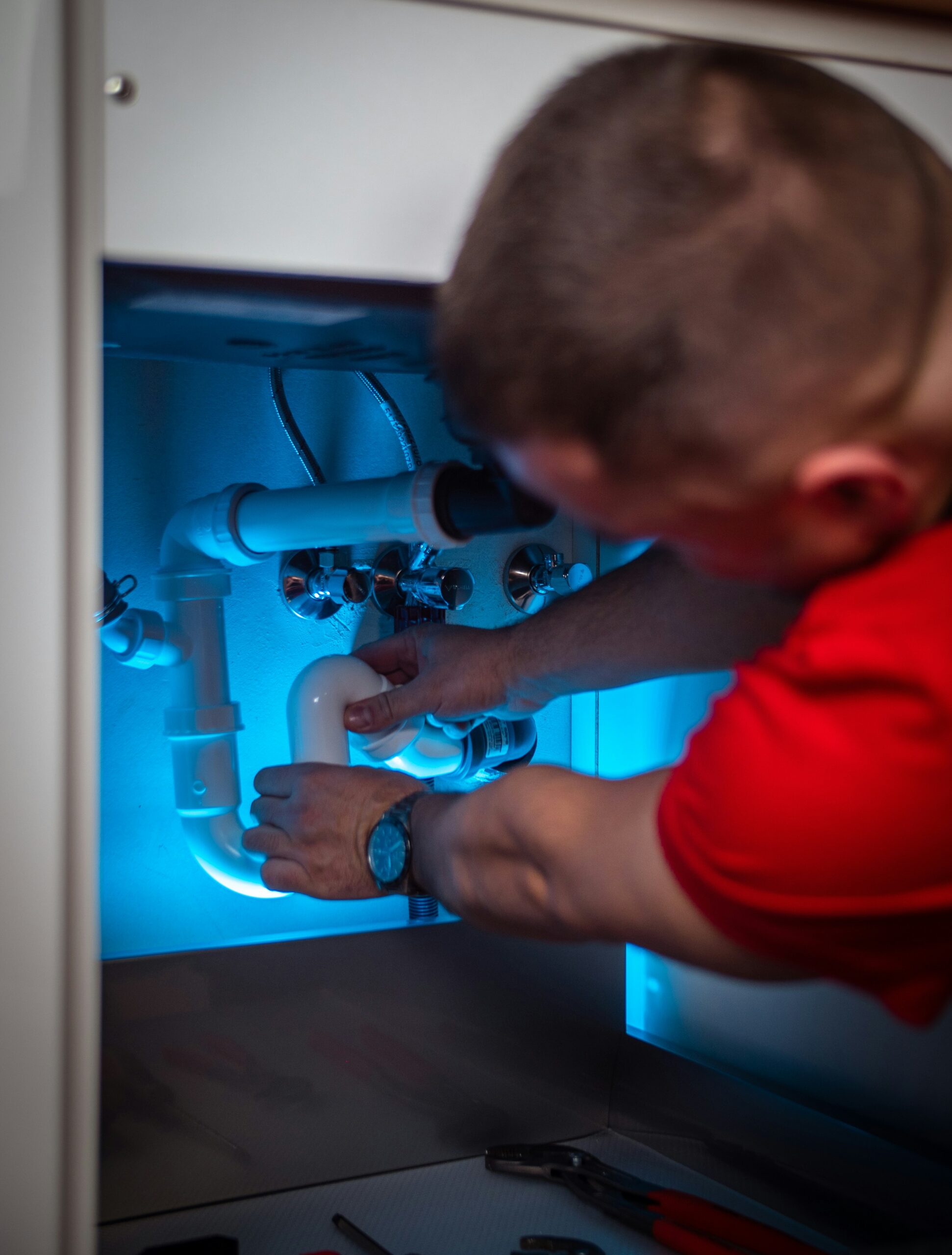
Quick Answer:
Start by checking that all winter caps and plugs are removed and any shutoff valves under the sink are fully open. Run water to refill the trap and flush any antifreeze or standing debris until the flow is clear. If the sink immediately rises when you turn the water on, you likely have a clog or a closed section farther down the line—not just stale or empty traps.
Why This Happens
During winterization you may drain lines, install temporary caps, or close valves to prevent freezing. When you return the system to normal, a few things can cause an overflow:
- Temporary caps or plugs are still in place, blocking flow.
- Supply valves under the sink remain partly or fully closed.
- Traps were left dry and debris or sediment settled where it can catch hair and gunk.
- Antifreeze, sediment, or rodent nesting material left in the drain needs flushing.
- A blockage or closed point farther down the shared drain causes immediate backflow.
Minor trapped water is normal after winterization; if the sink level rises right away when you run water, that’s a sign of a blockage or a valve/cap still in place rather than just stale air in the pipe.
Step-by-Step What to Do
Step 1 — Verify winter caps, plugs and valves
- Open the cabinet and look for any winter caps on tailpieces or small plugs in supply lines. Remove them.
- Find the shutoff valves under the sink and open them slowly—turn fully on, then test the handle for expected water flow.
Step 2 — Run water to refill the trap
- Turn on both hot and cold briefly to allow the p-trap to refill. A filled trap seals out sewer gas and prevents odors.
- Run water for 30–60 seconds. If you had drained the trap completely, this should restore the water seal.
Step 3 — Flush if you used antifreeze or drained lines
- If antifreeze or any sanitizing liquid was used, flush the drain with cold water until the flow runs clear and there is no chemical smell.
- For drained lines, keep flushing until sediments and discolored water clear up.
Step 4 — Test and observe for immediate rise
- Run a steady stream of water and watch the sink. If the level rises quickly, you have a restriction or the drain is closed farther downstream.
- Run other nearby fixtures (toilet, nearby sink) to see if multiple drains are affected; that helps locate a shared blockage.
- If the overflow happens only under certain conditions, check related supply and venting points; for example consult the note about Overflow only when hot water used for hot-water-specific issues.
- If backups occur when several people use water at once, consider the linked troubleshooting for Sink backs up when guests use water.
What Not to Do
- Don’t leave traps dry or caps in place after winterization—this invites odor and backup; if you can’t locate the restriction, a plumber is appropriate.
- Don’t ignore an overflowing sink. Stopping use and investigating promptly reduces water damage.
- Avoid pouring large amounts of corrosive drain cleaner if you’re unsure what the blockage is—these chemicals can be hazardous and may not fix a blocked main line.
When to Call a Professional
- Call a plumber if you can’t find or remove the cap/plug, or if shutoff valves are stuck or leaking.
- Call if the sink still rises immediately after confirming valves are open and traps are filled—this points to a clog or blocked shared drain.
- Call if you smell sewage, see water backing into other fixtures, or have active water damage you can’t control.
Safety Notes
- Shut off water at the supply valve or main if there is an active leak you cannot stop.
- Wear gloves and eye protection when removing caps or working under the sink; old antifreeze or debris can be irritating.
- Keep electrical devices and outlets away from standing water. If water reaches outlets, turn off power to that area at the breaker before working.
- Dispose of antifreeze and contaminated water safely and according to local rules; do not pour automotive antifreeze down household drains.
Common Homeowner Questions
- Q: Why did the sink overflow the first time I used it?
A: Most often a cap or closed valve remained, or a downstream clog caused immediate backflow. - Q: Will running the water a long time fix it?
A: Flushing can clear antifreeze and loose debris, but immediate rising usually means a clog that flushing won’t solve. - Q: Can I fix the clog myself?
A: You can check and remove visible caps, open valves, and clear the p-trap; if the restriction is deeper or you can’t locate it, call a plumber.