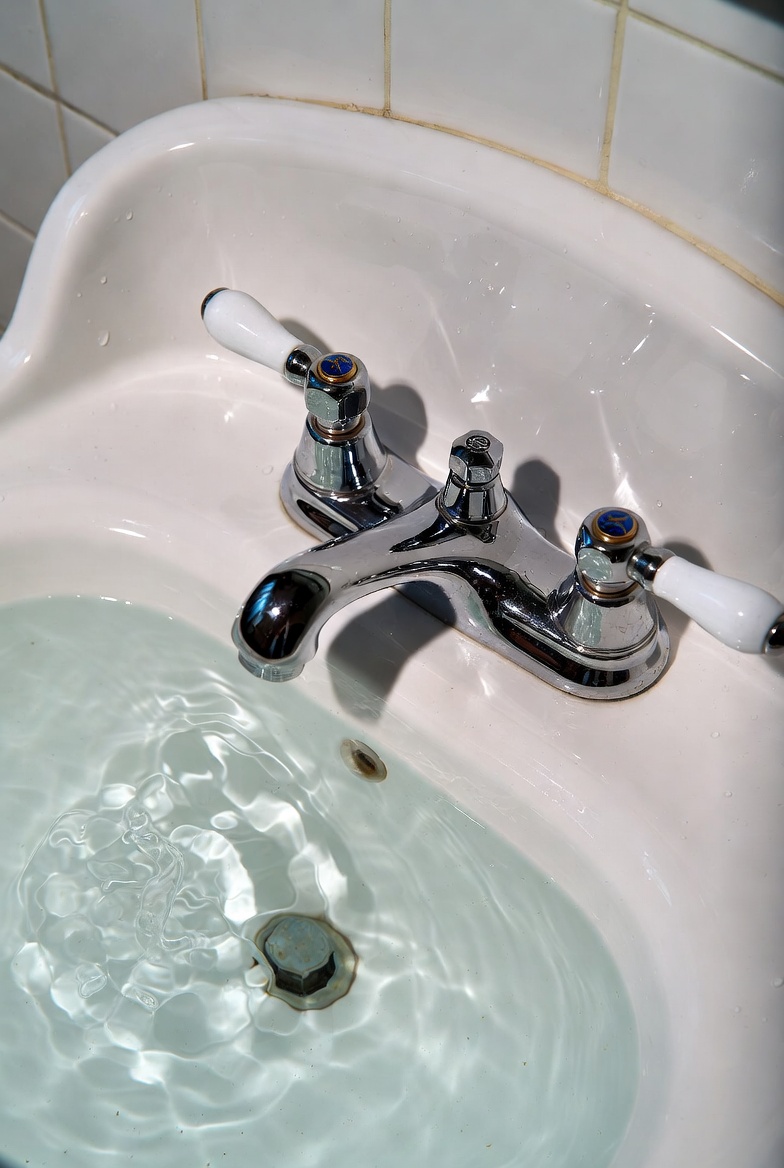
Quick Answer:
If water in a sink goes down but then rises back up, it’s usually a partial blockage or a venting problem. Mark the water line and watch whether it rises without adding water to confirm whether the sink is actually filling from downstream or backing up from the sewer. Small fixes you can try at home include clearing the trap and using a plunger; larger or repeating backups need a professional.
Why This Happens
- Partial clog in the P-trap or drain line: debris, soap scum, or grease can let water pass at first and then slow or reverse flow as more water tries to go through.
- Blocked plumbing vent: if the vent on the roof is restricted, the drain can’t get proper air flow and water can surge or back up.
- Sewer main or municipal backup: if multiple fixtures back up or you notice sewage smell, the problem may be beyond your house drain.
- Fixture-specific issues: some sinks have problems that only show in specific conditions (for example, if a sink behaves like **Sink only stops when hot water used**, that points to different causes than a vent or main sewer issue).
Step-by-Step What to Do
1. Observe and confirm
Mark the water line and watch whether it rises without adding water. Use a piece of tape on the basin or a permanent marker on the porcelain edge to note the immediate level. Wait several minutes — if it rises on its own, the water is being pushed back from downstream or the trap is re-filling.
2. Check other fixtures
- Run water in another sink, toilet, or tub briefly. If those fixtures back up or drain slowly, suspect a main sewer or shared line problem.
- If the issue is only this sink, the blockage is likely local.
3. Clear the P-trap
- Place a bucket under the trap, loosen the slip nuts, and remove the trap to clear hair and debris. Reassemble and test.
- If you’re not comfortable doing this, skip to calling a professional.
4. Use a plunger or hand auger
- Try a sink plunger first (seal the overflow with a wet cloth). Several firm pumps may dislodge a partial clog.
- If plunging fails, a hand auger (drain snake) fed down the trap or tailpiece can often reach and clear obstructions.
5. Check the cleanout or vent
- Look for an accessible cleanout near the foundation or basement to see if water or sewage is present. If so, do not try to clear a main sewer clog yourself.
- If safe and accessible, a roof vent blockage (leaves, bird nest) can be cleared, but only if you’re comfortable on a ladder and know safe roof practices.
6. Re-test
After any cleaning, mark the water line again and run a small amount of water to confirm the drain now flows normally and does not rise on its own. If the sink behaves like **Sink only stops when water runs long**, that symptom suggests a different pattern (for example, a slow-moving clog that only clears with continuous flow).
What Not to Do
- Do not ignore water rising back up after it initially drains. That behavior means the drain is not clear or the system is under pressure and can lead to overflow or sewage backup.
- Do not pour large amounts of harsh chemical drain cleaners into a partially filled sink — they can be ineffective, harmful to pipes, and dangerous if you need to work on the trap afterward.
- Do not remove roof vents or attempt major sewer work without proper tools, knowledge, and safety measures.
When to Call a Professional
- Repeated backups after you clear the trap or snake the drain.
- Multiple fixtures are slow or backing up, or you notice sewage odor — these suggest a main sewer issue or municipal backup.
- You’re uncomfortable working under the sink, on the roof, or with plumbing tools.
- If a cleanout shows sewage or you suspect pipe damage, call a licensed plumber immediately.
Safety Notes
- Wear gloves and eye protection when handling dirty water or working under sinks.
- Shut off water to the fixture if there’s a risk of overflow or if you’re disconnecting plumbing.
- Use ladders safely for vent access; if you’re unsure, hire a professional rather than risking a fall.
- If you smell sewage strongly or see sewage in the house, evacuate the affected area and get professional help quickly.
Common Homeowner Questions
Why did it seem to drain at first and then come back up? A partial clog can let some water through initially but slows as more water tries to pass, causing backflow.
Could this be a sewer main problem? Yes — if multiple fixtures are affected or you smell sewage, the main line or municipal system may be the cause.
Is it okay to use store-bought drain cleaners? Short answer: avoid them for recurring blockages; they can damage pipes and create hazards if you later open the trap.