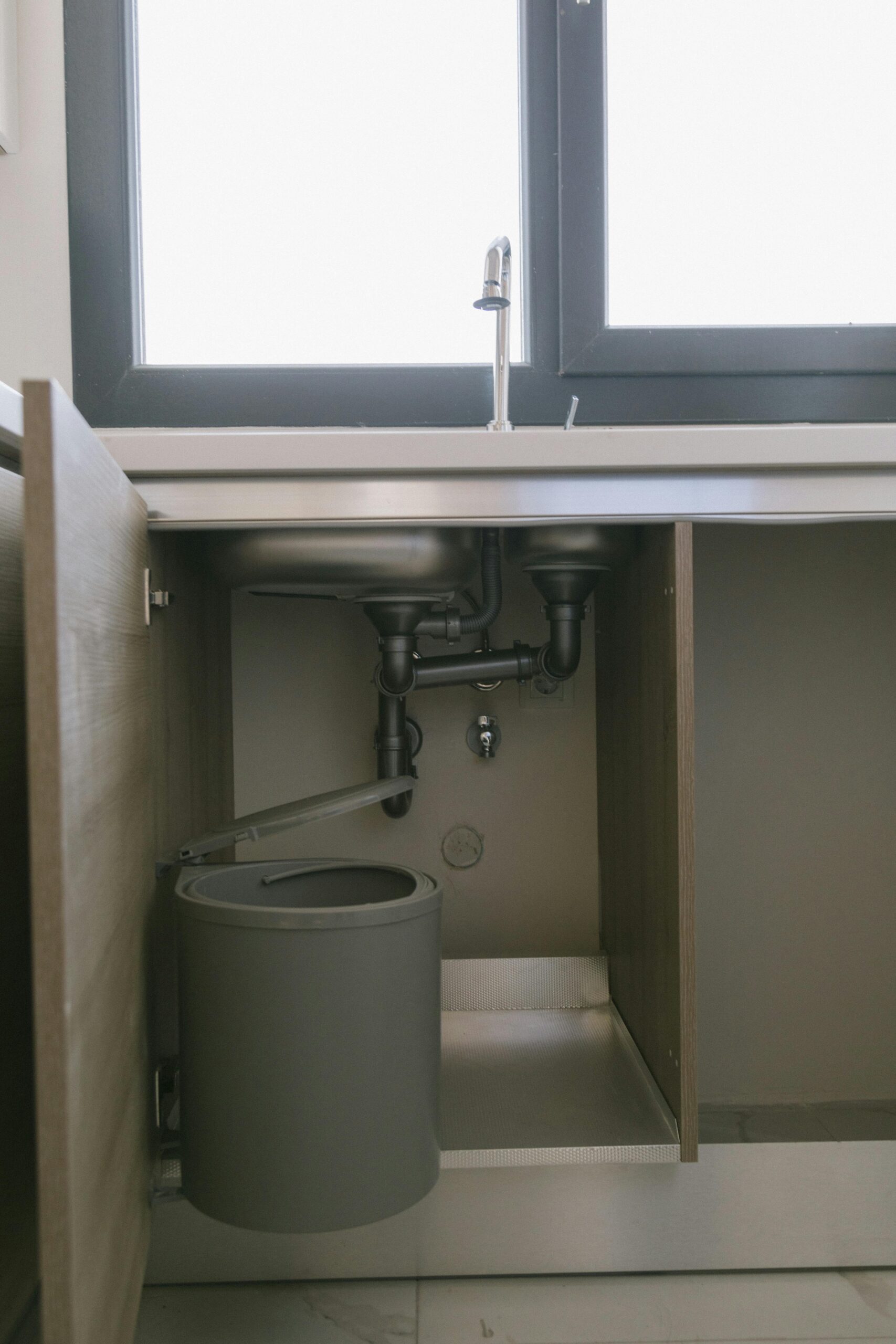
Check for an emergency first
For strong, widespread or unexplained gas-like fumes, exposure symptoms, or suspected high sewer-gas concentrations in an enclosed space, leave the building immediately and call the fire department or emergency services from outside. Avoid flames, switches and other ignition sources; do not remain to ventilate, sniff drains or investigate. Smell intensity does not measure the concentration. A faint localized drain odor without those warning signs calls for a different plumbing investigation; it does not automatically establish a fuel-gas leak.
If fuel gas is suspected, leave the building or affected area immediately. Do not operate valves, switches, plugs, appliances or phones there. Call the gas emergency service from a safe location well away, and wait for responders’ clearance.
Keep away from wet electrical equipment. Do not touch wet appliances, plugs or switches, or enter water to reach a breaker. When no gas leak is suspected, power may be isolated only from a safely accessible dry location; otherwise call an electrician or emergency help. Wet equipment needs qualified assessment before it is used again.
A sink that backs up when a disposal is restarted needs the reason it was off recorded. A routine break in use, a motor overload, a jam and an unresolved drain clog are different situations. Bailing water out does not by itself make resetting or pulsing the motor an appropriate test.
Useful details to record
- Why the disposal was off, how long it was unused and whether a breaker, overload or control had operated.
- Whether the unit hummed, ran normally or remained silent before it was stopped again.
- The existing water level, affected fixtures, recent work and any drain chemicals used.
What the pattern can tell you
- An overload or circuit trip occurred. Do not keep resetting. Use the actual model procedure or obtain service, especially for repeated trips, leakage or electrical concerns.
- It ran but the sink rose. The drain path needs assessment; restarting the motor does not establish where a blockage lies.
- It hummed without normal operation. A model-specific jam procedure may be relevant after safe isolation. Do not force the mechanism or put a hand inside.
What to do next
- Before using a tool, ask whether a drain opener or other chemical was added. If so, follow the exact product label and tell the plumber what was used. Do not plunge, snake, open the trap, run the disposal or try a neutralizer while hazardous residue may remain. Waiting a generic number of hours or rinsing by guesswork does not establish that the drain is safe to handle.
- Keep hands and fingers out of a disposal even with power off. Establish safe power disconnection under its actual instructions before any jam, object or drain service, and keep the dishwasher from pumping into an open drain. Do not touch a wet plug or enter water to reach a breaker.
- Stop adding water during backup. Do not scoop or handle water that may contain chemicals or sewage; tell the service provider about it.
- For a dry, ordinary non-sewage case, use only the identified maker’s permitted jam or accessible-trap care. Do not treat a reset button as a drain-clearing step.
- Fully reassemble any serviced drain before a controlled leak check and the prescribed restart. Recurring backup, an inaccessible obstruction, repeated humming or tripping needs the appropriate plumber or appliance service.
Will short bursts clear material that hardened while it sat?
Do not assume that explanation or use repeated bursts against a backup. The observation does not identify the material, and clearing standing water does not repair a jam or drain restriction. Match the next step to the actual unit and drainage conditions.