After a remodel, use the actual handover and commissioning details. Debris, incomplete isolation restoration, changed controls and altered delivery are possibilities; do not cycle an unstable valve to dislodge a presumed particle.
For safe first response and service boundaries, start with Shower Temperature Unstable After Remodel: First Checks.
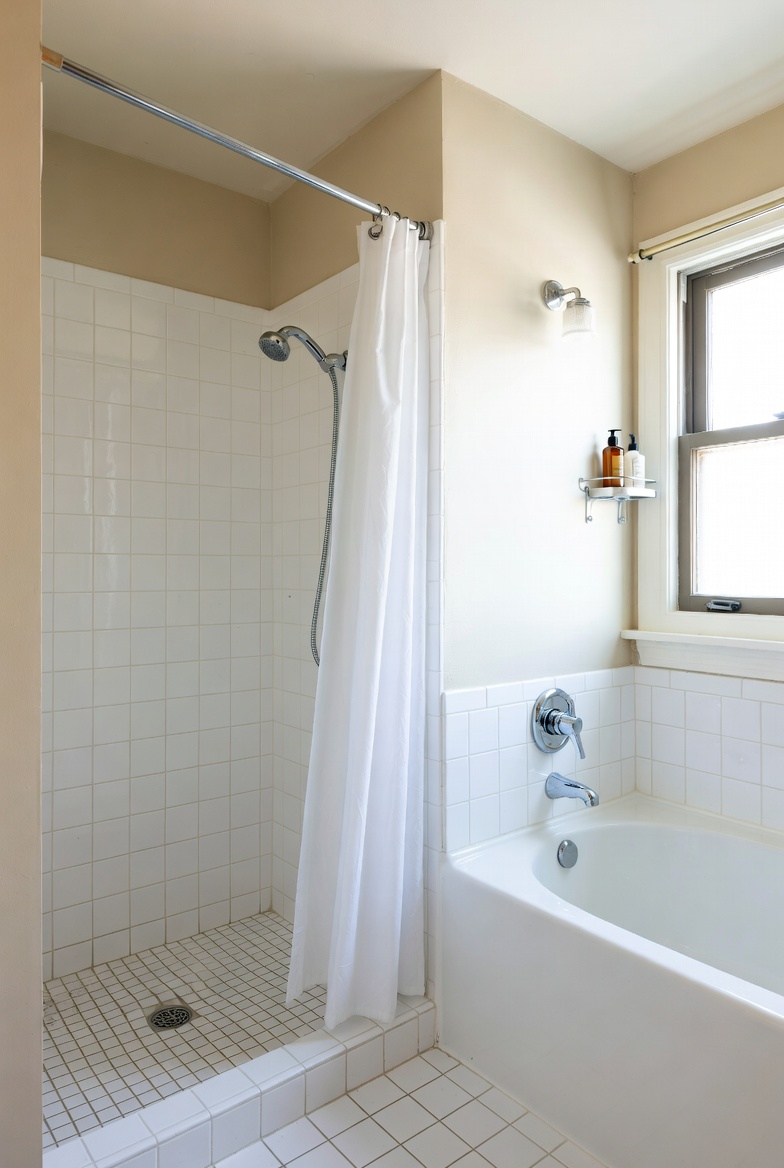
The shower-and-bathtub photograph provides room context. It does not establish the remodel history, installed protection or temperature behavior.
Stop unsafe bathing before investigating
For unexpected hot surges or unpredictable temperature, move out of the spray and stop bathing. Stop flow only from a safely reachable control without crossing dangerous water or risking a fall. Keep the shower out of bathing use until assessed and restored. A lower starting setting or separate appliance schedule does not certify protection.
If heater concerns include gas or carbon monoxide
For suspected fuel gas, leave without operating valves, switches, appliances or phones in the affected area. Call the gas emergency service from well away and wait for clearance. A CO alarm or suspected CO exposure requires everyone outside and an emergency call from safety. CO has no odor; do not cycle a heater to investigate.
A record you can use
- Changed and retained equipment
- List only changes supported by the handover documents: valve/body/trim, heater, treatment or piping. Mark what was retained and what is unknown; a new visible handle does not identify everything behind the wall.
- Service points and unfinished work
- Keep any documented closed stop, affected branch and reason it remains closed. Ask the installer to identify its purpose and restoration plan. Do not open an uncertain stop or expose a concealed space to complete this field.
- Completed handover evidence
- Keep the actual installed models, instructions, date and recorded delivered-temperature/commissioning conditions. Separate a product’s advertised function from evidence that the installed system was completed and checked.
- Original complaint and unresolved items
- Describe the first event already experienced and any known leakage or uncompleted work. Keep later reported results with their dates. An unchecked field means the evidence is missing; it does not establish debris, a missing spool or a need for a larger heater.
Use the existing records and a focused installer follow-up. This map does not authorize a new flow, stop-position or hot-spray experiment.
Fictional example: “New trim is listed on the remodel invoice. The body model, any treatment changes and final temperature-check record are unknown. One service valve is noted as closed, with no stated reason.” Ask for the completed handover and reason for that closure; do not turn the unknown valve to investigate.
Keep the existing record
- Actual remodeled valve, heater, treatment and piping changes, with installed part and commissioning records.
- Original affected outlets, any known closed service valves and safe visible damage or leakage.
Confirm access and why a valve is closed
Do not climb into a ceiling opening or turn every apparent stop fully open. Handle-parallel applies to some quarter-turn valves, not every stop; a valve may be deliberately closed for unfinished work or a leak. Use the actual layout and installer’s restoration plan. Do not force a valve or operate a control through full hot to clear debris.
Finish commissioning before choosing equipment
Head removal and cartridge service have different isolation, capture and retention requirements. Do not discharge hot water from a bare arm into a hand-held bucket as a generic flush. Preserve the maker’s secure reassembly and limit checks. Heavy-use timing does not justify a larger tank or tankless conversion without actual demand, inlet, supply and control assessment.
Keep legitimate head care within its actual procedure
For maker-permitted external showerhead care, stop flow, allow hot parts to cool and use the actual removal method without twisting the arm or forcing retained screens. Use only compatible cleaning and the correct seals/refit. A permitted head-off observation still needs a secured outlet, accepting receiver and safe measured-temperature setup; it is not permission for a bare-arm hot-spray test. Stop flow and release the relevant pressure again before final refit. Do not drill a restrictor or remove a required control to make the symptom disappear.
Set up any further measurement safely
Further diagnostic runs need the actual model’s method, sound retained assembly, an accepting drain or secured receiver, and a safely reachable control. Keep everyone out of the spray. Measure delivery with a suitable thermometer positioned without skin exposure; a display, pipe touch or hand check cannot measure an unstable event. Stop for unsafe temperature, leaks or backup. If that setup is unavailable, arrange qualified testing. An ordinary pre-bathing check differs from deliberate exposure to known instability.
Use the actual service and return-to-use procedure
Internal work needs the exact model, isolation of all connected hot/cold feeds, cooling, and controlled local pressure release and verification before opening. A closed shower handle or unrelated open sink is insufficient. Use approved compatible tools, parts, cleaner and lubricant. Complete seals, orientation and secure retention before restoration. Restore the required handle, trim and limit parts, then verify the maker’s cold-first and delivered-temperature requirements before bathing. Re-isolate and release pressure again before reopening after a test.
Follow up on the actual result
Keep the original record and any safe measurements. Ask what was corrected and how delivered temperature, required protection and leak-free return to use were verified. One steady test or a new cartridge does not establish every operating condition.
Related patterns
- Temperature swings after filter install
- Shower temperature varies by time of day
- Temperature Swings During Shower Use