Quick Answer:
Small, intermittent rust flakes in your taps usually mean corrosion or loose sediment somewhere in the system. If the flakes come only from hot water, the water heater or its dip tube is the likely source. If both hot and cold show flakes, the problem is further upstream: old galvanized pipe, the main line, or localized corrosion. Use a sink strainer to capture flakes, then follow the step-by-step checks below.
Why This Happens
- Water heaters can accumulate rust and sediment. As the dip tube or tank lining degrades, flakes shed into hot water.
- Galvanized or iron pipes corrode from the inside. Corrosion produces flaky rust that dislodges with flow changes or pressure swings.
- The main water line or a recently operated main valve can stir up settled rust in the service line, briefly producing flakes or discolored water — think of events similar to Brown water after main valve use.
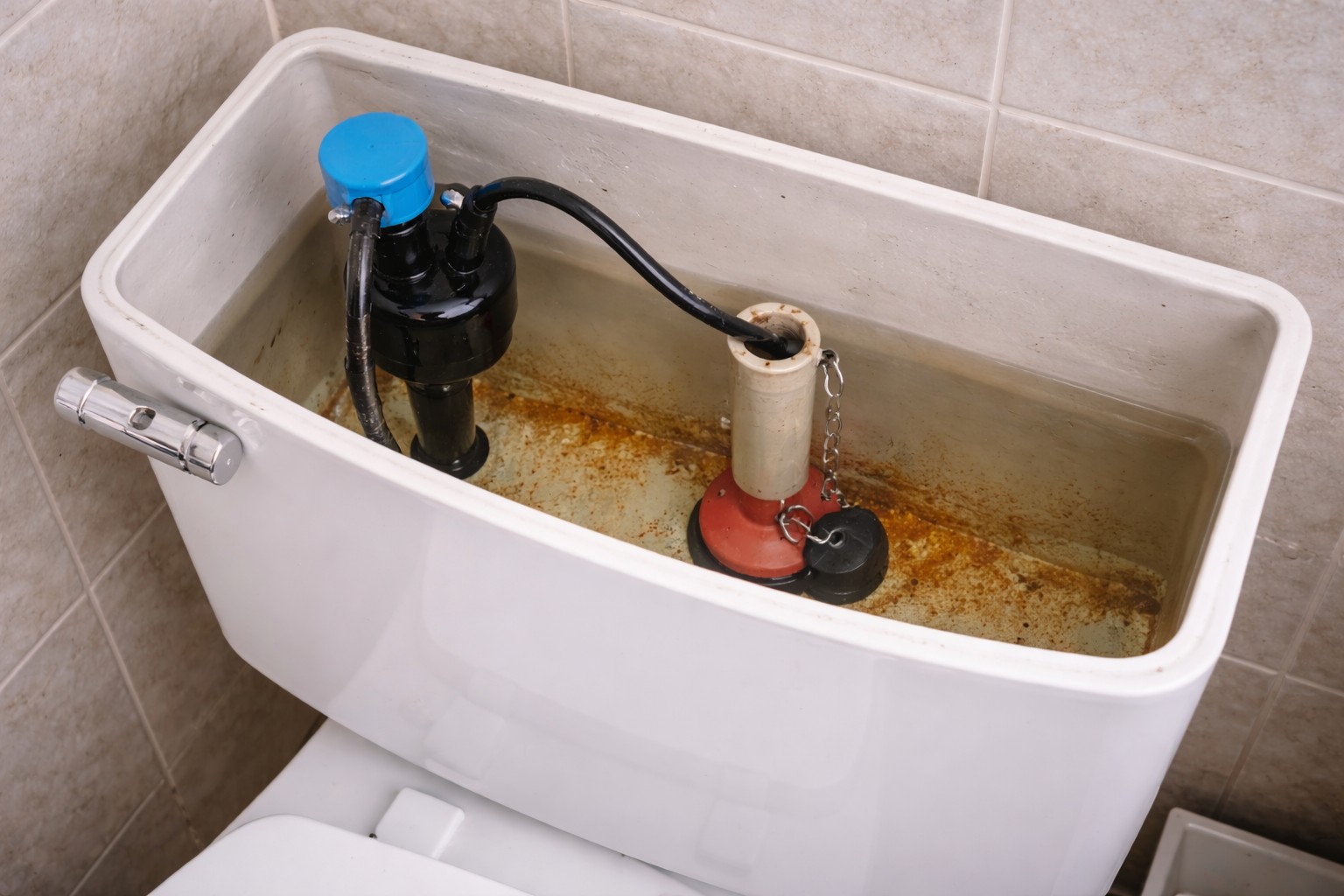
- Loose sediment in other fixtures can spread; it can also cause issues like clogs or fill failures in nearby valves, a situation related to Sediment causing toilet fill failure.
Step-by-Step What to Do
1) Capture and inspect
- Place a fine mesh sink strainer or a coffee filter over the drain and run a short flow of water to catch flakes.
- Note color and size: reddish-brown flakes indicate iron/steel corrosion; darker particles may be old sediment.
2) Determine hot-only or cold too
- Run cold water first for a minute, then run hot. If flakes appear only from the hot side, suspect the water heater.
- If flakes appear from both, the issue is likely in house piping or the service line.
3) Flush the water heater (into a bucket)
- Turn off power to the heater (electric: switch off breaker; gas: set to pilot/turned off) and close the cold inlet valve.
- Attach a short hose to the drain valve and drain into a bucket placed on a sturdy surface. Watch the water for flakes and sediment.
- Drain only a few gallons at first to check for visible rust. If heavy sediment appears, a fuller flush or professional service may be needed.
- Never reopen the cold supply while the drain is running unless instructed by a guide or plumber; follow the heater maker’s instructions.
4) Consider pipe inspection if flakes are frequent
- If flakes keep coming back after a heater flush, the pipes may be corroding. Consider a visual inspection of accessible pipes or a plumber who can inspect hidden lines.
- Frequent flakes from cold water suggest the service line or galvanized piping is failing and may need replacement.
5) Monitor for leaks and pattern changes
- Keep a log: when flakes appear, which taps, hot or cold, and any recent work on the system (main valve turned, repairs, pressure changes).
- Regularly check exposed fittings and pipe joints for dampness or rust stains that suggest an imminent leak.
What Not to Do
- Don’t dismiss rust flakes—they indicate corrosion and often precede leaks.
- Don’t pour harsh acids or unknown chemicals into the system to “dissolve” rust — that can damage pipes and fixtures and create hazards.
- Don’t assume a quick run of water permanently solves the problem if flakes recur; temporary clearing can mask a worsening condition.
When to Call a Professional
- Flakes return after flushing the heater or appear frequently from cold water — this suggests pipe or main-line corrosion needing a plumber’s inspection.
- You find active leaks, bulging or heavily corroded visible pipes, or water that is continually brown/discolored.
- The water heater is old (commonly 8–15 years depending on type) and shows signs of internal rust or repeated sediment buildup.
Safety Notes
- Hot water can cause scalding. Let water cool before handling drain water, and wear gloves and eye protection when inspecting or draining the heater.
- Turn off power or gas to the heater before doing any drain work. If you’re unsure how, call a professional.
- Dispose of rusty drain water responsibly — don’t pour large amounts on plants or into sensitive surfaces without checking local guidance.
Common Homeowner Questions
- Can I drink water with rust flakes? No. Small amounts are unlikely to cause immediate harm, but discolored water tastes bad and indicates corrosion — avoid drinking until resolved.
- Will a water filter stop the flakes? A point-of-use filter can catch flakes but won’t fix the corrosion source; consider filters as a temporary measure.
- Is pipe replacement the only long-term fix? If internal corrosion is widespread, replacing the affected pipe or service line is the reliable long-term solution.