A rotten-egg description during hot-water use is useful history, not identification of a gas, bacterium or failed anode. Decide whether there is an air emergency before investigating an odor already noticed in water.
Respond to a possible air hazard first
For suspected fuel gas, leave the building or affected area immediately. Do not operate valves, switches, plugs, fans, appliances or phones there. From well away, call the gas emergency service or emergency services and wait for clearance. Hissing, a strong smell or illness is not required before acting on a suspected leak.
For strong, widespread or unexplained gas-like fumes, exposure symptoms or suspected high sewer-gas concentrations, leave and call emergency services from outside. Do not stay to ventilate, sample or find the source. Never enter a well pit or confined plumbing space. Odor intensity cannot measure gas concentration. A faint localized drain odor without those warning signs can need ordinary plumbing assessment.
A carbon monoxide alarm or suspected exposure also requires everyone outside and an emergency call from safety. Carbon monoxide has no odor; a water-odor comparison cannot clear a combustion concern. Do not restart or cycle a heater to investigate.
Separate the water-use decision
For a new unexplained water-quality change, use a known-safe supply for drinking, food preparation and oral care while contacting the drinking-water supplier or local well-water authority. Follow the actual advice for bathing and other uses. A mild smell, no posted advisory, clearer water or an odor-free interval cannot alone approve use. An identified nuisance condition can have different provider instructions; not every familiar odor requires the same tests.
Keep the original observation
- Original water use versus room-air observation, without drawing fully hot samples or cycling the heater.
- Heater and anode model, source water, treatment, installation work and prior service findings.
A heater-related explanation needs actual evidence
Sulfur-related water chemistry, a reaction involving an actual anode and other source conditions are possibilities. A hot-only observation does not uniquely identify the tank or exclude a fixture, connector or drainage contribution. A well-water explanation is not automatically the cause in a city-supplied home. Do not infer concentration or health risk from how strongly it smells.
Avoid a hot-sample or heat-cycle challenge
If testing is appropriate, have the supplier or certified laboratory choose the substances, collection site, bottles and handling before flushing, cleaning an outlet or altering treatment. A casual glass, a tank drain and a lab-defined first-draw sample are different. Report existing observations without deliberately tasting water or making hot/cold sniff comparisons.
Do not put a hand or face near fully hot water, lean over a glass, stand by a burner or compare the first draw before and after reheating. A later milder sample changes several conditions and does not prove bacteria responded immediately to a heat cycle.
Anode and disinfection decisions
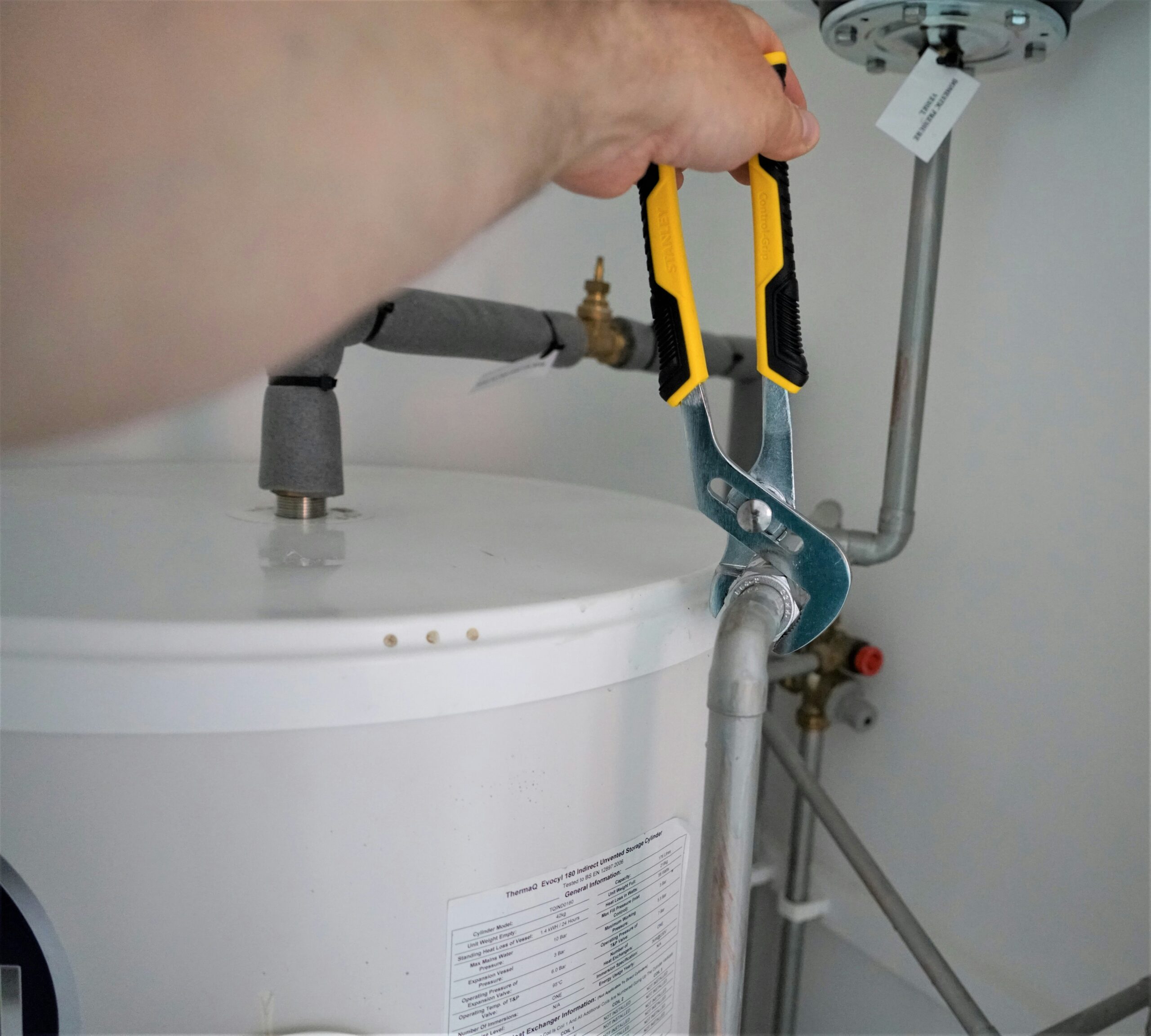
Heater or anode work needs the actual model procedure: isolate relevant water feeds and energy, control temperature, release retained pressure by the specified method and verify the worked segment before opening it. Power or fuel off alone does not depressurize a tank. Preserve the model’s required corrosion and relief protection. Use compatible parts and an approved treatment, with complete safe reassembly and full-water commissioning before heat returns. Do not permanently remove an anode, add disinfectant or raise temperature as a generic odor experiment; appropriate owner maintenance or qualified service depends on the actual instructions.
A manufacturer’s smelly-water bulletin describes one equipment context, not a diagnosis of this tank or a promise that an aluminum/zinc rod will cure every odor. Ask the actual maker or technician about compatibility and the verified source before choosing a remedy.
Arrange the next appropriate assessment
Use the original history to choose supplier or well-water advice, installer or appliance service, or drain/trap assessment. Do not wait for a fixed number of days, repeated exposure or a stronger smell before reporting an unexplained change. Treatment should address actual findings and equipment; a recurrence log or one negative test does not certify every possible hazard.
Related situations
Safety sources
- Con Edison: suspected gas leaks
- Wisconsin DHS: sewer-gas exposure and emergencies
- CDC: drinking-water advisories
- CDC: carbon monoxide alarms and wet electrical devices
- EPA: certified drinking-water laboratories
- A. O. Smith: smelly-water bulletin, within its equipment context
- Example electric-heater manual: filling and maintenance requirements
- Minnesota Department of Health: sulfur odor and actual source investigation