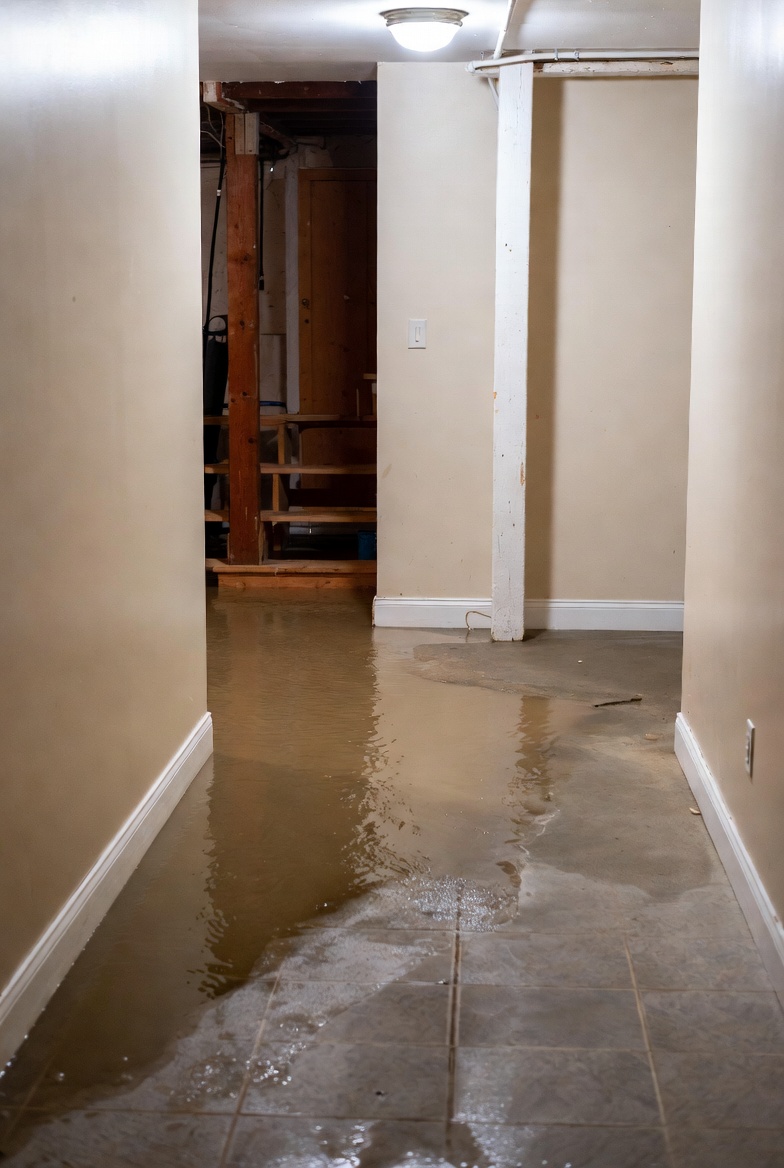
Slow drainage across several fixtures raises concern about a shared restriction or sewer condition. Stop contributing discharge if water is returning or capacity is clearly failing. Roots are possible, but grease, debris and other faults can also affect a shared main; house-wide symptoms do not prove a long root mat.
Protect people before checking the pipe
For strong, widespread or unexplained gas-like fumes, exposure symptoms or suspected concentrated sewer gas, leave the building and call emergency services from outside. For suspected fuel gas, leave even if faint; do not operate switches, plugs, valves or phones in the affected area. Do not stay to sniff, ventilate or wait for an odor to fade. Follow responder clearance.
During sewage return, stop affected household wastewater inputs, keep people and pets away and obtain prompt appropriate service. Stay out of water near electrical equipment. Do not touch wet plugs, appliances or controls; isolate power only from safe dry access when no gas emergency is suspected, or get utility/electrician help. A supply shutoff does not stop every public sewer, groundwater or automatic inflow.
Establish inspected condition before choosing the repair extent
- Closed access: Do not open a cleanout to discover standing sewage or rely on rags and a bucket to catch it. Observe only safely visible exterior conditions and give the provider the original affected fixtures and event.
- Useful inspection: Ask for the actual access, route, footage reference, material, entry defects and extent viewed. A camera may not pass or see through a blockage. Rental availability or understanding the controls does not establish safe gas, head, residue, electrical or access conditions.
- Treatment and responsibility: A few entry points do not automatically qualify for foam or simple cutting, and a continuous mat does not automatically require full replacement. Assess actual pipe and site suitability. A position before or beyond the street connection does not universally settle ownership; use local rules, connection and service records, and the actual inspection.
What should I receive from the service provider?
Ask for a copy of the video where obtained, a written account of observed conditions and inspection limits, the location reference and the reason for each proposed repair or follow-up. Do not assume every provider supplies a liability-stamped map. Keep qualified clearing and repair as options without inappropriate deep hand removal, unassessed high-pressure work, confined-space entry or automatic excavation.
Use evidence before choosing root treatment
Keep unknown cleanout caps and sealed covers closed. Gloves, upwind position, a slow turn, a bucket or rags do not establish a controlled release of trapped sewage or gas. Do not enter a manhole, pit, tank or excavation. Keep off soft, undermined or sinking ground; do not probe wet soil with a rod or stake. Complete the local locating process, including relevant private services, before any excavation; a sewer camera location alone does not locate all utilities or certify a safe trench.
Tell the provider about every drain opener, root-control chemical, winterizing product and prior treatment. Do not add another product, improvise neutralization or use a guessed wait or rinse as clearance for tools or opening. Root-control products and drain openers have different purposes; any proposed treatment needs its exact current label, permitted site, pipe condition and receiving-system assessment. Chemicals cannot repair a broken joint or collapsed pipe.
Ask for the observed material and defect, access point, footage reference, inspected extent and missing or obscured sections. Keep a copy of the video and written explanation. An underwater or blocked view may hide the cause or pipe condition; a camera does not prove every leak, identify the responsible tree or automatically settle ownership. Cutting may restore flow without sealing the entry. A spot repair, lining or replacement needs the actual condition, shape, grade, connections and access assessed; root length alone does not choose the repair.
After correction, use an appropriate assessed completion or manufacturer maintenance check with an accepting receiving path and required source controls. Stop at leakage or renewed rise. Do not reproduce an unresolved backup with a flush, hose, hot tap or appliance load. Set any follow-up inspection or cleaning interval from the documented condition and service plan, rather than a universal root-growth clock.
Related guides
When to get prompt basement drainage help
Sources and limits
- Wisconsin DHS: sewer gas, exposure and leaving an unsafe area
- Con Edison: suspected fuel-gas leak response
- CDC: electrical hazards near water
- Madison Metropolitan Sewerage District: stop discharge and report backup
- Example drain-opener label: remaining-product restrictions
- Seattle Public Utilities: repair choices and sewer-camera limits
- Seattle Trees: roots, damaged utilities and locating before digging
- Enbridge example: locating services before excavation
- Portland utility: roots and other material can obstruct sewer mains
Sources explain general functions and examples; they do not identify your pipe, tree, defect or local responsibility. Independent professional review and household field tests have not been obtained.