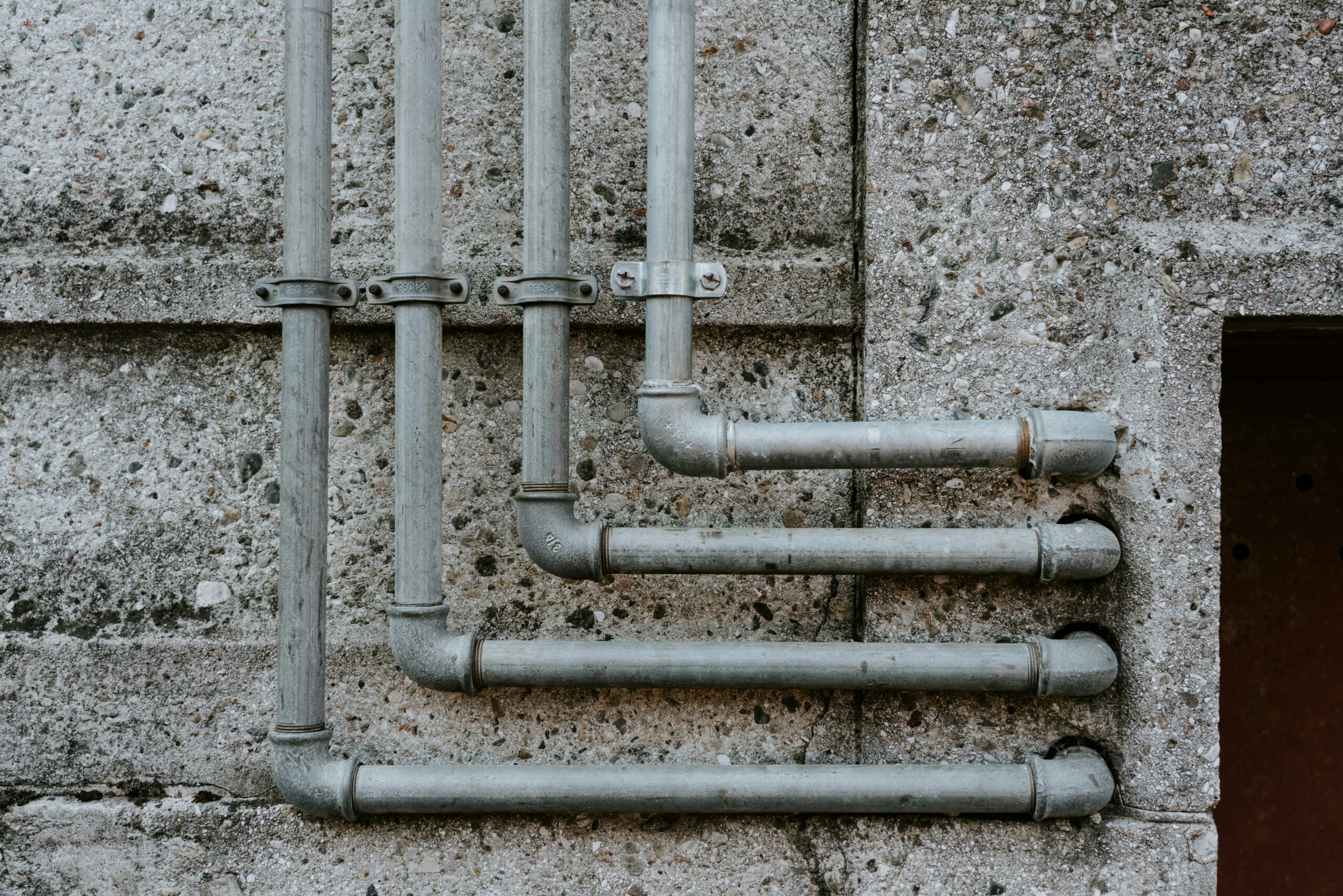
For a rattle in an upstairs wall, keep the original room, fixture action and timing. Sound can travel vertically or horizontally, so a surface shudder does not distinguish an exact pipe contact from appliance or other transmitted vibration.
Check the area before investigating
Keep people away from sagging, bulging or water-damaged ceilings; do not stand below, press or puncture them to locate a rattle. Active leakage, severe movement, steam, very hot discharge or electrical arcing needs prompt appropriate help. Stay away from wet electrical gear and do not enter water to reach a switch. Use only a safely accessible dry normal control when safe, otherwise get qualified assistance.
For suspected fuel gas, a carbon monoxide alarm or exposure symptoms, leave immediately and call the appropriate emergency service from safety. Do not operate switches, phones, valves or appliances in the affected area. A known safely operable customer supply stop can limit an active supply leak when safe; do not force unknown, shared, utility or fire-protection controls.
Keep supplied flow separate from residual water after isolation
- State matters: Closing a supply and opening the fixture may release residual water; it is not evidence of a sustained flushing flow that cleared air or debris. Any appropriate purge needs the actual procedure, a safely restored supplied state and a safe receiver after faults are addressed.
- Useful observations: Ordinary maker-permitted control observations can help in safe conditions, but do not repeatedly run several fixtures, force hot-only operation or enter an unsafe attic to trace a hidden branch. A control setting is not a measured flow or pressure record.
- Planned access: Do not drill, poke metal tools into the wall or rely on a circuit switch or noncontact tester as permission for hidden electrical work. Qualified inspection may use existing access or justify a new opening. Do not promise a secure repair without any finish disturbance.
Can every loose-looking upstairs clamp be tightened?
No. Identify its actual material, support function and movement allowance. Routine accessible work differs from concealed, structural or pressurized service. Preserve the observed condition and obtain help for uncertain access, leakage or wiring.
Match the support to the actual pipe
Routine care of an accessible external support may be possible with a sound dry work area, known safe temperature and the correct pipe, fastener and mounting instructions. A fixed anchor can be intentional; a sliding guide can be intentional. Do not tighten every strap until all movement stops. Do not use sharp, crushing or incompatible hardware, blind wedges or makeshift cloth wraps. Approved compatible cushions or insulation can be useful where the actual design permits them.
Opening or reworking a pressure-containing fitting is different from external observation or routine support care. It requires actual isolation and controlled retained pressure, temperature and energy; reducing flow is not enough. Do not use touching a hot or moving pipe as a diagnostic. Hidden runs, uncertain supports, wiring, gas, vents or structural changes need suitable qualified service. Cameras and listening tools have limits; no one can guarantee a concealed repair will avoid every opening or finish repair.
Related guides
Sources and equipment limits
The PEX guidance is an example for that material, not a support specification for every pipe. Use the actual product and local requirements. Independent professional review and field testing have not been obtained.