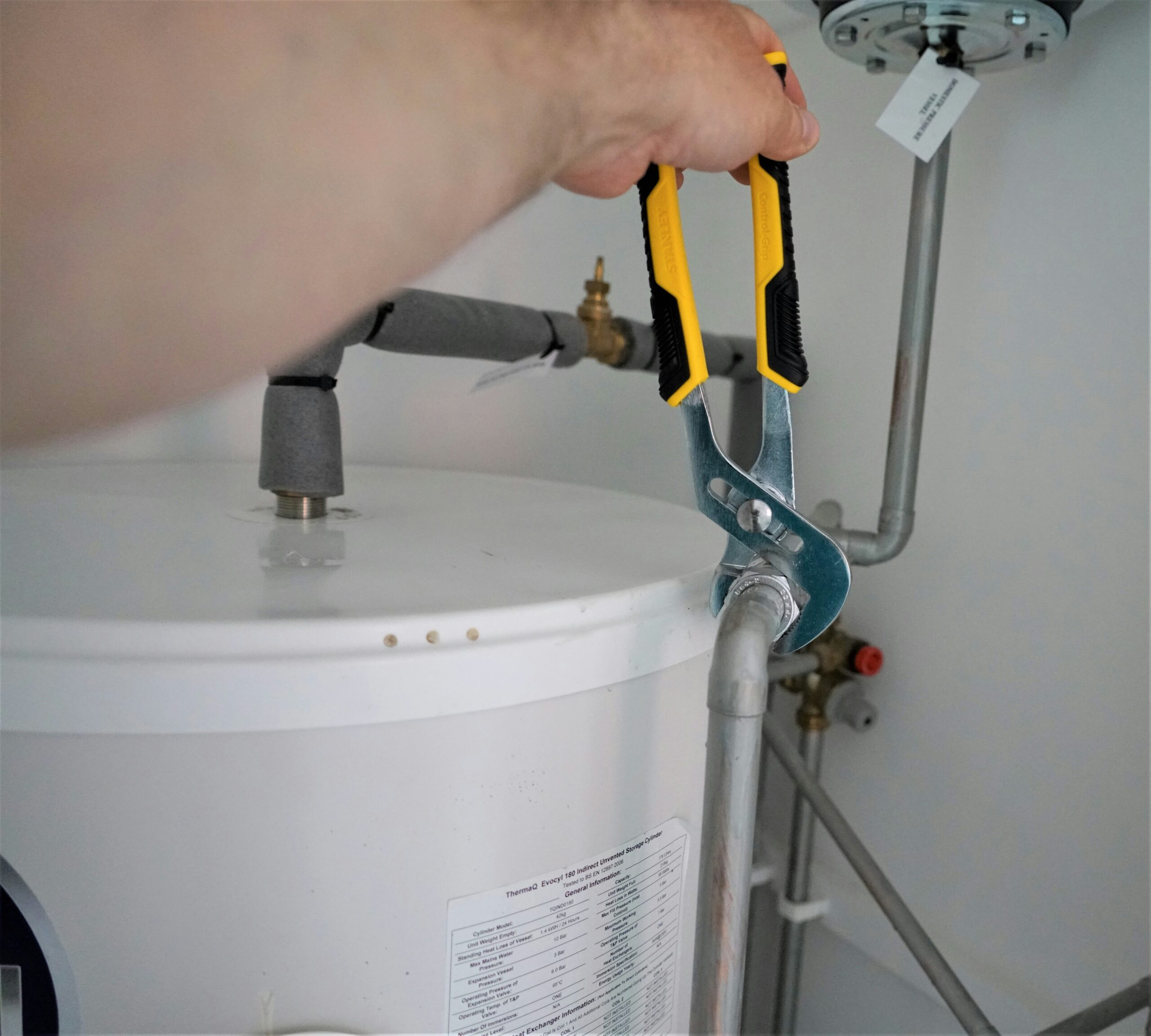
Quick Answer:
If the hot side of your plumbing shows weak flow or sudden surges while the cold side stays steady, the pressure-reducing valve (PRV) and thermal expansion control are common causes. Start by comparing cold and hot flow at a tub spout, watch behavior during the water heater’s recovery period, and check the hot-side expansion tank. If you see surges, address thermal expansion and confirm the PRV is regulating pressure correctly. A leaking relief or PRV can add clues—look for PRV dripping at relief port when you inspect the system.
Why This Happens
- Domestic water enters at a single pressure. A PRV near the main shutoff sets the house pressure. If the PRV is failing or is not regulating under changing conditions, one side (often hot) can behave differently.
- When the water heater heats water, the volume increases. If expansion isn’t handled (waterlogged or missing expansion tank, or no expansion control), pressure can spike briefly, then the PRV may react and reduce flow, causing weak hot or intermittent surges.
- Hot-side piping and valves can trap or amplify pressure swings. That is why this often points to hot-side PRV problems or to inadequate expansion control rather than an immediate heater failure.
Step-by-Step What to Do
1. Compare cold vs hot at a tub spout
- Run the tub full cold and collect water in a 1‑liter (or gallon) container for 15 seconds; note the volume. Repeat for full hot. This simple flow test shows if hot flow is lower than cold.
- Do the test with only one tap open each time, and keep the water heater idle (no recent heavy hot use) for the first comparison.
2. Watch during water‑heater recovery
- Use hot water until the heater runs (for storage tanks, that’s after a long shower or dishwasher run). Observe the hot spout while the heater is heating back up.
- If surges or pressure drops happen during recovery, thermal expansion is a likely contributor: the system pressure rises as the heater reheats water and the PRV may open or react.
3. Verify the expansion tank
- Locate the expansion tank near the water heater. Tap it: a hollow sound or a lighter feel is ok; a solid, heavy feel suggests it’s waterlogged.
- Check the tank’s air charge at the Schrader valve (use a tire gauge) only if the tank is isolated and the system is depressurized. The pre-charge should match your static household pressure; if it’s low, the tank may need air added or replacement.
- If you’re not comfortable isolating and depressurizing the tank, mark this for a pro.
4. Check the PRV and confirm regulation
- First, visually inspect near the main shutoff for leaks, corrosion, or drips. Note any dripping from relief fittings—this can be relevant to diagnosis.
- To confirm a PRV is regulating, compare pressure readings before and after the valve using pressure gauges at an outdoor hose bib (cold side) and at a hot-side test point if available. Typical household regulated pressure is often set between 40–60 psi; a big mismatch or wild swings means the PRV or its relief may not be holding steady.
- Do not make large adjustments to the PRV if you’re not experienced. Minor turnings may be possible, but incorrect changes can create other problems; call a professional if the PRV doesn’t hold steady or if you’re unsure.
5. If hot surges, correct thermal expansion
- If you confirmed the expansion tank is faulty or missing, add or replace it. That typically stops pressure spikes during heating and reduces hot-side surges.
- After fixing expansion control, re-test hot flow and observe the PRV. If surges stop and hot flow matches cold, you’ve likely solved it.
- If issues persist, the PRV may need service or replacement to restore steady regulation.
What Not to Do
- Don’t blame the water heater first—confirm cold-side behavior and expansion control before assuming the heater is at fault.
- Don’t replace the PRV or water heater without verifying pressure behavior with simple tests first.
- Don’t open or remove PRV components or relief valves while the system is pressurized. That can be dangerous.
When to Call a Professional
- If you suspect a waterlogged expansion tank but aren’t comfortable isolating and depressurizing the line.
- If the PRV won’t hold a steady pressure, shows leaking at the relief port, or you see repeated dripping—this may require replacement or adjustment by a plumber.
- If you have high incoming municipal pressure (over about 80 psi) or complex multi-zone pressure issues — these need proper gauges and experience to correct safely.
Safety Notes
- Turn off power or gas to the water heater and let it cool before doing any work on or near the heater or its plumbing.
- Relieve system pressure before opening lines, tanks, or valves. Hot water under pressure can scald or cause injury.
- Use proper pressure gauges and fittings. If you’re unsure how to measure pre‑charge or pipe pressures, call a licensed plumber.
Common Homeowner Questions
- Why does only the hot side surge? Thermal expansion and a PRV that reacts differently under changing temperature conditions commonly cause hot-side surges.
- Can I fix a waterlogged expansion tank myself? You can check and add air if you know how to isolate and depressurize the tank, but replacement or full servicing is best done by a pro if you’re not comfortable.
- When is the PRV likely the culprit? If pressure readings before and after the valve differ unexpectedly or the valve leaks/drips and adjusting it has no effect, the PRV is likely faulty and should be serviced.