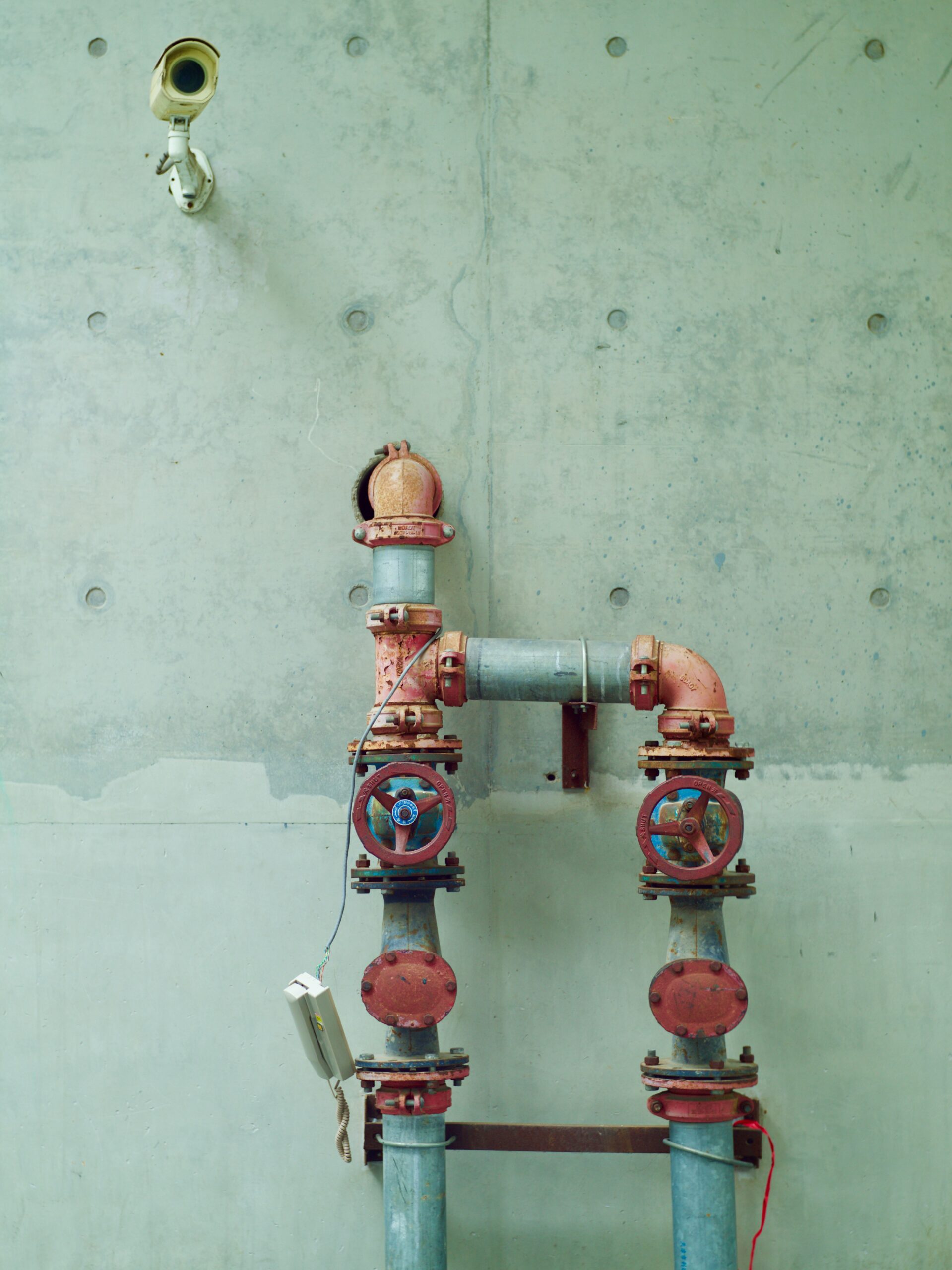
Buzzing heard near a reducer during ordinary flow is useful timing evidence. Feeling vibration at the body does not prove it originated there or establish cavitation.
Safe first steps
Keep away from wet electrical equipment. Do not touch wet appliances, plugs or switches, or enter water to reach a breaker. When no gas leak is suspected, power may be isolated only from a safely accessible dry location; otherwise call an electrician or emergency help. Wet equipment needs qualified assessment before it is used again.
For leakage or severe abnormal pressure, use a known safely accessible permitted owner control without force or request prompt supplier/plumber assistance. Keep away from wet electrical equipment. Do not operate supplier meter/curb controls, protective test cocks or unknown shared valves by guesswork. A normal safe owner operation differs from experimenting on a failed assembly.
Keep the useful evidence
- Original low/ordinary/high-demand event already observed, without recreating it.
- Sound location, visible movement, leaks and recent work.
- Actual model, supply/regulated readings and pressure points if already available.
Interpret the actual conditions
Vibration can travel along piping. Operating pressure ratio, flow range, support, nearby devices and actual internal condition may matter. Persistent sound alone is not proof that a new PRV will resolve the cause.
What to do next
- Do not hold the body, tighten moving connections or increase to several full-flow outlets to identify the source.
- Stop use and seek prompt service for severe movement, leakage or unsafe delivery. Do not improvise clamps, wedges or a bypass.
- Have a provider assess actual model operating conditions, pressure reduction, pipe support and transmitted noise before calling it cavitation or a torn part.
- Any justified strainer service needs the actual access/isolation method; a quiet response after cleaning does not establish the original mechanism.
- Choose repair, operating-range correction or replacement from evidence, not the sound label alone.
Before internal service
Before any internal service or fitting removal, identify and isolate every supply that can pressurize the section, release trapped pressure through the appropriate controlled outlet and verify depressurization. Account for hot water and possible alternate feeds. Lowering a PRV setting, reducing flow or wearing gloves does not make a pressurized assembly safe to open. If isolation cannot be established, leave it assembled and obtain qualified help.
Identify the actual model and whether screen access, seat/module service and spring-cage removal are separate procedures. Water-pressure release alone does not establish that a mechanical spring is unloaded. Follow the complete actual pressure, spring-release, compatible-part and reassembly method; comfort with tools is not a substitute. If safe isolation or the procedure is uncertain, leave the assembly intact and obtain qualified service.
Keep all relevant supplies isolated while any retained component or connection is open. Fully reassemble compatible rated parts before controlled restoration and leak/function checks. Any specified construction or service flush needs its relevant securely connected path, source-off refitting and accepting discharge; never reopen supply into an exposed pipe aimed at a bucket. Whole-house/hot flushing is not a default diagnostic or water-quality clearance.
Does a vibrating PRV body confirm the valve is defective?
No. It records vibration at that point. The actual source, operating conditions and assembly integrity still need assessment.
Related guides
- Pressure fluctuates randomly throughout day
- Pressure gauge readings unstable at PRV
- PRV failing only under high demand
- PRV causing hammer in pipes
- Pressure Regulator (PRV) Failure Patterns