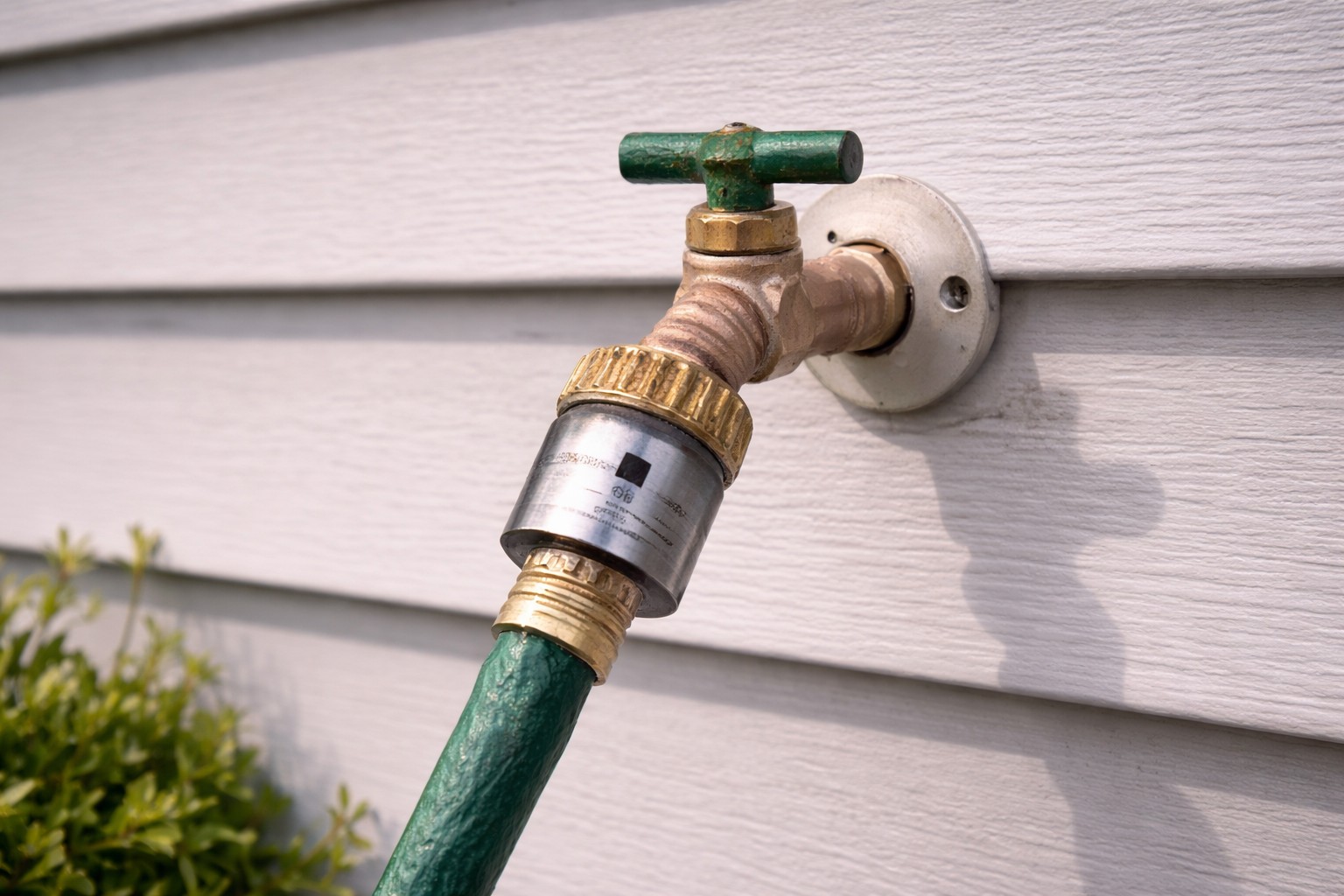
A drop during irrigation can reflect your own zone’s demand or a zone leak as well as wider supply conditions. A clock match or improvement after rescheduling does not prove a municipal main problem.
Respond before collecting more data
Keep away from wet electrical equipment. Do not touch wet appliances, plugs or switches, or enter water to reach a breaker. When no gas leak is suspected, power may be isolated only from a safely accessible dry location; otherwise call an electrician or emergency help. Wet equipment needs qualified assessment before it is used again.
For sudden severe loss, no supply, an active leak, unsafe temperature, abnormal high pressure or a protective shutdown, stop affected use and seek prompt supplier/installer/plumbing help. A week of readings, matching neighbors or constant symptoms is not required. Control a leak only from safe dry access with an identified owner valve without force; leave utility equipment and unknown controls to the responsible provider. Do not repeat the fault or disable needed services to make a log.
Keep this pattern’s useful evidence
- Actual water source and protected household/irrigation branch arrangement, zone and valve event times.
- Original affected household outlets, known zone flow/leaks and ordinary concurrent use.
- Existing controller/rain-sensor record and actual supplied gauge point, units and instrument limits.
A timed zone leak can be substantial
A leak beyond a zone valve may occur only while that valve admits water. Normal pressure outside the irrigation window does not rule out a large zone loss. Keep a known leaking zone off by its actual safe owner control and obtain irrigation service; do not run it another 10–15 minutes to demonstrate the drop. Inspect only from safe access, without opening valve bodies or electrical enclosures.
No cleanout gauge or live precharge test
A drain cleanout is not a potable water-pressure connection. Do not adjust a regulator slightly as a cause test, or check/recharge a tank’s precharge during live irrigation. A water-side operating reading differs from air precharge; actual vessel application/condition, independent energy/source isolation and verified unloaded water side are required for the appropriate qualified service. Preserve all backflow protection.
A schedule change also changes your own load
Legitimate controller scheduling follows current local watering rules and actual model instructions. Staggering approved zones or avoiding unnecessary simultaneous use may help an assessed demand issue, but cannot distinguish site demand from city cause by itself. Do not move a fault to unattended overnight operation or relax protective controls.
Use comparable measurements and safe service
Keep pressure and delivered flow separate. An optional gauge check uses an intact existing approved owner connection, compatible pressure/temperature rating and its actual connection/release procedure. Map the source, regulator, check and valve side; a near-street hose bib is not automatically upstream. Record units, time and actual demand/heating conditions. Compare like static or known-flow states; a maximum-only pointer stores neither the low nor its time/duration, and an ordinary dial may miss fast events. No hot adapter, drain cleanout, backflow test cock or live fitting is a generic supply test point.
Before any retained part or joint is opened, identify and independently isolate all feeds, control temperature and relevant energy, release trapped pressure appropriately and verify that segment is unloaded. A lower PRV setting or remote tap alone does not establish safe service. Complete compatible reassembly, required protection and actual commissioning before restoration. Do not bypass a regulator/check or relax an unexplained protective alert to improve delivery.
Related situations
- Pressure better during rain
- Pressure drops when city demand rises
- Pressure Drops When Multiple Fixtures Run
- Water Pressure Changes by Time of Day
Safety sources
- CDC: electrical hazards near water
- Watts 25AUB example: actual regulation, measurement and service boundaries
- Watts IWTG example: a retained maximum is not a low-pressure time log
- Portland example: distinguish pressure, flow, property conditions and supply events
- EPA: preserve protection against cross-connections
- EPA WaterSense: soil-moisture controls can suppress a scheduled irrigation event