Quick Answer:
If the pool autofill opens and lots of water flows at once, the service line can be overwhelmed and you’ll see pressure drop at taps and showers. First, stop the autofill valve. Then check pressure with other fixtures isolated, watch the meter while the autofill runs, and confirm the pressure-reducing valve (PRV) setting before replacing anything.
Why This Happens
Homes share a single service line and water meter. A pool autofill can demand a large continuous flow, leaving less flow and lower pressure for the rest of the house. The supply can be limited by the meter size, the service pipe diameter, or a PRV that’s set low. You’ll see the same behavior in other high-demand situations — for example, when the sprinkler or a washing machine runs, or in these common patterns: Shower pressure drops when toilet flushes and Pressure weakens when hose is used. Those are signs the issue is demand-related rather than a single broken fixture.
Step-by-Step What to Do
Step 1: Stop the autofill and note immediate change
- Shut off the pool autofill controller or ball valve. If pressure returns quickly, the autofill is the likely cause.
- Record which fixtures were affected and how the pressure changed (e.g., slow trickle, no flow, or brief sputter).
Step 2: Test pressure with fixtures isolated
- Close individual fixture supply valves (bath, toilet, hose bibs) or shut off branch valves so each fixture can be tested alone.
- Use a simple pressure gauge at an outdoor hose bib or have a plumber attach one at the PRV to compare static and operating pressure.
- Measure static pressure with everything off, then open one fixture at a time to see which loads cause the pressure to fall.
Step 3: Observe meter flow patterns
- Watch the water meter while the autofill runs. A fast, steady meter rotation indicates high continuous flow; intermittent jumps indicate start/stop demand.
- Video the meter with your phone during tests so you can review how flow changed when other fixtures opened.
Step 4: Confirm PRV setting
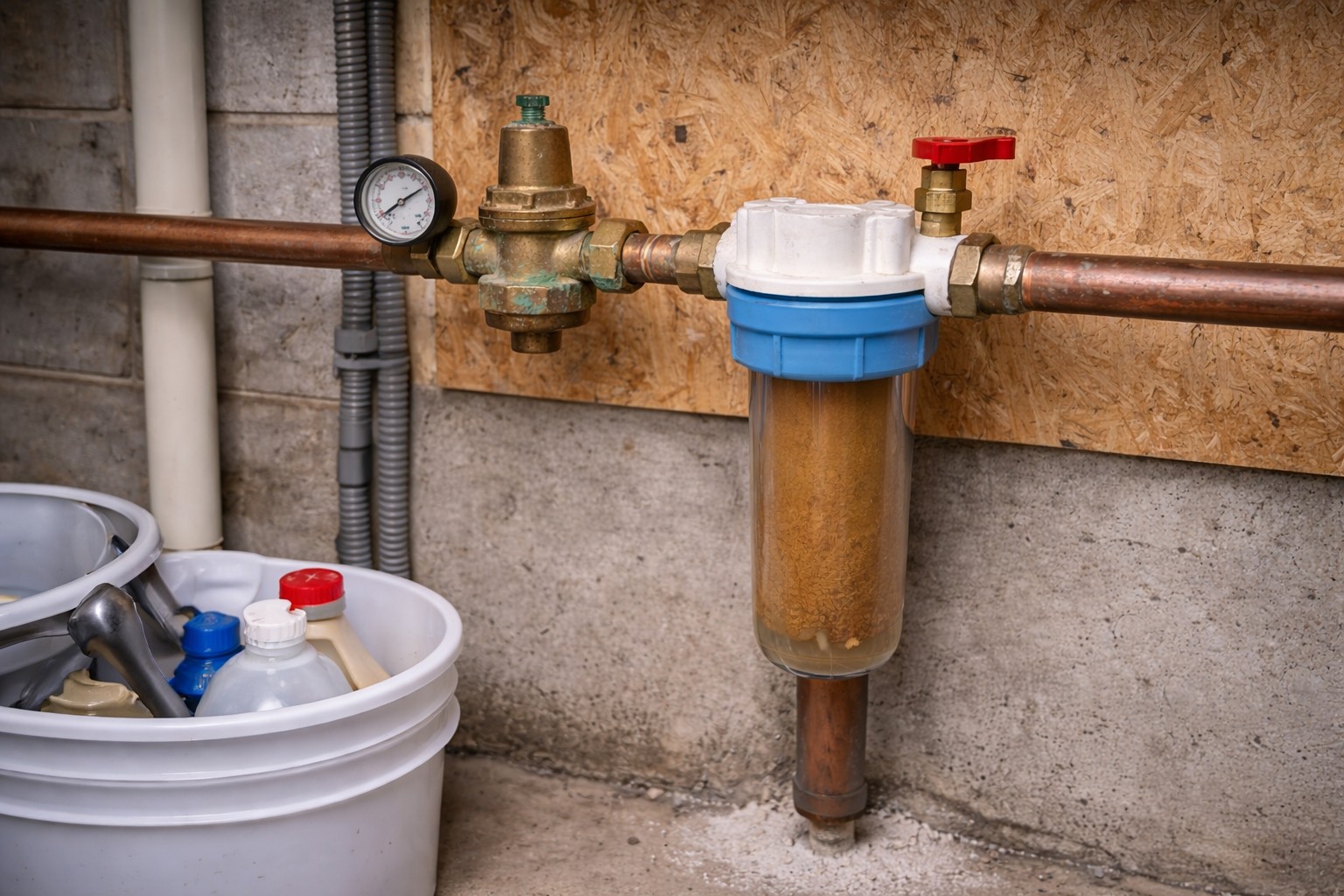
- Locate the PRV near the main shutoff and check if it’s set lower than typical household pressure (commonly 50–60 psi). If you don’t have a gauge, a plumber can verify it.
- Do not force-adjust the PRV if you’re unsure how it works — improper setting can harm appliances or reduce protection against pressure spikes.
Step 5: Run controlled tests
- With the pool autofill off, note normal pressure. Turn the autofill back on and repeat the meter and fixture tests to quantify the impact.
- If the autofill flow exceeds what the service line and meter comfortably supply, consider filling at a slower rate or running fills overnight when other demand is low.
What Not to Do
- Do not assume fixture failure when pattern is demand-related.
- Do not leave the autofill running full-rate while diagnosing—stop it first.
- Do not randomly replace fixtures or the PRV without confirming measurements; replacements may not fix a demand-capacity problem.
- Do not remove or bypass any required backflow prevention device; that protects your water supply.
When to Call a Professional
- Call a licensed plumber if the pressure drop continues after stopping the autofill, or if you find unusually high meter flow with no known uses.
- Call your water utility if you suspect the meter or service line is undersized or damaged, or if there’s a suspected leak between the main and your house.
- Ask a pro to test and set the PRV if it appears incorrect or you lack a pressure gauge.
Safety Notes
- Ensure the pool autofill has a properly installed and tested backflow preventer. If missing or faulty, a professional should install or repair it to avoid contamination risk.
- Don’t work on the main shutoff or PRV if you’re unsure—turning valves the wrong way can create unsafe conditions or damage equipment.
- If you detect a strong smell of gas (natural gas) while at the meter or service area, evacuate and call emergency services; do not operate electrical switches.
Common Homeowner Questions
- Why did pressure drop only when the pool autofill started? The autofill creates a continuous high flow that can exceed what the service and meter can deliver simultaneously to all fixtures.
- Can I limit the autofill flow instead of calling a plumber? Yes—reduce the fill rate or run fills during low-demand periods, but have a plumber check if this is a long-term solution.
- Is a leaking service line possible? Yes. If you see high meter flow with everything off, or wet ground near the service line, contact the utility or a plumber right away.
For more related articles, see the Pressure Drops When Multiple Fixtures Run hub.