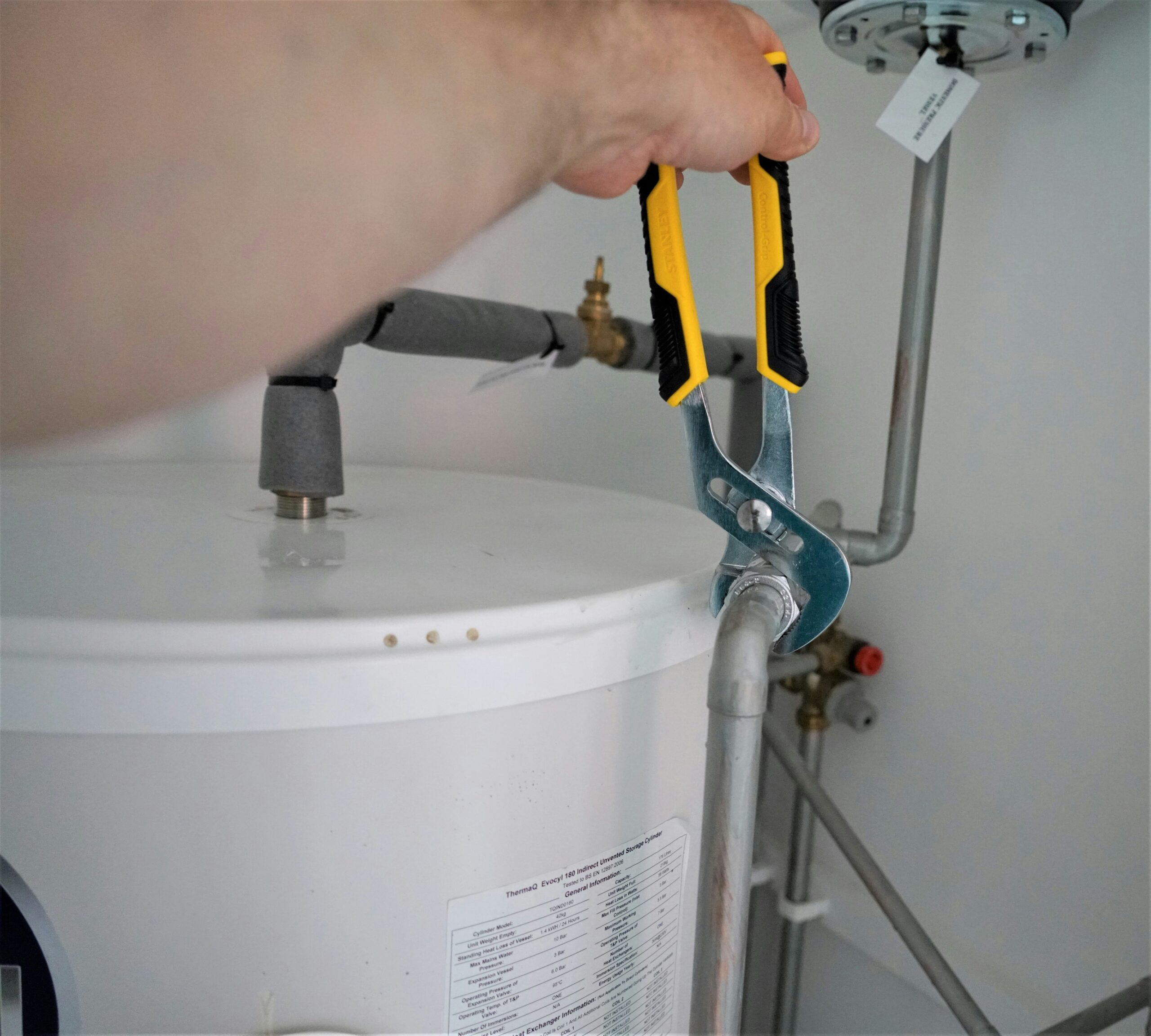
Quick Answer:
If hot and cold water pressures changed right after a heater was installed, start by comparing the water pressure on the heater inlet and outlet and check the tempering (mixing) valve near the heater. Often the imbalance is caused by a valve or pressure device that was moved, adjusted, or is stuck — not the heater itself.
Why This Happens
- Installers often close, adjust, or replace valves and devices near the heater. A partially closed shutoff, mixing valve, or pressure-reducing device can change flow balance.
- Tempering or anti-scald valves on the heater outlet can be set incorrectly, stuck, or upstream pressure changed when pipes were worked on.
- Work on nearby piping can change how pressure-reducing valves or check valves behave. In some cases you may be seeing issues like Valves failing shortly after repair or a pressure device issue similar to PRV fails after pipe replacement.
Step-by-Step What to Do
1. Do a quick fixture test
Open a hot faucet and a cold faucet at the same time and note how each behaves. Try sinks and a shower. This gives a baseline of where the imbalance shows up.
2. Compare inlet vs outlet pressure at the heater
Measure or observe pressure on the heater inlet (cold supply) and the outlet (hot side after the heater). If you have a pressure gauge or a threaded hose bib on each side, attach a gauge and read both. A noticeably lower outlet pressure points to a valve or mixing device on the outlet side; similar pressures point upstream.
3. Check the tempering/mixing valve
Locate the tempering or mixing valve on the hot outlet. Look for signs it’s partially closed, corroded, or leaking. If adjustable, note its current position and gently check whether adjusting it (small increments) changes flow balance. If it’s stuck or shows damage, it may need service or replacement.
4. Inspect shutoff valves and fittings
Make sure all shutoff valves on the hot and cold lines are fully open. A valve left half-closed during installation is a common cause. Also look for bypasses or newly installed check valves that could restrict one side.
5. Consider the pressure-reducing valve (PRV) and expansion devices
If your home has a PRV, confirm it wasn’t adjusted or damaged during the install. If the PRV is failing or set differently on one side, you can see a pressure mismatch. If you suspect the PRV, have it inspected rather than attempting major repairs yourself.
6. Test again after small changes
Make one small change at a time (open a valve, move a setting) and retest fixtures. This helps isolate the single action that fixes the imbalance.
What Not to Do
- Don’t assume heater fault. The heater often isn’t the cause; valves or devices installed with it usually are.
- Don’t bypass safety devices such as the tempering valve or pressure relief valve to try to restore pressure.
- Don’t force or remove valves while the system is pressurized — that risks injury and water damage.
When to Call a Professional
- If you can’t locate the source after the checks above.
- If the tempering valve or PRV appears damaged, stuck, or leaks — these components often require a plumber to replace or adjust safely.
- If the change involved gas connections or the electrical supply to the heater, or if you smell gas or see signs of a serious leak.
- If adjusting valves doesn’t restore proper cold/hot balance throughout the house.
Safety Notes
- Turn off power to an electric heater or set a gas heater to pilot/off before doing any hands-on work near wiring or gas lines.
- Be cautious of hot water when testing fixtures — run water slowly when adjusting valves to avoid scalding.
- Do not remove the temperature and pressure relief valve or attempt repairs on gas connections yourself.
Common Homeowner Questions
- Why did this start right after the installation? — Small changes made during installation (valves moved, PRV adjusted, tempering valve installed) commonly cause pressure imbalances.
- Can I fix it myself? — You can do basic checks: compare inlet vs outlet pressure, ensure shutoffs are open, and inspect the tempering valve. For valve replacements or gas/electrical work, call a plumber.
- Will the new heater itself cause pressure changes? — Not usually. The heater body rarely changes pressure; nearby valves and safety devices adjusted during install are the usual culprits.