Quick Answer:
If pressure falls only during the city’s busiest hours, the cause is often the municipal supply being stretched, not a fault inside your home. Confirm this by testing pressure with fixtures isolated, watching the water meter for flow patterns during peak times, and checking the house pressure-reducing valve (PRV) setting before calling a pro.
Why This Happens
City water systems serve many customers at once. Morning and evening peaks, fire hydrant use, or nearby construction can lower distribution pressure for short periods. In many homes the drop is most noticeable when large, simultaneous demands occur on the same block or feeder main.
Home plumbing can exaggerate the feeling of low pressure if internal devices (old shower cartridges, mineral buildup, or a weak pump) are already marginal. If the timing matches city peak hours and neighbors report the same, the supply network is the likely cause. You may see patterns similar to Pressure collapse when bathtub fills or Shower pressure drops when toilet flushes when multiple users draw water at once.
Step-by-Step What to Do
Step 1 — Confirm the pattern
- Note the exact times pressure falls. If it lines up with early morning or evening, that’s a clue the issue is demand-related.
- Ask one or two neighbors whether they notice the same timing; consistent reports point to the supply.
Step 2 — Test pressure with fixtures isolated
- Turn off all faucets, appliances, irrigation and any automatic devices inside and outside the home.
- Attach a pressure gauge to an outside hose bib or a laundry faucet and record the static pressure when everything is off.
- Open a single fixture and note the pressure change. Repeat during a peak hour to compare readings.
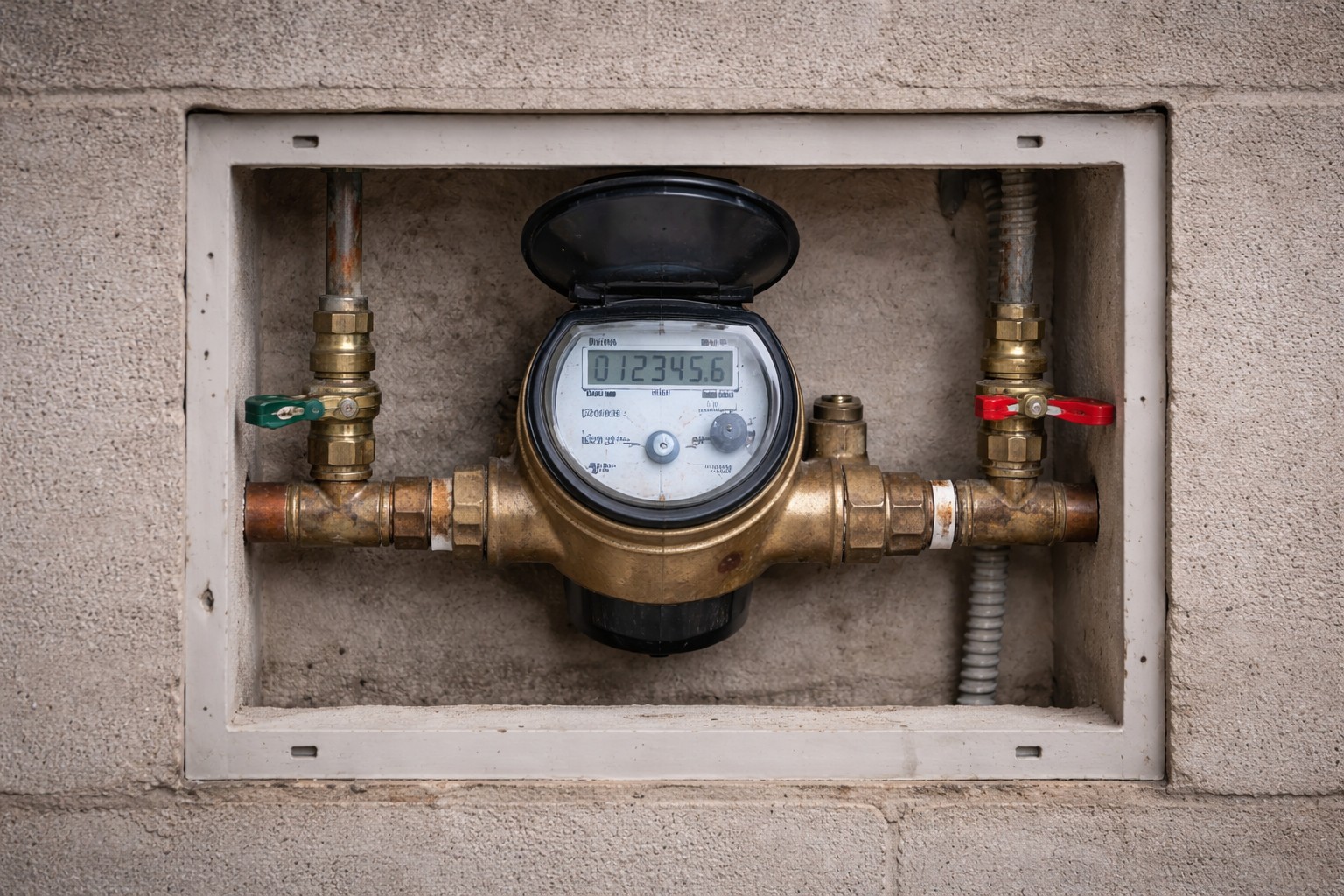
Step 3 — Observe meter flow patterns
- Watch the house water meter while pressure is low. If the meter spins or shows flow when you haven’t intentionally used water, there may be a leak or a neighbor-side issue; if it’s idle but pressure is low, the supply pressure has dropped.
- Record meter behavior at different times to build a pattern to show the utility if needed.
Step 4 — Confirm PRV setting
- Locate your PRV (usually near the main shutoff). A properly set PRV keeps household pressure steady; if it’s slipping or set very low it can mimic supply problems.
- Do not force adjustments. If you’re comfortable, check the current setting and note whether raising it slightly improves pressure outside peak times. If not comfortable, skip to “When to Call a Professional.”
Step 5 — Document and time your checks
- Keep notes with dates, times, and gauge readings. This makes it easier to show the utility or a plumber that the issue is correlated to city demand.
What Not to Do
- Do not assume fixture failure when the pattern is demand-related. If drops line up with city peak hours, the supply is the likely cause.
- Don’t repeatedly crank the PRV or force plumbing components—this can make things worse.
- Don’t call a plumber immediately without doing simple isolation tests; you may be billed for a trip when the problem is in the municipal system.
When to Call a Professional
- Pressure is low at all hours, not just during city peaks.
- Your meter shows flow when all fixtures are off (suspect a leak).\
- The PRV is leaking, stuck, or you aren’t comfortable checking/adjusting it yourself.
- You’ve documented the pattern and the utility says the supply is normal—have a plumber inspect internal piping and fixtures.
Safety Notes
- Shut off the main supply slowly when isolating systems to avoid pressure shock to appliances and pipes.
- If you open the PRV cover or remove parts, water or debris can spray—wear eye protection and follow manufacturer guidance.
- Don’t attempt work on the public side of the service line or the curb box; contact the water utility for those issues.
Common Homeowner Questions
- Q: Is low pressure at peak times dangerous? A: No — it’s usually an inconvenience; only call if appliances cannot run or pressure never recovers.
- Q: Will raising my PRV fix peak-hour drops? A: Rarely. Raising a PRV helps household pressure but can’t increase supply available from the street during peaks.
- Q: Should I contact the city water department? A: Yes, after you document the pattern and confirm neighbors are affected or your meter readings show low supply pressure.
For more related articles, see the Pressure Drops When Multiple Fixtures Run hub.