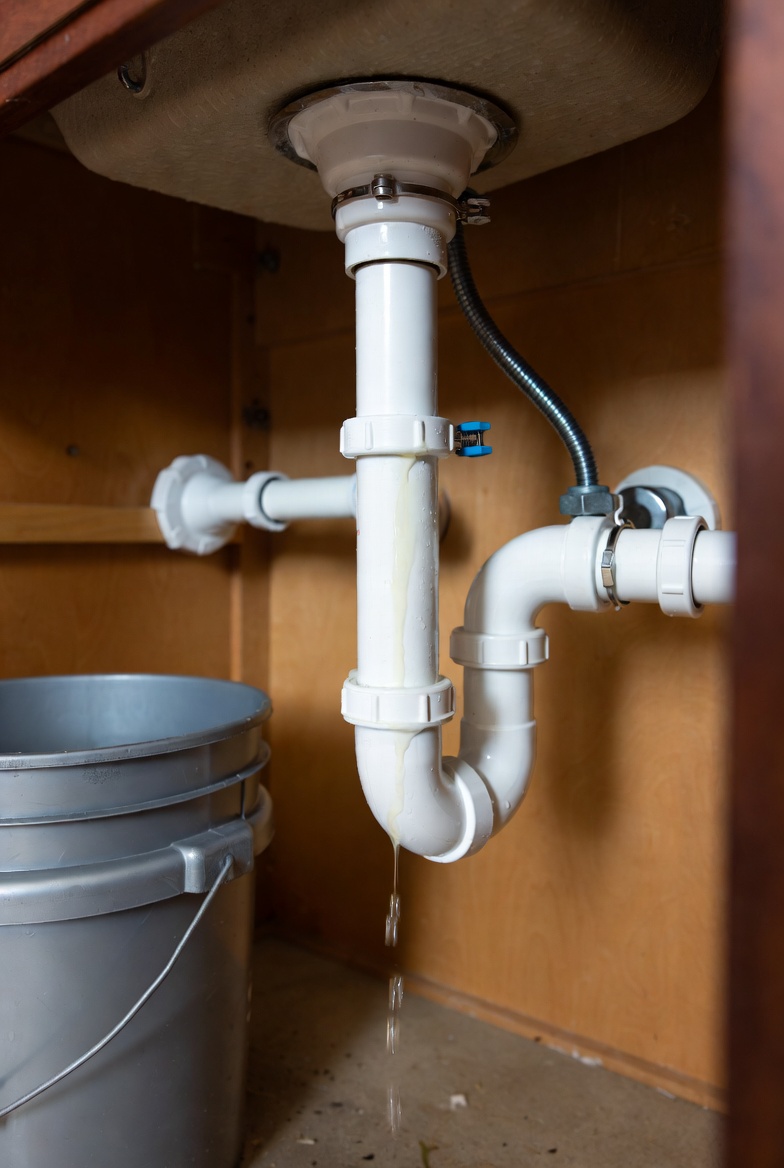
Quick Answer:
If you see moisture under the sink near the drain body, the leak is often at the sink flange or the pop-up pivot area. First dry the area and look for wet spots around the drain body gasket and the pivot ball nut. Tighten or replace a worn gasket and reseat the pivot nut if it’s seeping. If the stopper itself is jammed or not sealing, check for a clog or linkage problem.
Why This Happens
- Wear and age: gaskets and seals around the drain body dry out or fail over time.
- Loose fittings: the drain body nut or pivot ball nut can work loose from use or vibration.
- Blockage and pressure: a stuck or clogged stopper can trap water, increasing pressure at seal points.
- Improper installation: seals not seated correctly or old plumber’s putty that has shifted.
Step-by-Step What to Do
Prepare and protect the area
Place a bucket and towels under the sink to catch water. Turn off the faucet so you can test with a full sink without spraying. Use a flashlight to see the drain body and pivot assembly clearly.
Dry and identify where the moisture is coming from
- Wipe the drain body, drain body nut (the large nut under the sink that holds the tailpiece or flange) and the pivot ball nut (the smaller nut that holds the pivot rod) until dry.
- Fill the sink with a few inches of water and watch under the sink while you lift and release the stopper. Note exactly where droplets appear: at the drain body gasket area or at the pivot ball nut.
Check the drain body gasket
- If water appears where the drain meets the sink (the drain body gasket), the gasket or the flange seal is likely failing.
- Try gently tightening the drain body nut a little to see if seepage stops. If it does not stop, the gasket or putty should be replaced and the flange resealed.
Inspect the pivot ball nut and pivot rod
- Look for water seeping from around the pivot ball nut. If that nut is wet, the pivot rod seal is likely the source.
- Loosen the pivot ball nut a half turn and pull the pivot rod out to remove the stopper, then inspect the rubber gasket on the pivot and the ball seat. Replace the small rubber seal if it’s softened, cracked, or compressed.
- After replacing the seal, reinstall the pivot rod and tighten the pivot ball nut so it’s snug but not excessively tight. Operate the stopper to confirm a good seal.
Address the stopper and linkage
- Remove hair and debris from the stopper; a plugged stopper can cause slow draining and extra pressure on seals. See Stopper clogged with hair if you suspect a clog.
- If the stopper doesn’t seat properly when closed, check the horizontal linkage and spring clip adjustment on the lift rod. For guidance on a failing seal or misadjusted linkage see Pop-up stopper won’t close.
Test and recheck for leaks
Refill the sink and operate the stopper several times while watching under the sink. If the leak persists after new seals and correct tightening, the flange or tailpiece may be damaged and need replacement.
What Not to Do
- Do not overtighten drain body nuts trying to stop a pop-up leak.
- Do not rely on temporary tape or glue as a long-term fix for a failed gasket.
- Do not pour chemical drain cleaners into a sink while you are working on the drain—chemicals can cause burns and damage parts.
When to Call a Professional
- If leaks continue after you replace seals and adjust nuts.
- If the sink flange is corroded or the tailpiece is cracked—these parts often require replacement that’s easier for a plumber to handle.
- If water damage has occurred to cabinets or subfloors, call a pro to assess and repair water damage to prevent mold.
Safety Notes
- Wear gloves and eye protection when working under the sink, especially if scraping old putty or replacing rubber seals.
- Place a bucket under the work area to catch water and protect cabinets.
- Turn off hot water if heat is involved in adjacent repairs. For simple drain seal work, shutting off the faucet is usually enough.
Common Homeowner Questions
- Can I fix this myself? Yes, if the issue is a worn gasket or loose pivot nut; those are common DIY fixes.
- How much will parts cost? Replacement rubber seals and gaskets are inexpensive—usually a few dollars to a couple dozen dollars for a full kit.
- How long does a repair take? A basic inspection and seal replacement typically takes 30–60 minutes for a homeowner with basic tools.