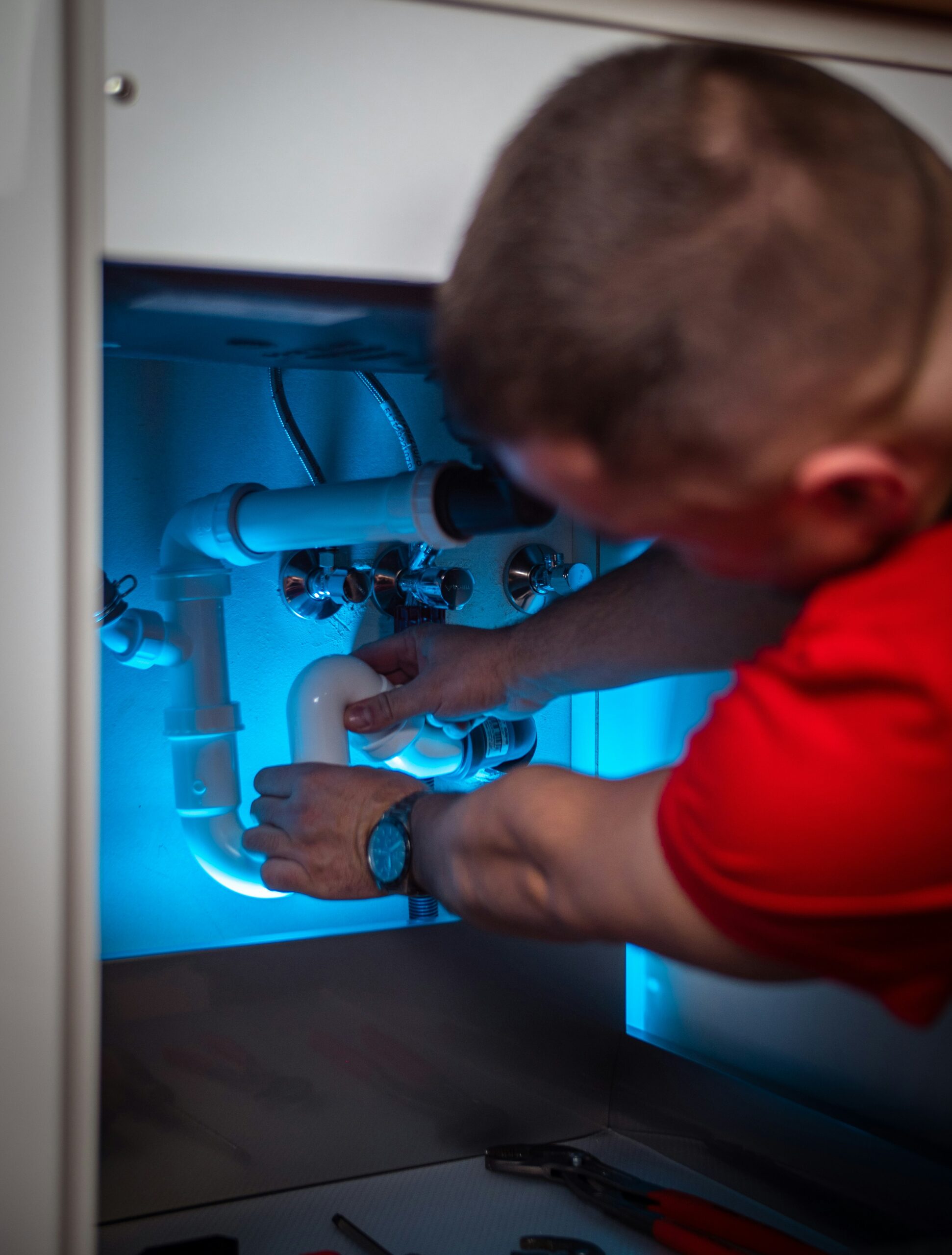
Under a sink, supply hoses, drain parts, a faucet and connected appliances can share a small cabinet. Identify which action accompanied the original vibration. A sound or shudder in that cabinet does not prove a loose water line.
Check the area before investigating
Keep people away from sagging, bulging or water-damaged ceilings; do not stand below, press or puncture them to locate a rattle. Active leakage, severe movement, steam, very hot discharge or electrical arcing needs prompt appropriate help. Stay away from wet electrical gear and do not enter water to reach a switch. Use only a safely accessible dry normal control when safe, otherwise get qualified assistance.
For suspected fuel gas, a carbon monoxide alarm or exposure symptoms, leave immediately and call the appropriate emergency service from safety. Do not operate switches, phones, valves or appliances in the affected area. A known safely operable customer supply stop can limit an active supply leak when safe; do not force unknown, shared, utility or fire-protection controls.
Distinguish the visible supply, drain and appliance routes
- Describe the event: Keep whether the original noise followed faucet use, draining, a disposer or dishwasher operation. Continuous vibration and a single closing impact are useful descriptions, but do not uniquely separate pressure excitation from structural contact.
- Inspect without disturbing: In a safe dry cabinet, look at already exposed parts for leakage, obvious contact or damaged support. Do not pull a hose, push a drain joint or grip a moving line. A nearby surface can transmit vibration from another location; do not make a hidden source claim from touch alone.
- Select the work: An approved external support adjustment differs from tightening a compression or slip-joint fitting. Identify the actual material, joint and instructions before work; do not use generic wrench turns. Keep a wet appliance or electrical connection out of reach and obtain suitable help.
Can foam or insulation be used in the cabinet?
A compatible, correctly rated cushion or insulation can be appropriate for an identified contact and support design. It is not a substitute for repairing a leak or damaged mount, and random packing can hide the condition or load a joint. Keep access and required clearances intact.
Match the support to the actual pipe
Routine care of an accessible external support may be possible with a sound dry work area, known safe temperature and the correct pipe, fastener and mounting instructions. A fixed anchor can be intentional; a sliding guide can be intentional. Do not tighten every strap until all movement stops. Do not use sharp, crushing or incompatible hardware, blind wedges or makeshift cloth wraps. Approved compatible cushions or insulation can be useful where the actual design permits them.
Opening or reworking a pressure-containing fitting is different from external observation or routine support care. It requires actual isolation and controlled retained pressure, temperature and energy; reducing flow is not enough. Do not use touching a hot or moving pipe as a diagnostic. Hidden runs, uncertain supports, wiring, gas, vents or structural changes need suitable qualified service. Cameras and listening tools have limits; no one can guarantee a concealed repair will avoid every opening or finish repair.
Related guides
Sources and equipment limits
The PEX guidance is an example for that material, not a support specification for every pipe. Use the actual product and local requirements. Independent professional review and field testing have not been obtained.