Quick Answer:
If your sink runs until the trap fills and then the flow stops, the common culprits are a restriction in the trap arm, a kinked trap adapter, or a sagging/flat trap arm that traps water. Start by catching the water in a bucket, inspect the P-trap and trap arm slope, and look for a damaged or kinked trap adapter. Small clogs or a misaligned trap are often fixable; persistent or leaking problems should go to a pro.
Why This Happens
Water that runs into the drain but stops once the P-trap fills is usually meeting a restricted section downstream. Typical reasons:
- Debris or grease in the trap or trap arm creating a partial blockage.
- A kinked trap adapter (often plastic) where the trap meets the wall stub-out, narrowing flow.
- Incorrect slope: the trap arm can be too flat or sag toward the trap so water pools instead of flowing away. A gentle downward slope toward the wall is needed.
- Venting problems that slow airflow and make flow irregular, especially with slow or intermittent draining.
For related intermittent and worsening symptoms, check these topics: Sink stops draining randomly and Sink drains then overflows.
Step-by-Step What to Do
1. Stop water and prepare
- Turn off the faucet. Place a bucket under the P-trap and have gloves and rags ready.
- If there’s a stopper, remove or lift it so you can run a test without trapping water in the sink bowl.
2. Remove and inspect the P-trap
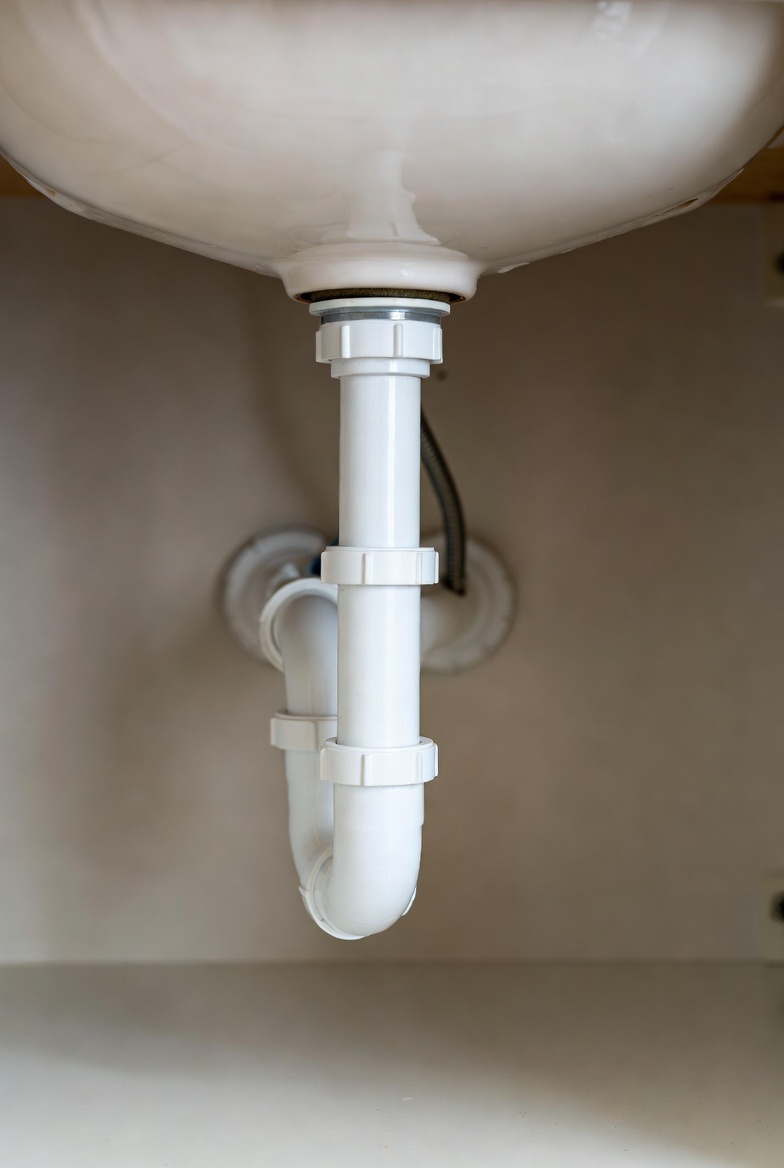
- Loosen the slip nuts by hand; use pliers only if snug. Let the trap drain into the bucket and inspect for hair, grease, or visible blockages.
- Clean the trap with a brush or rag. Replace any trap washers that look worn.
3. Check the trap arm slope and trap adapter
- Look at the horizontal piece (trap arm) that goes into the wall: it should slope down toward the wall at about 1/4 inch per foot. If it’s flat or sags, water can pool and stop flow.
- Inspect the trap adapter where the trap connects to the wall stub-out. Plastic adapters can become kinked or crushed and restrict flow—replace a kinked adapter.
- If the trap arm is sagging, you may be able to re-seat or re-support it so it slopes correctly. If the trap arm itself is damaged, replacement is the fix.
4. Reassemble carefully and test
- Put the cleaned trap back, hand-tighten slip nuts and run water to check flow and leaks.
- Flush with a steady stream for a minute to confirm the trap empties into the wall pipe instead of filling and stopping.
5. If the problem continues
- Try a straight drain snake down the trap arm (not a power auger) to clear a deeper blockage.
- If multiple fixtures are slow or you suspect a vent or main-line issue, proceed to call a professional.
What Not to Do
- Do not overtighten slip joints trying to fix a flow stop. Overtightening can crack plastic fittings or strip threads and cause leaks.
- Do not pour strong chemical drain cleaners into a trap you plan to disassemble—chemicals can splash and cause injury and will corrode some fittings.
- Do not use excessive force with tools on plastic trap parts; replace damaged parts instead of trying to bend them back into shape.
When to Call a Professional
- There is a persistent blockage after you clean the trap and snake the arm.
- Leaks appear at joints you cannot fix, or fittings crack when tightened.
- Multiple fixtures are affected, or you notice sewage smell or backups elsewhere—these point to a vent or main sewer issue.
- You’re uncomfortable disassembling drain fittings or working under the sink.
Safety Notes
- Wear gloves and eye protection when working under sinks. Keep a bucket and rags handy for spills.
- Avoid mixing or using chemical drain cleaners when you plan to touch the trap; they can cause burns and damage pipes.
- Work slowly and don’t force fittings; replacing a damaged part is safer than forcing a repair.
Common Homeowner Questions
- Why does the trap fill and then stop? A restriction downstream (clog, kinked adapter, or bad slope) prevents continuous flow once the trap reaches a stopping point.
- Can I fix this myself? Often yes—cleaning the trap, replacing a kinked adapter, or correcting the trap arm slope will fix it.
- Will chemical cleaners solve it? Not reliably; they may soften some clogs but can be unsafe and damage fittings. Mechanical cleaning is usually better.
For more related articles, see the Sink Drains Then Suddenly Stops hub.