Quick Answer:
If the washing machine’s inlet solenoid is leaking or stuck, it can let water travel back into the house plumbing and feed other lines. First, shut off the washer’s shut-off valves and watch the affected lines. If the pressure or flow drops and stabilizes, the appliance is the likely source. Follow the steps below to confirm and contain the problem safely.
Why This Happens
- Washing machines use an electrically controlled solenoid valve to let water in. If that valve fails or remains partially open, water can flow backward into the supply lines when pressures change.
- Pressure imbalances in the system — for example, when the city supply dips or a neighbor’s usage changes — can cause water to move the wrong direction. This is sometimes related to Reverse flow after city pressure change.
- Cross-connections inside appliances or damaged internal check valves can allow hot and cold lines to mix, creating odd flow patterns.
Step-by-Step What to Do
1. Isolate the washer
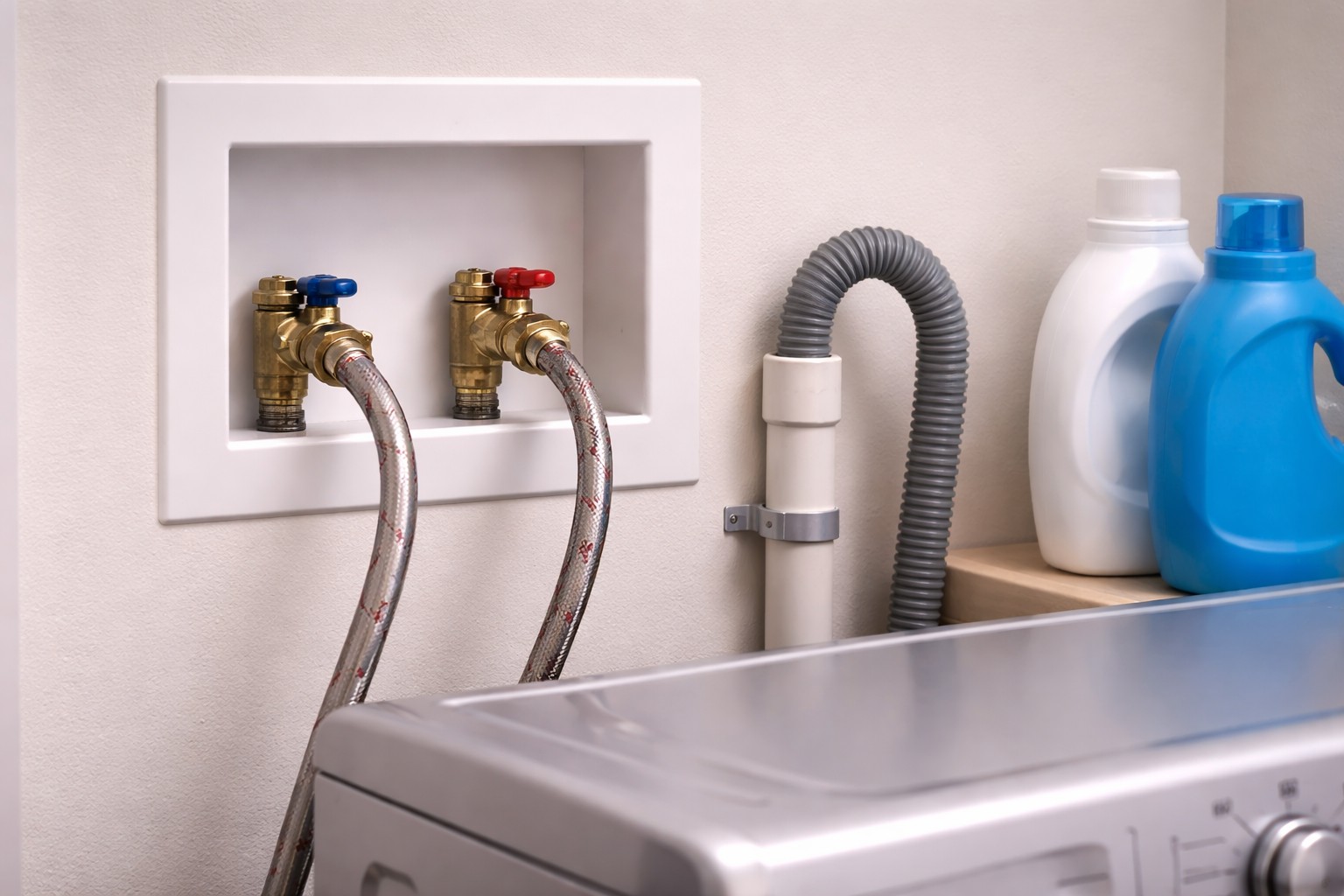
- Close the two shut-off valves that feed the washer (cold and hot). These are usually behind the appliance. Closing them isolates the machine from house supply.
- Observe the downstream fixtures and supply lines after closing the stops. If the unwanted flow or pressure change stops and the lines stabilize, the washer is the likely culprit.
2. Observe and confirm stabilization
- Open a nearby faucet (both hot and cold briefly) to confirm normal service once the washer stops are closed.
- Watch for pressure drop or air pockets that settle after isolation; stabilization within a few minutes suggests an appliance leak rather than a system-wide issue.
3. Inspect the washer connections and hoses
- With the water isolated, check inlet hoses, connectors, and the solenoid valve for obvious damage or mineral buildup.
- Replace any suspect hoses or the solenoid assembly per the manufacturer’s guidance, or leave the unit disconnected until repaired.
4. Check the hot/cold behavior
- If you notice unexpected hot water in cold taps or vice versa, test faucets one at a time. That symptom could point to mixing inside the appliance or elsewhere; this is related to issues like Hot water flowing into cold lines.
5. Restore and monitor
- Once you repair or isolate the appliance, reopen the washer shut-offs slowly and watch for return of the issue. If the lines remain stable, test the washer on a short cycle while standing by to shut it off if problems recur.
What Not to Do
- Don’t keep appliances connected. Leaving a suspected faulty washer hooked up can let the problem continue or worsen.
- Do not try to electrically work on or test the solenoid if you are not qualified. Unplug the machine and isolate water before attempting mechanical checks.
- Avoid making permanent changes to the home’s plumbing (cutting or rerouting supply lines) without professional guidance.
When to Call a Professional
- If closing the washer stops does not stabilize pressure or flow — the issue may be elsewhere in the home or the municipal supply.
- If you find internal damage to the washing machine solenoid or inlet assembly and you’re not comfortable replacing it yourself.
- If you suspect cross-connection contamination or if water tastes, smells, or looks unusual after a backflow event.
Safety Notes
- Always turn off and unplug the washer before removing hoses or accessing internal parts.
- Use basic personal protective equipment — gloves and eye protection — when handling old hoses and fittings.
- Do not introduce makeshift valves or temporary fixes that are not rated for plumbing pressure; use approved replacement parts.
Common Homeowner Questions
- How long should I keep the washer isolated? — Keep it isolated until repair or inspection confirms the fault is fixed; short tests are fine under supervision.
- Can a leaking solenoid cause contamination? — A failing solenoid can allow undesirable flow patterns; if contamination is suspected, consult a pro and consider disinfecting affected fixtures.
- Is a new hose enough to fix the issue? — Sometimes a hose replacement is enough, but if the solenoid valve or internal mixing is faulty you’ll need a more thorough repair.
Frequently Asked Questions
- Why did water backfeed into other fixtures? — Because the machine’s inlet valve allowed reverse flow when system pressure shifted.
- Will shutting off the washer stops stop the problem immediately? — Yes, closing the dedicated shut-offs should isolate the washer and stop backfeed for observation.
- Can I keep using the washer after I close the stops and see stabilization? — No. Do not run the appliance again until the cause is identified and repaired.