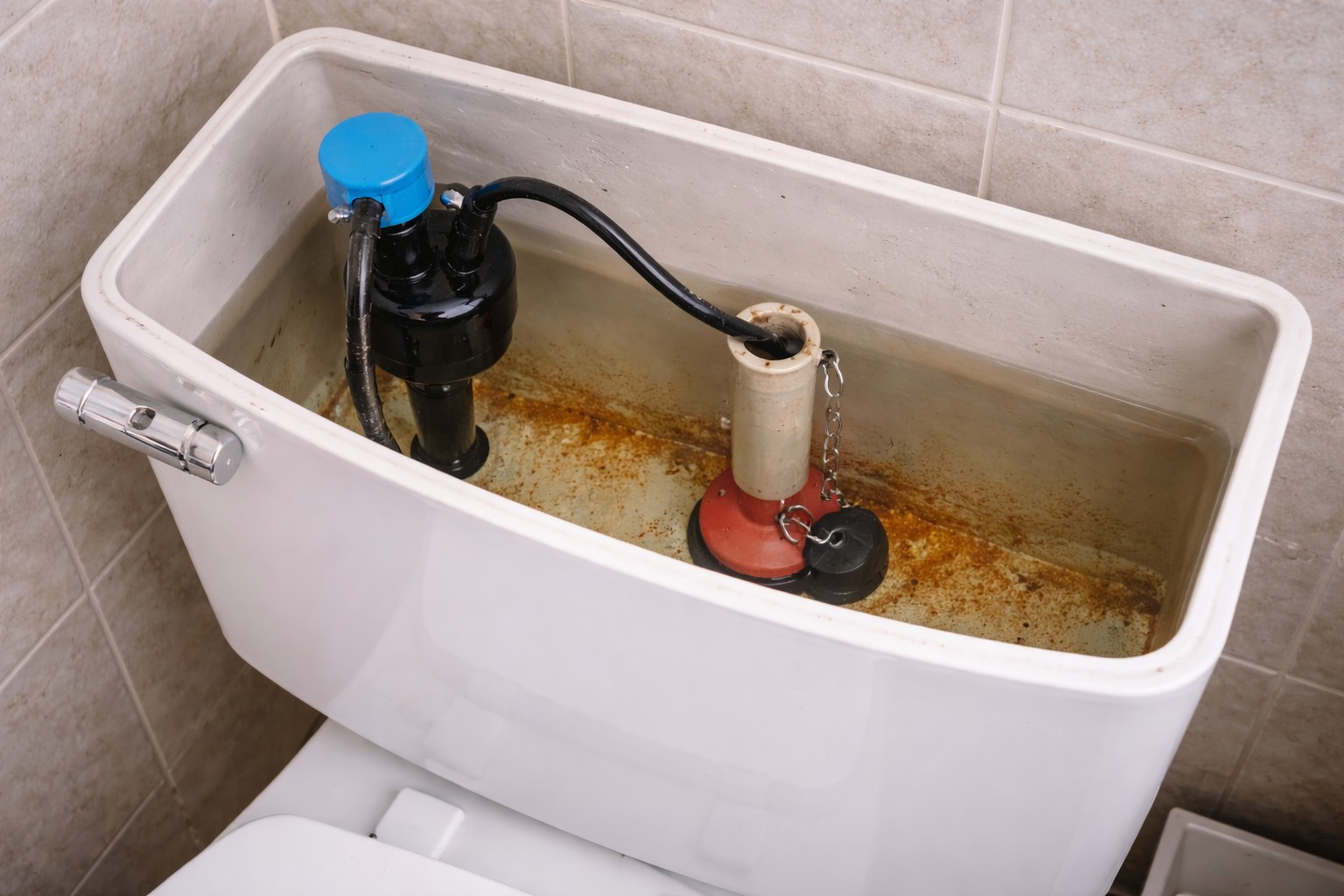
Quick Answer:
If a toilet is refilling from the wrong side of the plumbing, shut off the toilet supply (or the house main if needed), then trace and verify the supply routing and the shutoff valve orientation. This is usually a cross‑connection, a misrouted line, or a valve installed or turned the wrong way. Follow the step-by-step checks below before using the fixture again.
Why This Happens
- Cross-connections: A supply line from another appliance or a bypass has been tied into the toilet feed, allowing water to flow the wrong way.
- Misrouted piping: During renovation or repairs a hot or laundry feed can be connected to the toilet branch by mistake.
- Valve problems: A shutoff valve that is installed backwards or left partially open can let water from an adjacent circuit feed the tank.
- Backflow risk: Without proper backflow prevention, pressure changes can push water from another appliance into the toilet line; see Backflow through washing machine for a similar situation and why protections matter.
Step-by-Step What to Do
1. Stop the symptom immediately
- Turn the toilet shutoff valve clockwise to close it. If you can’t identify the valve or it doesn’t stop the flow, shut off the house main.
- Do not flush once you’ve closed the valve; open the tank lid and let the tank drain naturally to avoid any added pressure or backflow.
2. Verify the toilet supply routing
- Locate the flexible or rigid supply line behind the toilet and follow it as far as you can. In basements or crawlspaces trace the pipe to where it tees into the system.
- Look for unexpected connections — a shared tee with a laundry or a line that heads toward appliances instead of the main stack.
- Take photos or notes so you can explain what you found to a plumber if needed.
3. Check shutoff valve orientation
- Confirm whether the valve is a quarter‑turn (handle parallel = open, perpendicular = closed) or a multi‑turn (clockwise closes). If the handle orientation is inconsistent with other valves, it may have been installed rotated or replaced incorrectly.
- Operate the valve gently to see if it fully stops flow. If it leaks or won’t turn, do not force it — note the problem and move to containment (house main).
4. Inspect for backflow devices and contamination risk
- Check whether hose bibs, appliance feeds, or washing machine connections near the toilet have backflow preventers or air gaps.
- If you suspect contamination after a repair or an unusual backflow event, treat the situation seriously and review guidance similar to a Backflow contamination scare after repair.
5. Test carefully after fixes
- After correcting routing or valve position, open the supply slowly and watch for unintended flow from other fixtures.
- Flush once to confirm normal operation, then monitor for a few minutes for any signs of cross‑feeding.
What Not to Do
- Don’t keep flushing blindly.
- Don’t cut or reroute pipes unless you are confident in your plumbing skills; improper cuts can make the problem worse.
- Don’t ignore odors or dirty water — they may indicate contamination that needs disinfecting.
When to Call a Professional
- If you cannot identify where the line runs or find an unexpected tee.
- If valves are stiff, leaking, installed oddly, or you suspect a hidden cross‑connection in walls or floors.
- If you see signs of backflow contamination (discolored water, foul odor, or suspect wastewater contact) — a licensed plumber or utility specialist should handle repairs and disinfection.
Safety Notes
- Turn off water at the nearest valve or the house main before any inspection that requires removing covers or fittings.
- Protect electrical systems when working in basements or near washers; water and power together are dangerous.
- If contamination is suspected, avoid contact with the water. Use gloves and eye protection and follow professional guidance for disinfection.
Common Homeowner Questions
- Why is hot water in the toilet tank?
Likely a misrouted hot feed or a cross‑connection; trace the plumbing or call a plumber. - Can I fix a backwards valve myself?
If the valve is accessible and straightforward, you can replace it, but call a pro if it’s seized or in a tight spot. - Is the water safe after backflow?
If any backflow or contamination is suspected, treat it as unsafe until tested or disinfected by a professional.