Quick Answer:
If water moves between two bowls after replacing a trap, the trap is likely misaligned, the slope is wrong, or a seal is loose. Start by shutting off water to the fixture, then check the trap orientation, slope, and connections before testing again.
Why This Happens
When you replace a trap, small differences in height, angle, or fit can let water flow the wrong way between fixtures. Common causes are:
- Trap arm sloped back toward the other bowl or sink instead of toward the wall drain.
- A trap that is the wrong size or shape for the drain line, creating a path between bowls.
- Poorly seated seals or loose slip nuts that let water find the easiest path.
- Venting or discharge changes after work that alter pressure — similar problems can happen in other installations like Cross-flow after installing disposal or when systems are under heavy demand (see Water jumps bowls during peak hours).
Step-by-Step What to Do
Step 1: Stop and inspect
- Turn off water to the sink and clear the area under the cabinet.
- Place a bucket under the trap to catch any water when you loosen fittings.
Step 2: Loosen and remove the trap
- Loosen the slip nuts at each end of the trap by hand or with channel pliers if needed. Support the trap as you remove it.
- Check the trap for blockages, dents, or deformation that could affect flow.
Step 3: Check sizes and parts
- Confirm the trap matches the tailpiece and wall stub-out in diameter and type (e.g., 1-1/4″ vs 1-1/2″).
- Inspect washers, gaskets, and slip nuts for wear; replace if cracked or flattened.
Step 4: Reinstall the trap ensuring correct orientation and slope
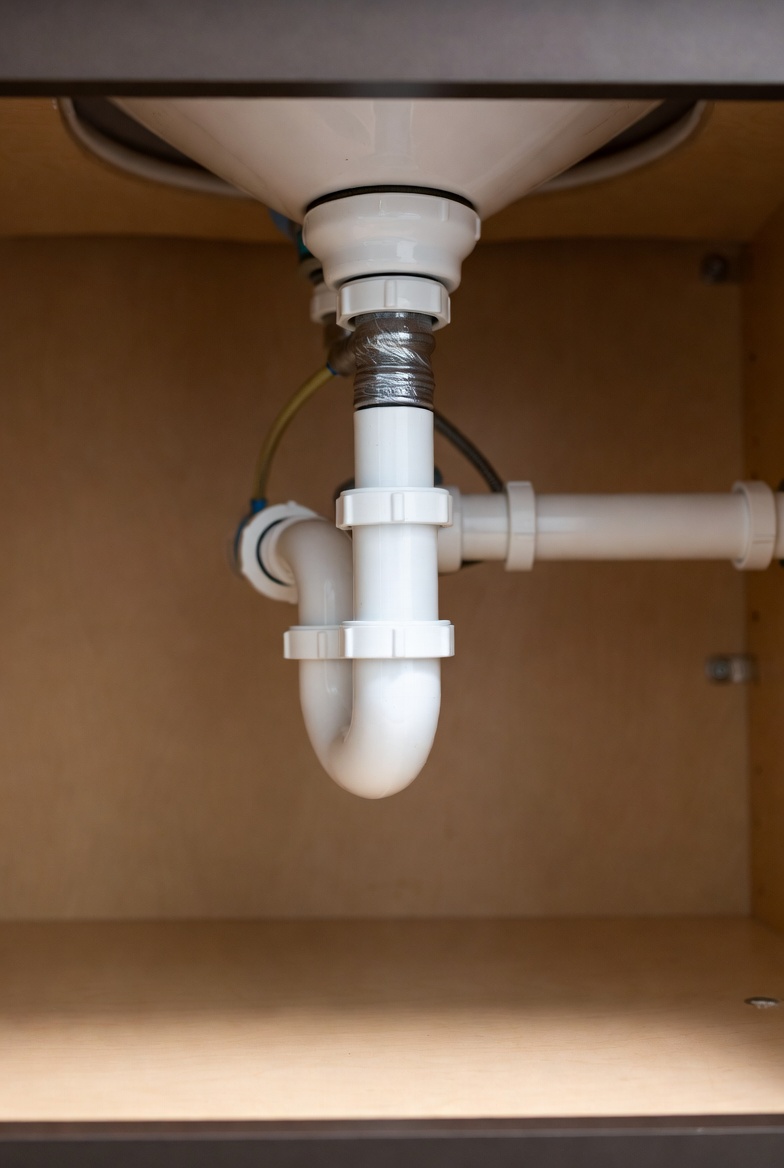
- Put the trap back on so the U-bend faces the fixture and the trap arm slopes gently down toward the wall drain. The slope should be about 1/4″ per foot toward the drain—enough to allow flow without creating a back-slope.
- Hand-tighten slip nuts, then give a slight snug with pliers—do not overtighten plastic nuts.
- Ensure the trap weir lines up with the trap arm; don’t force parts into odd angles to make them meet.
Step 5: Test the repair
- Run water in each bowl separately and together. Watch for cross-flow or leaks at joints.
- If water still moves between bowls, double-check slope and sealing, and inspect the branch connection where the two drains meet.
What Not to Do
- Do not install mismatched trap sizes. Using the wrong diameter or type creates gaps and improper flow.
- Do not overtighten plastic slip nuts — they can crack and leak.
- Do not rely on chemical drain cleaners to fix cross-flow; they won’t correct alignment or vent issues and can be hazardous.
When to Call a Professional
- Repeated cross-flow after correctly reinstalling the trap suggests a deeper issue with the branch fitting or venting.
- If you cannot access the drain junction where the two bowls meet, a pro can inspect and correct the trap arm or branch connection safely.
- If there is sewage smell, persistent gurgling, or leaks you can’t stop, call a licensed plumber.
Safety Notes
- Turn off water to the fixture before loosening parts to avoid spills and slips.
- Wear gloves and eye protection when working under the sink; drains can contain biofilm and rust.
- Avoid using heat or chemical solvents on plastic fittings; these can deform or crack the parts.
Common Homeowner Questions
- Why did this start after I replaced the trap? — Small differences in trap height or angle let water seek a new path; rechecking orientation usually fixes it.
- How do I know if the trap size is wrong? — If parts don’t fit without forcing or you see gaps, the diameter or type is likely mismatched.
- Can I fix it without removing the cabinet contents? — You can try, but removing contents and supporting the trap gives better access and reduces the risk of dropped parts or damage.
For more related articles, see the Double-Bowl Sink Cross-Flow Issues hub.