Quick Answer:
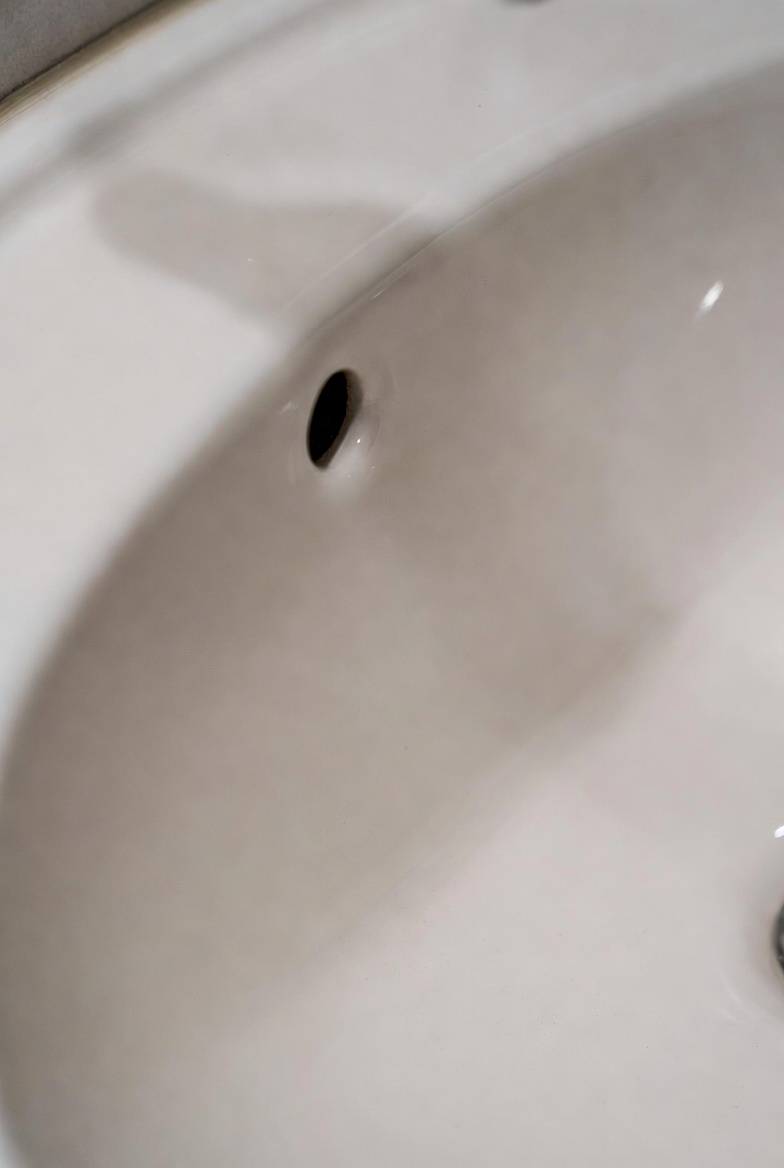
If water spurts from the overflow opening when you turn on the faucet, stop the flow and test carefully. This usually means the sink’s normal drain path or overflow channel is blocked, or the water flow is set too high. A short, controlled test will help you decide whether you can fix it yourself or need a plumber.
Why This Happens
- Normal overflow openings are safety paths, not regular outlets. If they discharge during normal use, the main drain or the overflow channel may be blocked or restricted.
- A clogged pop-up stopper, trapped debris in the tailpiece or P-trap, or a partial block further down the drain can raise the water level and force water through the overflow.
- High faucet flow or a malfunctioning faucet valve can push more water into the basin than the drain can handle.
- Corrosion or mineral buildup inside the overflow channel itself can prevent water from flowing back into the drain—see **Overflow channel clogged with gunk** for what to look for.
- If the drain and overflow appear clear but the problem continues, learn more about similar cases in **Sink overflows despite clear drain**.
Step-by-Step What to Do
1. Stop the flow
- Turn the faucet off immediately. If the overflow is actively spitting water, cutting the supply removes the immediate risk of more water escaping.
2. Run a short low-flow test
- Stop the water and run a short test at low flow to see when the overflow starts discharging. Use a slow trickle from the faucet and watch the basin and overflow opening closely.
- Note whether the overflow only runs at high flow or even at a slow trickle. That information matters for diagnosing the cause.
3. Check the stopper and visible drain parts
- Remove and inspect the pop-up stopper or grid. Hair and soap gunk often hide here and can block normal drainage.
- Clear any visible debris from the sink drain opening and the top of the tailpiece.
4. Inspect and clean the P-trap
- Place a bucket under the cabinet, loosen the trap nuts, and remove the P-trap. Clean it out and test the sink before reinstalling.
- If the trap is full of hair or sludge, clearing it may restore normal flow and stop the overflow discharge.
5. Clean the overflow channel
- Many sinks have an internal channel behind the overflow opening that fills with gunk. You can run a flexible brush or a pipe cleaner down the opening to remove buildup.
- Be cautious and gentle—avoid sharp tools that could damage the sink finish or internal parts.
6. Test again
- After cleaning, run the same low-flow test. If the overflow no longer discharges, try a normal flow and monitor for leaks.
- If overflow returns immediately or other fixtures back up, stop testing and consider professional help.
What Not to Do
- Do not keep running water if it is coming out of the overflow opening.
- Do not force sharp tools into the overflow or drain—this can damage parts and make repairs harder.
- Avoid pouring large amounts of chemical drain cleaner into an overflow opening; it can damage finishes and plastics and is often ineffective on mechanical clogs.
When to Call a Professional
- Overflow keeps discharging even at low faucet flow or after you’ve cleaned the trap and overflow channel.
- Multiple fixtures (toilet, shower, other sinks) are slow or backing up—this suggests a main sewer or branch drain issue.
- You notice foul sewage smells, repeated clogs, gurgling from other drains, or water leaking into cabinets or walls.
- You’re uncomfortable disassembling plumbing parts or the problem is beyond simple cleaning.
Safety Notes
- Turn off the faucet before reaching into drains. Hot water can cause burns and moving parts can pinch fingers.
- Place a bucket under the P-trap before loosening it to catch water and debris.
- If you suspect sewage backup, avoid handling wastewater and call a professional; sewage poses health risks.
Common Homeowner Questions
- Why does water come out of the overflow only sometimes?
Partial clogs or high faucet flow often cause intermittent overflow; the drain handles normal flow until the clog or flow rate is enough to raise the basin level. - Can I clear the overflow channel myself?
Yes, you can often clear loose gunk with a flexible brush or pipe cleaner, but stop and call a pro if the channel seems blocked deeper or you can’t remove the buildup. - Is this a sign of a sewer main problem?
Not always. If only one sink is affected it’s usually a local clog. If multiple fixtures back up or you smell sewer gas, it could be a main-line issue and needs a plumber.