Quick Answer:
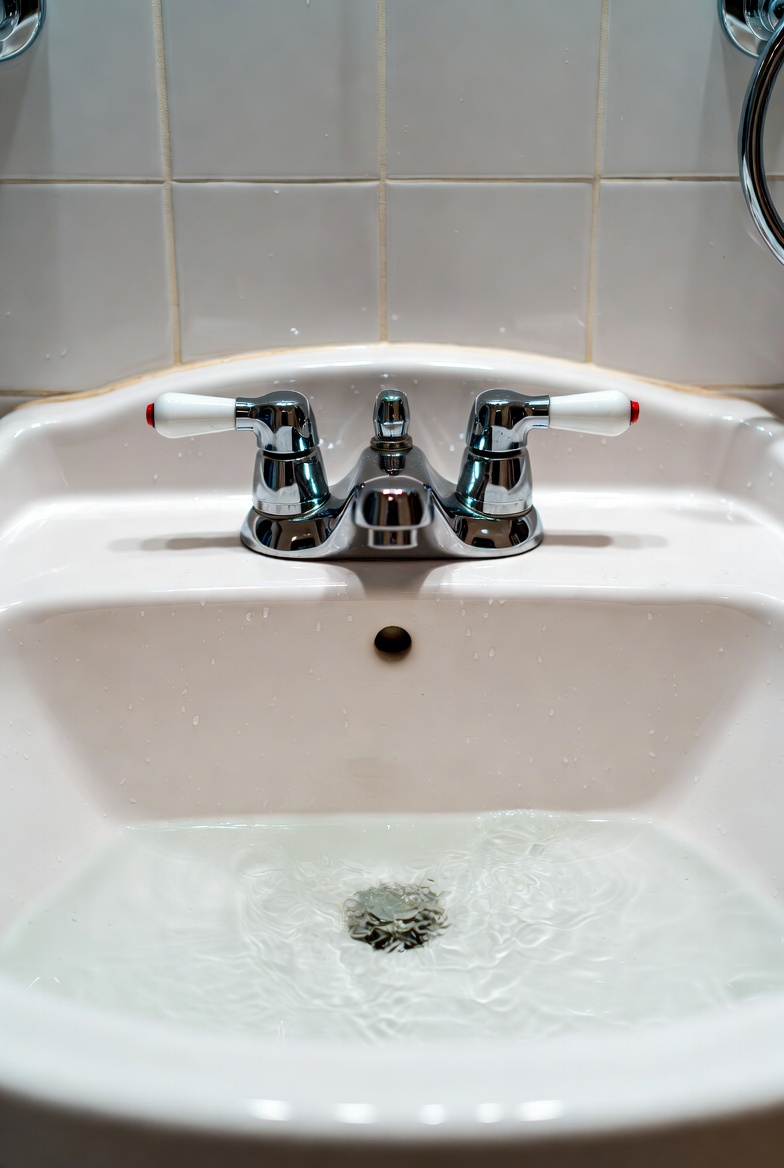
If the sink water rises and spills over even though the visible drain looks clear, the blockage is likely below the stopper or farther down the drain line. Start by removing the stopper and checking the drain throat, then perform a full basin dump to see how fast the drain clears. Those two checks usually show whether the clog is at the top, in the P‑trap, or deeper in the line.
Why This Happens
Stacked drains, pop-up stoppers, and built-in overflow channels can hide hair, soap scum, toothpaste residue, and small debris. A top view that looks clear only proves there’s no obstruction in the immediate opening — not that the pipe is free further down. A stuck or partially blocked stopper and a clogged P-trap are common causes. If you also see wetness under the cabinet or water running down cover plates, consider whether the overflow is involved: Overflow channel leaking inside cabinet.
Step-by-Step What to Do
1. Remove the stopper and inspect the drain throat
- Gather a flashlight, pliers, and a towel or small bucket.
- Pop out or unscrew the stopper mechanism. On many sinks you can twist and lift the stopper; on others you’ll need to loosen the pivot rod under the sink to free it.
- Look into the drain throat with a flashlight. If you see hair or gunk near the top, remove it by hand (use gloves) or with a flexible plastic pick or small drain snake.
2. Test with a full basin dump
- Plug the drain and fill the basin to the rim with water. This gives you a clear, repeatable test of how quickly the line accepts a large volume.
- Remove the plug quickly and watch: the water should drop rapidly. If it sinks slowly or overflows, the restriction is still present below the throat.
- Repeat the test after any cleaning step to see if the flow improves.
3. Check and clean the P‑trap
- Place a bucket under the trap, loosen the slip nuts, and remove the trap. Expect water and trapped debris.
- Clear the trap and inspect the trap inlet and outlet with a flashlight. Rinse and reassemble, then repeat the full-basin dump test.
4. If the trap is clear but overflow behavior continues
- Try a hand auger (small drain snake) from the sink side to push or pull the clog. Use gentle, controlled motion to avoid damaging pipes.
- If the sink gurgles or multiple fixtures slow when you test, the problem may be deeper or in the venting system. In that case, further DIY steps are limited.
- If the issue follows shaving or similar activity, consider whether trapped residue caused it: Overflow backing up after shaving.
What Not to Do
- Do not assume the drain is clear just because you can’t see a clog at the top.
- Do not pour large amounts of chemical drain cleaner into an actively overflowing sink — it can make a mess and be dangerous to handle later.
- Do not force tools in blindly; pushing a clog farther can make the problem worse or damage the pipe.
- Do not keep running water into a sink that is overflowing — that increases the mess and risk of water damage.
When to Call a Professional
- Repeated overflows after cleaning the stopper and P‑trap.
- Signs of a sewer backup (multiple fixtures affected, strong sewage smell, or dark water).
- Gurgling noises that suggest a venting or main-line issue.
- When you can’t access the clog safely or an auger won’t clear it.
- Visible leaks under the sink that need pipe or seal repairs.
Safety Notes
- Wear nitrile or rubber gloves and eye protection when working under the sink.
- Keep a bucket and towels handy to contain spills. Work on a stable step stool if needed — don’t overreach.
- If you used chemical cleaners, ventilate the area and avoid mixing chemicals. Follow label warnings and clean the sink thoroughly before hands-on work.
- If you smell natural gas or encounter sewage backup, stop and call a professional immediately.
Common Homeowner Questions
- Why did the sink overflow if the top looked clear? A clog can sit below the visible opening—in the stopper, P‑trap, or further down the drain.
- Will a plunger fix it? Sometimes; a plunger can dislodge a shallow clog, but remove the stopper first and seal around the plunger properly.
- How long should I try DIY before calling a plumber? If basic checks (stopper removal, P‑trap cleaning, full-basin dump) don’t clear it, or multiple fixtures are affected, call a professional.