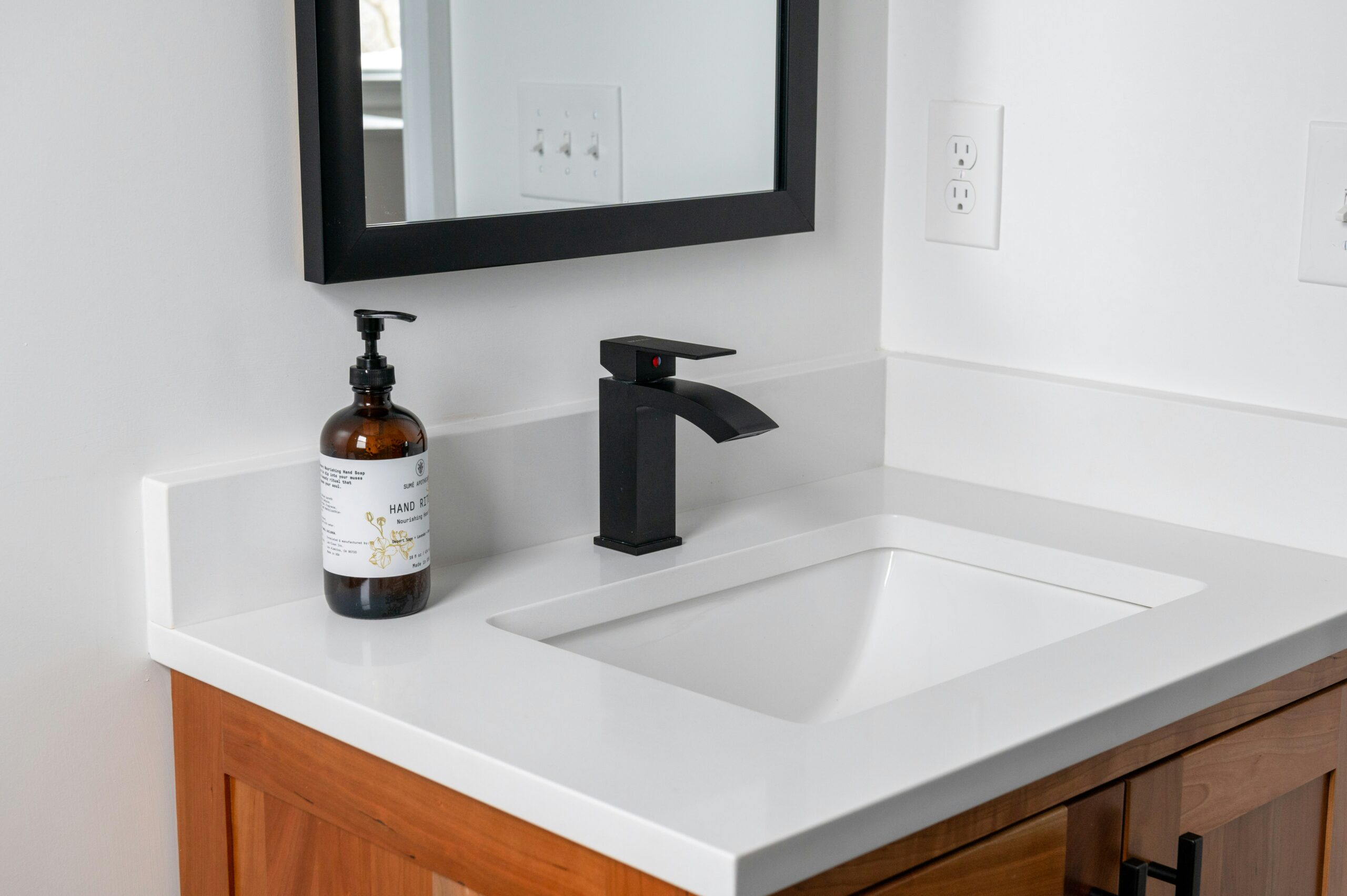
If your faucet continues to drip after you turn it off, it’s a sign that water isn’t sealing properly inside the faucet. Even a slow drip can be frustrating and waste a surprising amount of water over time.
In most cases, this problem is caused by worn internal components rather than anything you did wrong.
Quick Answer:
A faucet drips after you turn it off because internal sealing parts have worn out or are damaged. This is most often caused by a worn washer, faulty cartridge, damaged valve seat, or mineral buildup preventing a tight seal.
Why This Happens
When you shut off a faucet, internal components are supposed to stop water flow completely. Over time, normal wear prevents these parts from sealing as tightly as they should.
Common causes include:
- Worn washers or seals
- A failing cartridge in cartridge-style faucets
- A damaged valve seat
- Mineral buildup interfering with seals
- Aging faucet components
This issue is a specific type of leak and is different from a faucet leaking around the handle or base, which usually points to different parts.
Step-by-Step: How to Diagnose a Dripping Faucet
Step 1: Confirm the Drip Pattern
Watch the faucet after turning it off.
- A steady drip often means worn seals
- A slow, intermittent drip usually points to internal wear
Consistent dripping indicates a mechanical issue.
Step 2: Check Hot and Cold Handles Separately
Turn each handle on and off individually.
If:
- The drip changes when one side is adjusted
…the issue may be isolated to that side’s internal components.
Step 3: Consider the Faucet Type
Different faucet designs fail in different ways.
Common types include:
- Compression faucets
- Cartridge faucets
- Ball faucets
- Ceramic disc faucets
Knowing the type helps identify which parts are likely worn.
Step 4: Look for Mineral Buildup
Hard water can leave deposits inside the faucet that prevent parts from sealing properly.
Buildup can:
- Accelerate wear
- Prevent smooth operation
- Cause recurring drips
Cleaning may help temporarily, but worn parts usually need replacement.
Step 5: Check How Long the Faucet Has Been Installed
Older faucets are more likely to develop internal wear that causes dripping.
Repeated repairs may eventually cost more than replacement.
What Not to Do
- Don’t ignore a dripping faucet
- Don’t overtighten the handle
- Don’t assume dripping is normal
- Don’t delay repairs for long periods
Drips almost always worsen over time.
When to Call a Professional
Call a plumber if:
- Dripping continues after part replacement
- You can’t identify the faucet type
- Replacement parts aren’t available
- The faucet body is damaged
Some faucet designs require specialized tools or parts.
Safety Notes
- Shut off water before disassembling the faucet
- Cover the drain to prevent losing parts
- Avoid forcing stuck components
- Test thoroughly after repairs
Common Homeowner Questions
Is a dripping faucet serious?
Yes. Even slow drips waste water and usually indicate worn parts.
Can tightening the handle stop the drip?
Sometimes temporarily, but it often worsens internal wear.
Should I replace the faucet instead of repairing it?
If the faucet is old or parts are unavailable, replacement may be more practical.