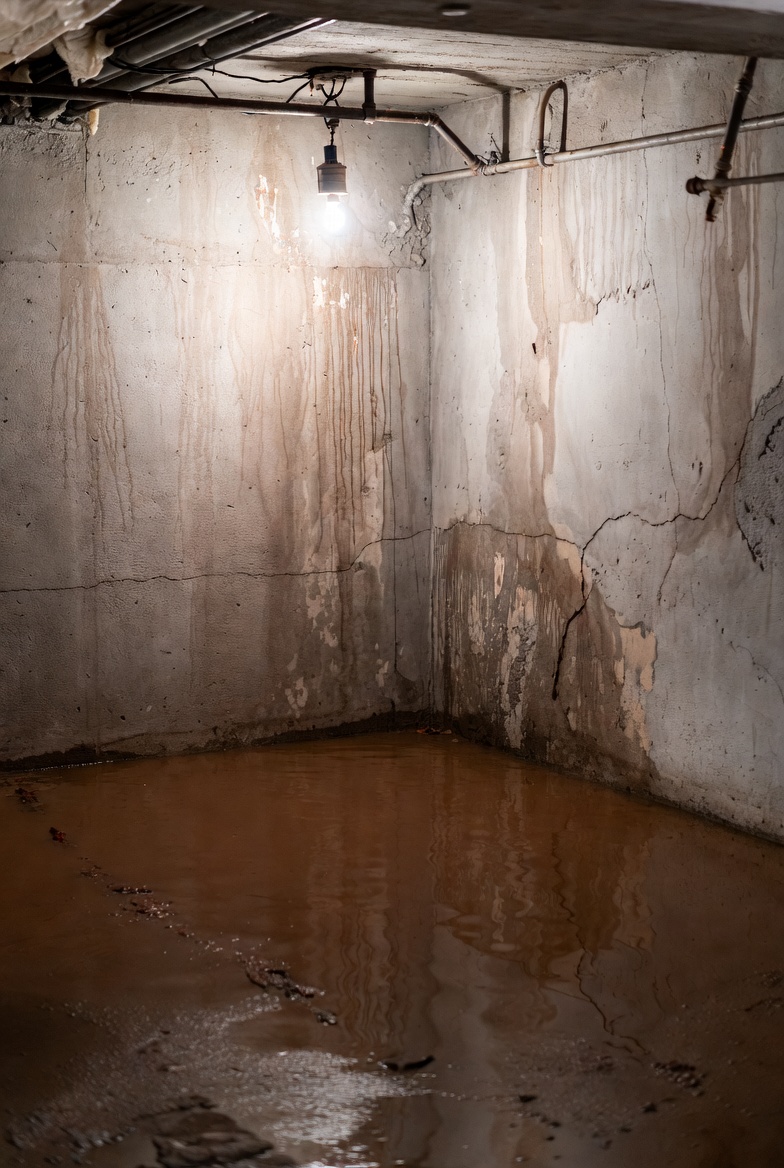
When a floor drain rises during a pump discharge, identify the pump’s actual duty and destination before choosing a repair. Do not add a bucket to start another cycle or divert the outlet outdoors as a household cause test.
Stop the event and check hazards
For strong, widespread or unexplained gas-like fumes, exposure symptoms, or suspected high sewer-gas concentrations in an enclosed space, leave the building immediately and call the fire department or emergency services from outside. Avoid flames, switches and other ignition sources; do not remain to ventilate, sniff drains or investigate. Smell intensity does not measure the concentration. A faint localized drain odor without those warning signs calls for a different plumbing investigation; it does not automatically establish a fuel-gas leak.
If fuel gas is suspected, leave the building or affected area immediately. Do not operate valves, switches, plugs, appliances or phones there. Call the gas emergency service from a safe location well away, and wait for responders’ clearance.
Keep away from wet electrical equipment. Do not touch wet appliances, plugs or switches, or enter water to reach a breaker. When no gas leak is suspected, power may be isolated only from a safely accessible dry location; otherwise call an electrician or emergency help. Wet equipment needs qualified assessment before it is used again.
For wastewater rising from a drain or affecting several fixtures, stop adding water and keep affected appliances from discharging using only safely accessible dry controls when no gas emergency is suspected. Avoid sewage contact, keep children and pets away and arrange prompt drainage help. Notify building management or the sewer agency as appropriate. Do not run fixtures to locate a shared blockage.
Keep the original evidence
- Actual pump model and duty from safe records: groundwater sump, sewage ejector/grinder, greywater drain pump or another system.
- Original cycle and receiving location; water returning from the floor drain versus a leaking discharge pipe or overflowing pit.
- Approved discharge destination, existing alarms, known power outage and any prior valve/pipe work.
Groundwater and wastewater pumps have different jobs
Liberty’s sump guidance distinguishes groundwater removal from sewage/septic service. A sewage ejector or drain pump can have an intended sanitary connection; an interior pipe is not automatically a routing violation. A groundwater sump needs its actual permitted storm/groundwater destination. Have the provider verify the installed application, local requirements and receiving capacity instead of applying one outdoor-discharge rule to every pump. Do not enter a pit or open a sewage basin to identify it.
A check valve does not establish the floor-drain path
A failed discharge check can let the retained water column return toward the pump basin. A floor-drain rise still needs an actual connection or water route; it does not by itself prove a check-valve fault. Pipework above a stopped pump may retain head. Power-off alone does not unload that column. Leave valve or access-cap removal to the identified model’s safely isolated, supported and controlled-release service procedure.
Preserve flood protection while stopping unsafe discharge
For sewage or greywater backing up, stop the contributing fixture/appliance inputs and contact the appropriate plumbing or sewer provider. A groundwater pump may be protecting the building from flooding, so do not disable it indiscriminately; obtain urgent pump/drainage help for an unsafe or failed outlet. Use only safely accessible dry controls under the actual procedure, and stay away from wet power equipment.
Diversion is not proof that the original drain is sound
Changing the destination also changes the receiver’s load. Overflow stopping after a diversion would not uniquely separate bad routing, backflow or a restricted receiver. If professional temporary pumping is needed to prevent damage, its actual pump duty, permitted destination, rated secured piping, capacity, freezing/backflow exposure and monitoring must be addressed. Never discharge sewage onto the ground or restore a route already known to be unsafe merely because a test has ended.
Service and return to use
Keep cleanouts and retained trap, primer, valve and pump housings closed while their pressure, wastewater head or residue state is unknown. A slowly loosened cap, bucket, gloves or wet-rated vacuum does not establish safe access. Any suitable service needs independent source/energy isolation, cooling where relevant, controlled release, verified unloaded conditions and the actual component procedure. An owner-removable surface grate is different from a retained trap or pressure housing. After hazards are resolved, follow its actual cleaning and reassembly method; do not force an unfamiliar part or use a cable as the next automatic step.
Keep cleanout caps closed. Do not loosen a cap to check a water level, watch a basin dump or release pressure; sewage and gas may escape. Do not climb to vents, enter pits or tanks, or use a flame to investigate an odor. Those checks need the appropriate qualified provider and controls.
If a cleaner may be present, identify the exact product and follow its label. Do not add another cleaner, acid, bleach, ammonia, vinegar or an improvised neutralizer. Do not plunge, snake or open the trap while hazardous residue may remain; tell the provider what was used. A rinse or elapsed time is not proof all residue is gone.
Before return to use, the cause and actual receiving path must be assessed and corrected, compatible parts and protection restored, and equipment commissioned under its own procedure. A short cycle can still release a full pump discharge. A passing trickle does not establish capacity. Any suitable attended functional check comes after those conditions, with a safe accepting receiver; stop and obtain further help if water rises again. Source and electrical hazards must be controlled before cleanup; use suitable restoration help for sewage or significant inaccessible contamination.
Related situations
- Overflow when multiple appliances run
- Overflow when appliances run together
- Overflow after city outage
- Floor Drain Overflows During Appliance Use
Safety sources
- Wisconsin DHS: sewer-gas exposure and emergencies
- Con Edison: suspected gas leaks
- CDC: electrical hazards near water
- Madison Metropolitan Sewerage District: stop discharge and report sewer backup
- Example drain-opener label: restrictions on plunging, disposal operation and mixing
- Liberty Pumps: groundwater sump duty differs from sewage or septic pumping