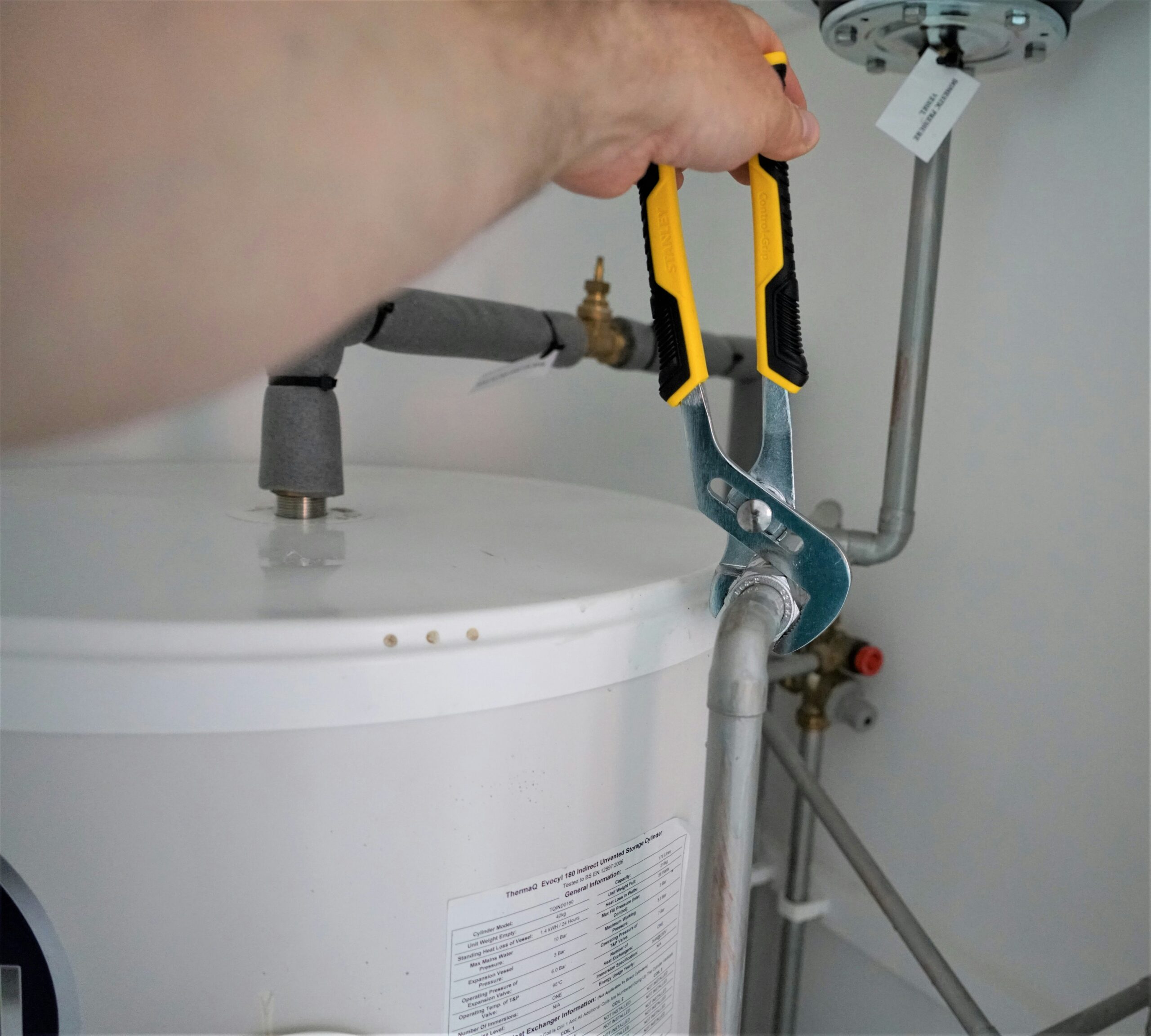
An odor noticed when the water heater operates can come from water, nearby drainage or a room/appliance problem. The timing does not identify bacteria, an anode reaction or the heater as the source. Decide on the emergency response before collecting any observations.
Rule out a room or appliance emergency first
If you smell fuel gas or suspect a gas leak, leave the building or affected area immediately and take others with you. Do not operate switches, plugs, phones, appliances, thermostats or valves in the affected area, light flames, or stay to ventilate or investigate. From a safe location well away, call the local gas emergency service or emergency services. Do not re-enter until responders say it is safe. Plumbing checks and normal maintenance must wait.
If a carbon monoxide alarm sounds or you suspect carbon monoxide exposure, get everyone outside immediately and call emergency services from safety. Carbon monoxide has no smell; an odor comparison cannot rule it out. Do not restart or repeatedly cycle a fuel-burning heater to investigate a possible combustion problem.
Keep away from wet electrical equipment. Do not touch wet appliances, plugs or switches, or enter water to reach a breaker. When no gas leak is suspected, power may be isolated only from a safely accessible dry location; otherwise call an electrician or emergency help. Wet equipment needs qualified assessment before it is used again.
For a new, unexplained water-quality change: do not deliberately taste the water. Use bottled water or another known-safe supply for drinking, food preparation, teeth brushing and ice while you contact the supplier. Follow the actual local notice for other uses. Boiling does not make chemically contaminated water safe, and clear appearance or a fading odor does not certify safety.
Do not recreate the odor
Do not stand beside a burner, wait for ignition, deliberately draw hot samples or lean over a cup to compare smells. Do not cycle the heater or run a long hot-water flush as a test. Record what happened during the original ordinary use, including whether the odor was in the room before a tap was opened.
What the existing pattern helps describe
- Room odor while an appliance operates: report the appliance, fuel type and original event to the appropriate emergency or qualified appliance provider. Water-odor troubleshooting cannot clear a combustion or fuel-gas concern.
- Odor noticed only while hot water was used: heater chemistry, hot plumbing, a fixture or nearby drainage are possible contexts. The observation does not uniquely localize the source.
- Odor also noticed in cold water or after supply work: tell the water supplier or well-water authority. A clear cold sample does not establish that either supply is safe.
What to arrange next
- For a new unexplained water change, use a known-safe consumption source and obtain the supplier or health authority’s advice on use and sampling. Do not flush away a planned first-draw sample; follow the actual laboratory collection instructions.
- Share the existing heater model, age, fuel, recent replacement or treatment work and prior odor history. Obtain these details without entering an unsafe area or removing covers.
- Ask a qualified provider whether source-water testing, heater inspection or fixture/drain assessment fits the record. Testing for one substance cannot certify every aspect of water quality.
- Heater draining, anode work or disinfection requires the actual manufacturer’s procedure and appropriate service. Do not remove the anode, add a chemical or raise temperature as an experiment.
Does a fading smell mean the problem is harmless?
No. Odor intensity neither measures gas concentration nor certifies potability. A smell changing after use does not demonstrate that flushing removed the cause. Do not wait for a stronger smell or symptoms before responding to suspected fuel gas.
Related guides
Safety sources
- Con Edison: suspected gas leaks
- CDC: carbon monoxide alarms and wet electrical devices
- CDC: electrical hazards near water
- CDC: drinking-water advisories
- EPA: certified drinking-water laboratories
- Example electric-heater manual: filling and maintenance requirements
- Minnesota Department of Health: sulfur odors, possible sources and limits