Quick Answer:
If you hear a noise during the refill or drain cycle, it’s often a valve, a pressure change, trapped air, or a connected device causing vibration. Recreate the cycle, listen for the exact phase, feel nearby supply lines for vibration, and compare with other appliance cycles. If the sound traces to inaccessible piping or an integrated system, a licensed plumber can safely isolate and fix it.
Why This Happens
- Fill or shutoff valves and their solenoids can buzz or click when they open or close under pressure.
- Pressure changes can make pipes vibrate or produce a “water hammer” thump when a valve closes suddenly.
- An undercharged or failed expansion tank allows the system pressure to move more abruptly, which makes noise.
- Built-in equipment — circulation pumps, water softeners, or smart shutoff devices — may run during or after a refill cycle and create vibration that travels through the plumbing.
- Mineral sediment in the tank or restricted fittings can change flow characteristics and add noise.
Noise that seems tied to other systems can look similar to household examples such as Buzzing when smart shutoff cycles or Pipes noisy during dryer steam cycle, which is why comparison checks are useful.
Step-by-Step What to Do
1. Recreate the cycle that triggers the noise
- Run the appliance or action that makes the sound—open a hot tap, start a dishwasher or water-using cycle—and note when the noise begins.
- Repeat the cycle once or twice so you can compare and be sure the sound is consistent.
2. Listen for the exact phase: fill, drain, or shutoff
- Try to identify whether the noise happens when water starts flowing (fill), while water is draining, or at the moment the valve closes (shutoff).
- Timing helps narrow causes: noises at shutoff often point to valves or water hammer; noises during fill point to inlet valves or pumps.
3. Touch nearby supply lines to feel for vibration
- Carefully place a hand on the hot and cold supply pipes near the water heater to detect buzzing or vibration. Don’t touch the tank or any clearly hot surfaces.
- If vibration is present on one line and not the other, the problem is likely on that side of the system (inlet valve, pressure regulator, or pump).
4. Compare with other appliance cycles
- Start other household cycles that use water (dishwasher, laundry, steam dryer) and note whether they produce similar sounds. That helps determine if the heater is the source or if vibration travels from elsewhere.
- Document what you hear and when; this helps a plumber diagnose remotely or on arrival.
5. Do basic, noninvasive checks
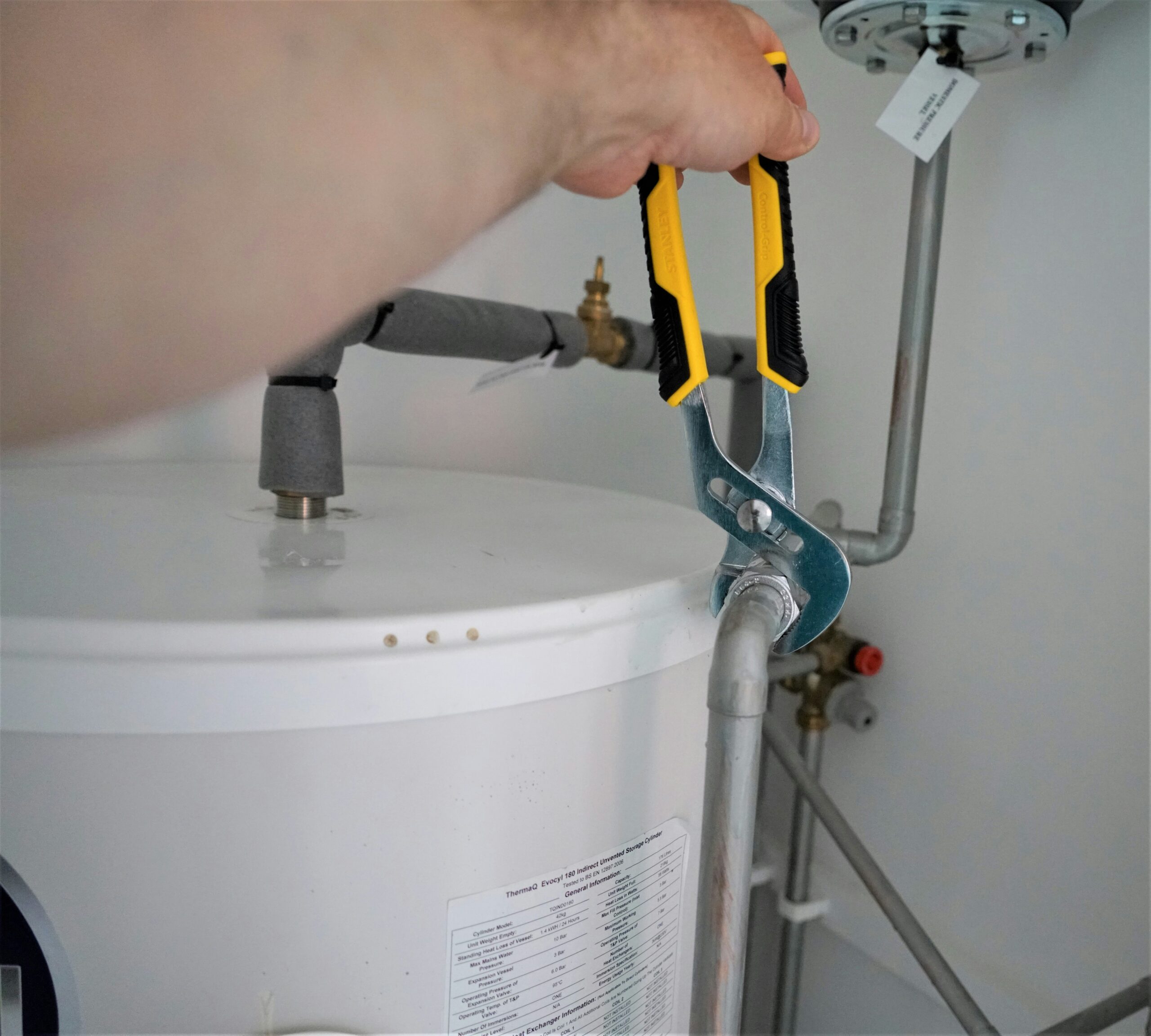
- Check valves and fittings for visible leaks or loose mounts—tighten accessible nuts and straps, but don’t force corroded parts.
- Look at the expansion tank: a waterlogged expansion tank can cause pressure-related noises. If you know how, tap the tank to hear if it’s full of water (solid sound) or has air (hollow sound).
6. Isolate before calling if possible
- Close the water heater’s supply valve briefly to see if the noise stops—this helps confirm the source. If closing the valve changes other systems, reopen and call a plumber.
- If the noise clearly comes from an inaccessible pipe run or an integrated device (softener, pump), stop further checks and arrange professional help.
What Not to Do
- Don’t disassemble appliances or bypass safety devices to chase sounds.
- Don’t tamper with pressure-relief valves, electrical connections, or gas controls.
- Don’t attempt to remove an expansion tank or internal parts of the water heater unless you’re a trained technician.
- If the noise is tied to built-in systems like softeners or pumps, have a plumber diagnose it properly rather than trying to modify those systems yourself.
When to Call a Professional
- Noise continues after basic checks, or you cannot safely access the piping.
- Sound traces to inaccessible piping runs, in-wall components, or integrated mechanical systems—these require isolation tools and experience.
- There’s banging that could indicate severe water hammer, a leak, or a pressure problem that could damage fixtures.
- Any signs of leaking, corrosion, or failure of safety devices (like a dripping pressure-relief valve).
- Electric or gas connections are involved, or you’re unsure how to safely shut power or water off.
A licensed plumber can use isolation valves, pressure gauges, and diagnostic tools to pinpoint the source without risking safety or voiding warranties.
Safety Notes
- Turn off power to an electric heater or set a gas heater to pilot before touching controls, if you know how and it’s safe to do so.
- Be careful of hot pipes and hot water—use protective gloves and avoid skin contact with heated surfaces.
- Do not bypass or disable pressure-relief or other safety devices.
- If you must close valves, do so slowly to avoid causing water hammer or sudden pressure shifts.
Common Homeowner Questions
- Is this normal? Short, occasional noises during refill or shutoff can be normal; persistent or loud noises should be checked.
- Can I fix it myself? Simple checks like feeling pipes and tightening loose clamps are fine; anything involving valves, wiring, or internal parts should be left to a pro.
- Will it damage my system? If left unaddressed, pressure-related noise or persistent vibration can loosen fittings and cause leaks, so don’t ignore recurring sounds.
For more related articles, see the Noises Only When Appliances Run hub.