Quick Answer:
If you notice a musty smell at the drain opening and worry there is organic film inside the tailpiece, start with a focused inspection and gentle cleaning. Many smells come from trapped debris or a slimy biofilm on the stopper and the tailpiece rather than from deep in the pipes. A flashlight inspection and simple cleaning often fix the problem. If the smell persists or you find visible mold or a leak, call a plumber.
Why This Happens
- Organic matter—hair, soap scum, skin cells, toothpaste—can collect around the stopper and inside the tailpiece. Warm, damp conditions let bacteria and fungi grow, producing a musty or sour odor.
- Slow-moving water or partial clogs let the film build up instead of flushing it away.
- Occasionally the odor comes only under certain conditions, for example when hot water is used and releases trapped smells. If that sounds familiar, see Odor only when hot water used for more detail.
Step-by-Step What to Do
Step 1 — Gather simple tools
- Bright flashlight
- Rubber gloves
- Old toothbrush or soft bottle brush
- Mild dish soap and warm water
- Baking soda and vinegar (optional for odor break-down)
- Bucket or bowl for small parts
Step 2 — Inspect the stopper and tailpiece
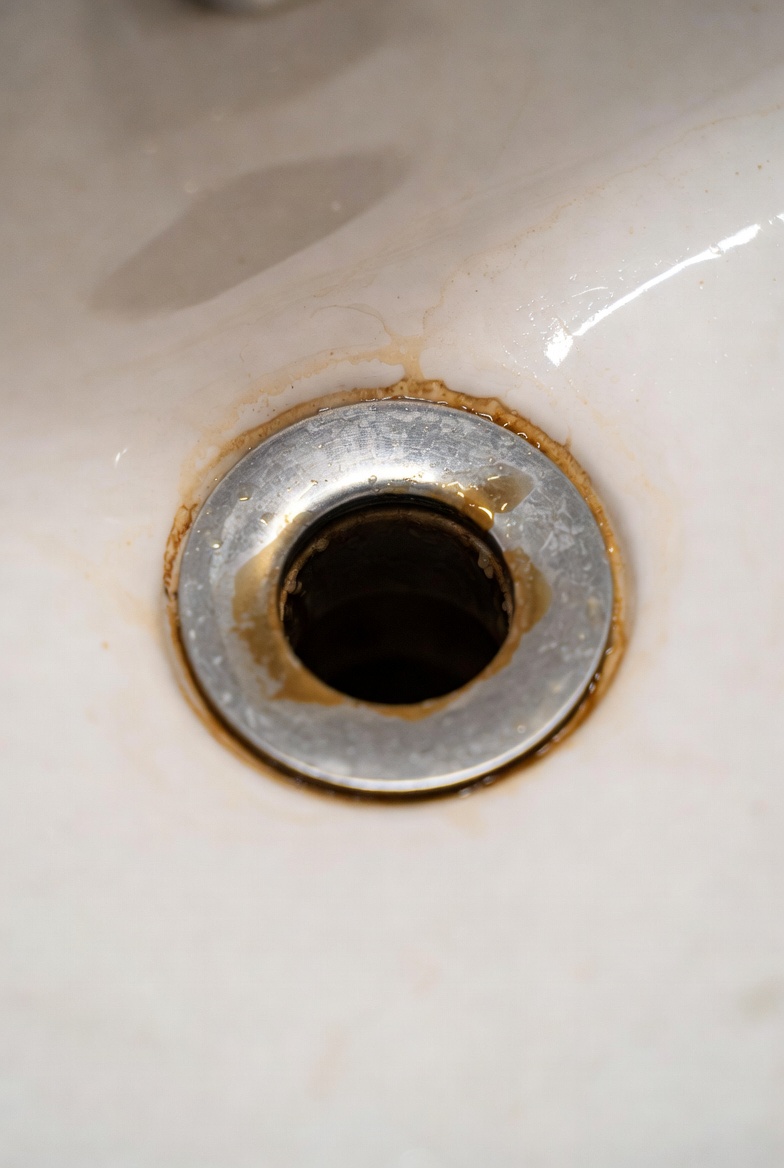
Use a flashlight to inspect the tailpiece and stopper area for slime. Remove the stopper if it’s easy to pull out or unscrew; many stoppers pop out with a gentle pull or need a small turn. Look into the tailpiece (the vertical pipe just below the sink drain) and check for a visible film, trapped hair, or standing water.
Step 3 — Clean what you can reach
- Wipe away debris with a paper towel or cloth, then scrub the stopper and the visible tailpiece interior with a soft brush and soapy water.
- Rinse with warm water. For persistent film, sprinkle baking soda into the drain, add a cup of vinegar, let it fizz for a few minutes, then flush with hot tap water. Do not mix bleach with vinegar or other acids.
Step 4 — Test and repeat if needed
Run the faucet for a minute and smell again at the drain opening. If the odor improves but is not gone, repeat the cleaning steps. If the smell returns shortly after cleaning or is accompanied by slow drainage, consider professional help. For guidance when the smell comes back after cleaning, see Odor returns after cleaning.
What Not to Do
- Do not scrape the drain with sharp tools that can damage finishes.
- Do not pour concentrated chemical drain cleaners down the drain if you aren’t sure what’s in the pipes—these can harm finishes and create hazardous fumes, and they can make professional repairs harder.
- Avoid mixing household chemicals (for example, bleach and vinegar); mixing can release dangerous gases.
When to Call a Professional
- Smell persists after careful cleaning and flushing.
- Drain remains slow or there are repeated clogs.
- There is visible mold, repeated heavy deposits of biofilm, or signs of a leak under the sink.
- You’re uncomfortable removing the trap or other fittings yourself.
Safety Notes
- Wear rubber gloves and eye protection when cleaning drains or using cleaning agents.
- Work in a well-ventilated area; open a window or run an exhaust fan if possible.
- If you use baking soda and vinegar, allow the fizzing to finish before flushing with hot water. Never mix bleach with acids or ammonia-based cleaners.
- If you disconnect plumbing components, place a bucket under the P-trap to catch water and tighten fittings hand-tight to avoid leaks—if in doubt, stop and call a plumber.
Common Homeowner Questions
- Why does the smell come back quickly? Short answer: new organic build-up or an unresolved partial clog—cleaning may need to be repeated or a deeper unclogging may be required.
- Can I use store-bought drain cleaners? Short answer: Use them sparingly; many are harsh and can damage pipes or finishes and aren’t a long‑term fix for biofilm.
- Is it the sewer line? Short answer: Usually not if the smell is limited to one sink; sewer smells are stronger and affect more than one fixture or the whole home.