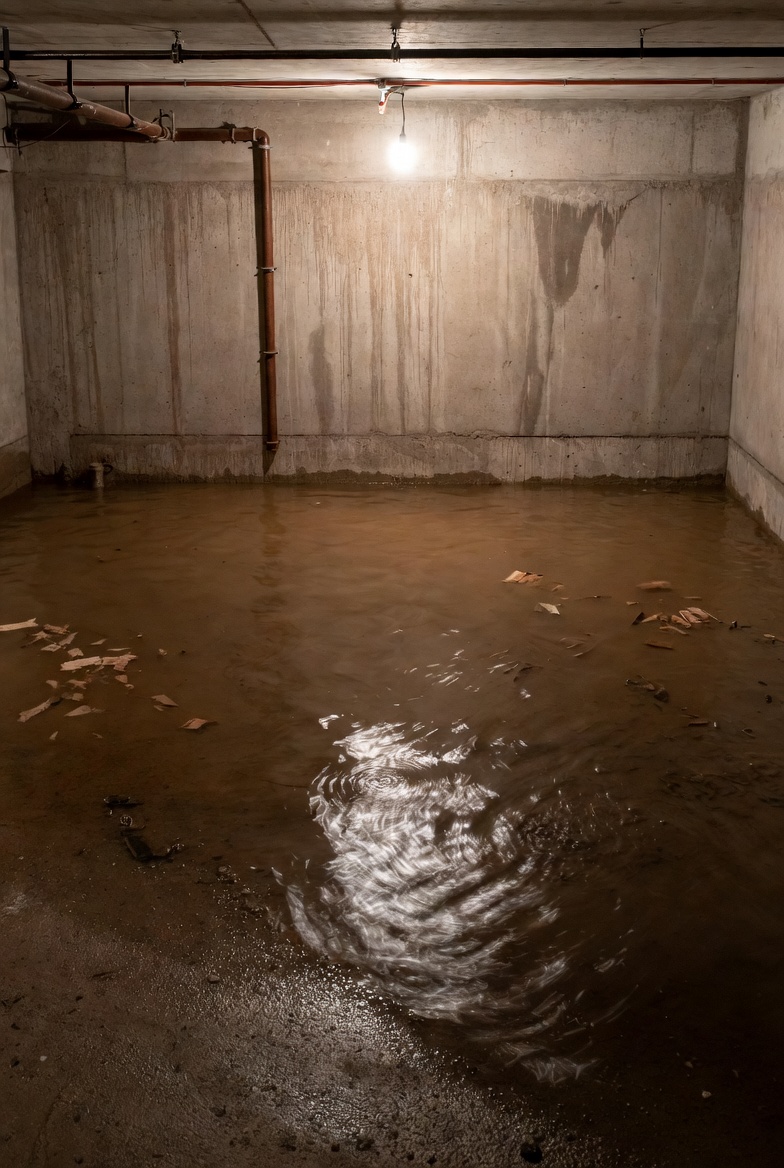
Sudden trouble in several drains warrants stopping contributing wastewater and requesting prompt help. Do not loosen a cleanout one or two turns, watch for squirting sewage and then try to close it as a household diagnostic.
Protect people and stop contributing discharge
For suspected fuel gas, or strong, widespread or unexplained gas-like fumes, exposure symptoms or suspected concentrated sewer gas, leave the affected building and call emergency help from safety. Do not operate switches, plugs, valves or phones there, or stay to sniff or ventilate. Follow responder clearance.
Stay out of water near electrical equipment. Do not touch wet appliances, plugs or controls. When no gas emergency is suspected, isolate electricity only from safe dry access or get utility/electrician help. During wastewater return, stop connected taps, toilets and appliance discharges using safely accessible controls. Keep people and pets away from sewage. A supply shutoff cannot stop every shared sewer or groundwater inflow.
Preserve sudden-onset evidence without assuming collapse
- Original event: Record the first return, affected fixtures and activity already occurring. Sudden onset does not prove the fault is beyond all branches or identify a collapse, roots, foreign object or public responsibility.
- Nearby work: Record known digging, heavy equipment, tree work and available service records from safe stable access. Timing and proximity justify questions without proving damage or blame. Do not dig or probe a buried service before applicable locates, private-service identification and site assessment.
- Inspection and tools: A dry or flowing cleanout would need its actual position, elevation and direction interpreted; do not create the observation by opening it. A camera has access and visibility limits and cannot promise to find every fault without risk. Avoid forced tools and use qualified compatible clearing rather than making cap release a prerequisite.
Must a cleanout be checked before any service can begin?
No household cap-opening test is required. Give the provider the existing symptoms and access records; appropriate controlled professional access and inspection depend on the actual system and hazards. Do not delay emergency mitigation for a guaranteed camera diagnosis.
Before opening parts or returning to service
Keep unknown cleanout caps and sealed pump, sewage or septic lids closed. Slow turning, gloves, distance or a plan to reclose after release does not establish safe pressure or gas conditions. Do not enter pits, tanks or manholes, or climb to a vent as a household backup check. Suitable qualified access requires the actual component and hazards assessed.
Give the provider the original affected fixtures, where water first appeared, what was already operating, weather and service history, and every cleaner or winterization product used. Do not mix chemicals or treat a guessed wait or rinse as clearance for opening, plunging or tools. Do not run fixtures, a bucket or another appliance cycle to reproduce a shared backup.
Ask which route and extent were inspected, what material or defects were actually visible and where access or standing water limited the view. A camera cannot guarantee every hidden defect, vent fault, grade or ownership conclusion. Appropriate clearing and repair depend on actual pipe condition, compatible equipment and receiving conditions. After correction and secure assembly, an appropriate bounded attended check with an accepting receiver differs from recreating a failure. Stop at leakage or renewed rise. Arrange suitable safe sewage cleanup and prompt drying; do not put contaminated water into another failing drain or spread it outdoors.
Related guides
- Multiple drains back up intermittently
- Multiple drains back up only upstairs
- Multiple Fixtures Backing Up Together
When to get prompt basement drainage help
Sources and limits
- Wisconsin DHS: sewer gas, exposure and leaving an unsafe area
- Con Edison: suspected fuel-gas leak response
- CDC: electrical hazards near water
- Madison Metropolitan Sewerage District: stop discharge and report backup
- Seattle Public Utilities: repair choices and sewer-camera limits
- Example drain-opener label: remaining-product restrictions
- EPA: prompt drying, electrical safety and flood cleanup limits
- Enbridge example: locating services before excavation
Manufacturer examples do not identify your installed system or prescribe a universal procedure. Independent professional review and household field tests have not been obtained.