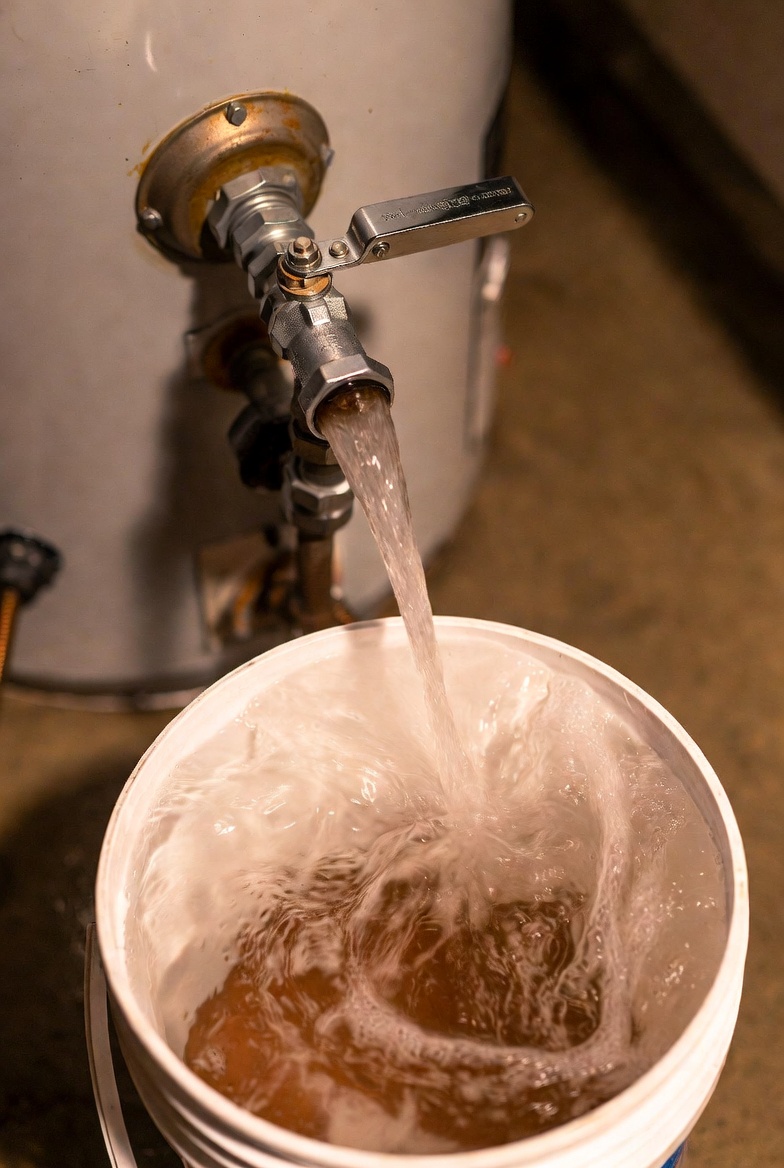
Check for an emergency first
If you smell fuel gas or suspect a gas leak, leave the building or affected area immediately and take others with you. Do not operate switches, plugs, phones, appliances, thermostats or valves in the affected area, light flames, or stay to ventilate or investigate. From a safe location well away, call the local gas emergency service or emergency services. Do not re-enter until responders say it is safe. Plumbing checks and normal maintenance must wait.
If a carbon monoxide alarm sounds or you suspect carbon monoxide exposure, get everyone outside immediately and call emergency services from safety. Carbon monoxide has no smell; an odor comparison cannot rule it out. Do not restart or repeatedly cycle a fuel-burning heater to investigate a possible combustion problem.
Keep away from wet electrical equipment. Do not touch wet appliances, plugs or switches, or enter water to reach a breaker. When no gas leak is suspected, power may be isolated only from a safely accessible dry location; otherwise call an electrician or emergency help. Wet equipment needs qualified assessment before it is used again.
A musty or moldy smell noticed after heater installation may concern water, damp building materials or room air. The timing is useful, but it does not prove bacteria in the tank, harmless new-part off-gassing or mold. Do not force heating cycles or lean over hot taps and drains to find the strongest odor.
For a new, unexplained water-quality change: do not deliberately taste the water. Use bottled water or another known-safe supply for drinking, food preparation, teeth brushing and ice while you contact the supplier. Follow the actual local notice for other uses. Boiling does not make chemically contaminated water safe, and clear appearance or a fading odor does not certify safety.
Useful details to record
- Where the odor was first noticed and whether water was running at the time.
- Visible dampness, staining or leakage already apparent from a safe, dry position; do not remove insulation or open equipment covers.
- The heater model, installation date, previous leak history and recent cleaning or construction in the room.
What the pattern can tell you
- There is visible water near electrical equipment. Keep clear and use the electrical boundary above. Do not touch the equipment or unplug it in the wet area.
- The room smells before water is used. Report that separately from water odor. The installer may need to check leakage or the surrounding building; an odor does not establish hidden mold.
- The change was noticed only during water use. Tell the installer and supplier which normal use revealed it. That does not rule out other sources or identify a microorganism.
What to do next
- After ruling out an emergency, contact the installer promptly about a new post-installation odor or leak. Use existing photos, paperwork and observations rather than recreating the event.
- If water quality has changed, ask the supplier whether an advisory or targeted sample plan applies. Do not taste water to distinguish musty from chemical or sulfur odors.
- For damp materials, have the leak source assessed and arrange appropriate building cleanup. Do not disturb suspected mold or wet insulation as an odor test.
- Any heater draining, internal cleaning or restart must follow the actual unit instructions. Routine owner maintenance is different from investigating an unexplained odor; do not prescribe repeated hot-water cycles or a generic vinegar or bleach treatment.
Does the smell fading after hot water runs prove the heater was the cause?
No. Water movement, temperature, room conditions and perception can change together. A disappearing smell does not identify the source or establish that water, wiring or the surrounding materials are safe. Keep the installation concern open until the responsible service check addresses it.
Related situations
- Musty odor after long periods of no use
- Moldy smell only at kitchen sink
- Musty, Earthy, or Moldy Water Smell